Transformer Model Explained
Introduction to Transformer Models
A Revolutionary Architecture
In 2017, the world of artificial intelligence was introduced to a new architecture that would change everything, especially in how machines understand language. This architecture is called the Transformer.
The transformer model, introduced in 2017 by Vaswani et al. in the groundbreaking paper “Attention Is All You Need”, revolutionized Natural Language Processing (NLP).
Before the Transformer, models like Recurrent Neural Networks (RNNs) processed text one word at a time, in sequence. This was slow and made it difficult for the model to connect words that were far apart in a long sentence. The Transformer model solved this by processing all words in a sentence at once, using a mechanism called self-attention.
The Encoder-Decoder Framework
At its core, the Transformer has two main parts: an encoder and a decoder. Think of it like a human translator. The encoder reads and understands the entire sentence in the original language, while the decoder uses that understanding to write a new sentence in the target language.
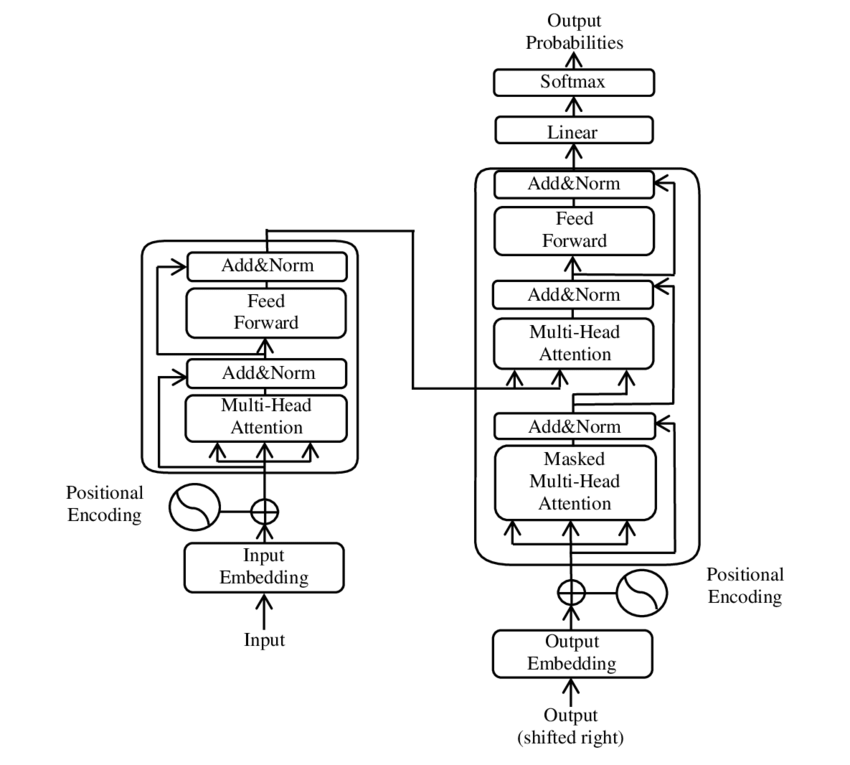
The encoder's job is to process the input sequence, like an English sentence, and build a rich numerical representation of it. It looks at every word in the sentence and how it relates to all the other words, creating a contextual understanding of the input.
The decoder's job is to take that numerical representation and generate an output sequence, like the same sentence translated into French. It generates the new sentence word by word, each time looking at the encoder's understanding of the input and the words it has already generated.
The Power of Self-Attention
The secret ingredient that makes the Transformer so effective is self-attention. This mechanism allows the model to weigh the importance of different words in the input sequence when processing a specific word. It helps the model understand context and handle long-range dependencies.
For example, consider the sentence: "The animal didn't cross the street because it was too tired." What does "it" refer to? A human reader knows "it" refers to "the animal." Self-attention allows the model to make this same connection, linking "it" directly back to "animal," even though several words separate them.
This ability to look at the entire sequence at once, combined with self-attention, is what allows Transformers to capture complex relationships in data. It represents a fundamental shift from the sequential processing of older models to a more holistic, parallel approach.
What was the primary innovation of the Transformer architecture that set it apart from sequential models like RNNs?
In the sentence, "The car passed the truck because it was going so fast," the self-attention mechanism helps the model determine what "it" refers to. What is the most likely connection self-attention would make?
Understanding this high-level structure is the first step. The encoder, the decoder, and the self-attention mechanism are the core building blocks of the powerful language models we use today.