Transformer Deep Learning Models
Introduction to Deep Learning
How Machines Learn
Deep learning is a way for computers to learn from examples, much like we do. It's powered by structures called neural networks, which are loosely inspired by the human brain. Instead of being programmed with explicit rules for a task, these networks learn by finding patterns in data.
Imagine a network of tiny, interconnected calculators. Each one is a 'neuron.' These neurons are organized into layers. Data flows from the first layer, the input layer, through one or more hidden layers, to the final output layer, which provides the answer.
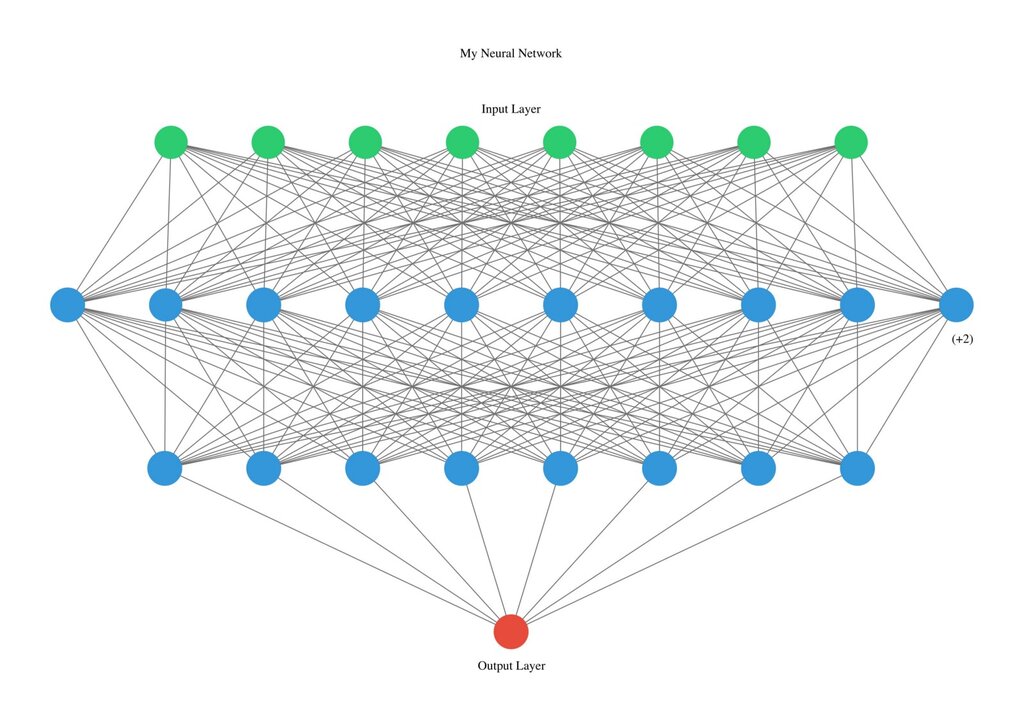
Let's say we want to teach a network to recognize a handwritten number. The input layer would receive the pixels of the image. The hidden layers would process these pixels to identify shapes, curves, and lines. Finally, the output layer would decide which number, from 0 to 9, the image represents.
Each neuron performs a simple calculation. It takes its inputs, multiplies each one by a 'weight,' and adds them all up along with a 'bias' value. The weight signifies the importance of an input—a higher weight means that input has more influence. The bias acts like a baseline adjustment. This sum is then passed through an activation function to produce the neuron's output.
The Neuron's Switch
An activation function is a crucial component. It introduces non-linearity into the network, allowing it to learn complex relationships in the data. Without it, a neural network, no matter how many layers it has, would behave like a simple linear model, unable to capture intricate patterns like those in images or speech.
Activation Function
noun
A mathematical function that determines the output of a neuron. It decides whether a neuron should be activated ('fire') or not, based on its weighted sum of inputs.
One common example is the sigmoid function. It takes any real number and squeezes it into a range between 0 and 1. This is useful for the output layer when predicting a probability, like the chance that an email is spam.
The function produces an 'S'-shaped curve. Very negative inputs result in an output close to 0, while very positive inputs result in an output close to 1.
Learning from Mistakes
So how does a network learn the right weights and biases? It starts with random values. When it sees its first training example, it makes a guess. Unsurprisingly, this initial guess is usually wrong. The network then calculates its 'error'—how far off its prediction was from the actual answer.
This is where the magic happens. The network uses the error to adjust its internal weights and biases, a process called backpropagation.
Backpropagation works backward from the output layer. It figures out which neurons were most responsible for the error and nudges their weights and biases in a direction that would make the error smaller. It's like a team of people trying to hit a target. After each shot, they see how far off they were and each person adjusts their aim slightly for the next try.
This process is repeated thousands or even millions of times, with the network gradually getting better at its task. Each tiny adjustment, guided by backpropagation, helps the network refine its internal representation of the data until it can make accurate predictions on new, unseen examples.
What is the fundamental way a deep learning model learns to perform a task?
In a neural network designed to classify images of handwritten digits (0-9), which layer is responsible for making the final decision about which digit the image represents?
These core ideas—neurons organized in layers, activation functions providing non-linearity, and backpropagation for learning—are the building blocks of deep learning.