Transformer Architecture Explained
Introduction to Transformer Models
From Chains to Webs
For a long time, computers tried to understand language by reading it one word at a time, from left to right. This is how early models like Recurrent Neural Networks (RNNs) worked. They'd take in a word, process it, and then pass what they learned to the next step, which processed the next word. It was a bit like trying to understand a story by looking through a narrow tube—you only see one piece at a time and have to rely on your short-term memory to connect it to what came before.
This sequential approach had its limits. When sentences got long, the model would often forget the beginning by the time it reached the end. The connection between a subject at the start of a paragraph and a pronoun at the end would get lost. Processing was also slow, since each word had to wait its turn. It was clear a new approach was needed to handle the complex, sprawling way that human language actually works.
A New Architecture
In 2017, a groundbreaking paper titled "Attention Is All You Need" introduced a new model that changed everything: the Transformer. Instead of processing words sequentially, the Transformer looks at the entire sentence at once. It examines every word in relation to every other word, creating a web of connections rather than a simple chain.
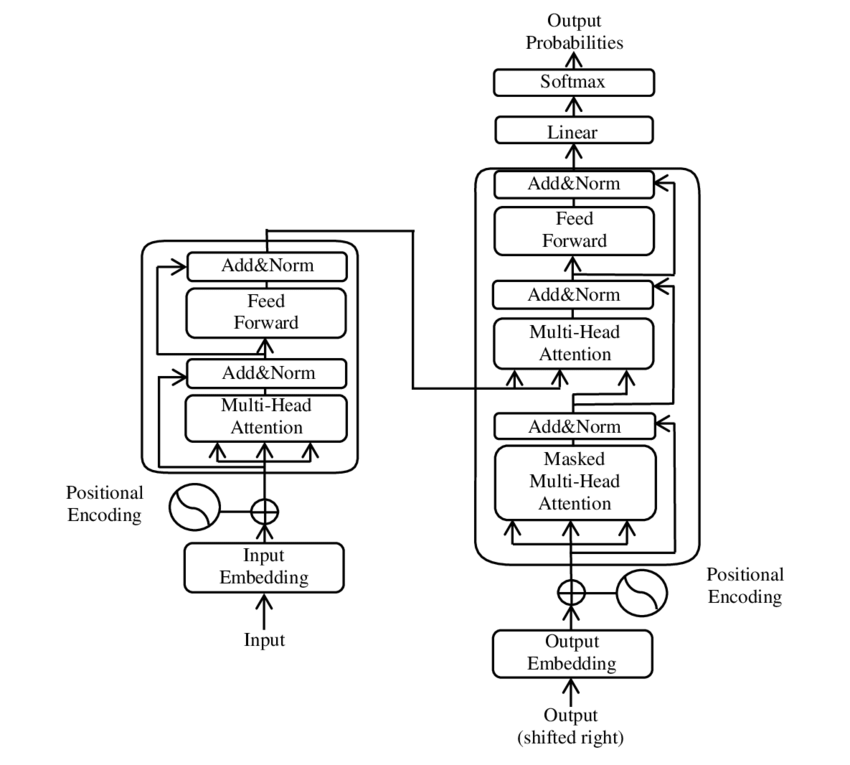
This parallel approach solved the long-range dependency problem and dramatically sped up training. The model could now instantly see how the first word of a sentence relates to the last, no matter how far apart they were. This ability to grasp the full context is what makes Transformers so powerful in tasks like translation, summarization, and chatbots.
Transformers don't just read a sentence; they absorb its entire context at once, weighing the importance of every word against all the others.
Core Components
The Transformer's design relies on a few key innovations that work together to understand language.
Self-Attention
noun
The mechanism that allows a model to weigh the importance of different words in an input sequence when processing a specific word.
Self-attention is the heart of the Transformer. It's how the model decides which other words in a sentence are most relevant to the word it's currently looking at. For example, in the sentence, "The bee landed on the flower because it wanted nectar," self-attention helps the model determine that "it" refers to the "bee," not the "flower."
To make this process even more robust, Transformers use Multi-Head Attention. Instead of calculating attention just once, it runs the process multiple times in parallel from different perspectives, or "heads." One head might focus on subject-verb relationships, while another tracks pronoun references. Combining these perspectives gives the model a much richer and more nuanced understanding of the sentence's structure and meaning.
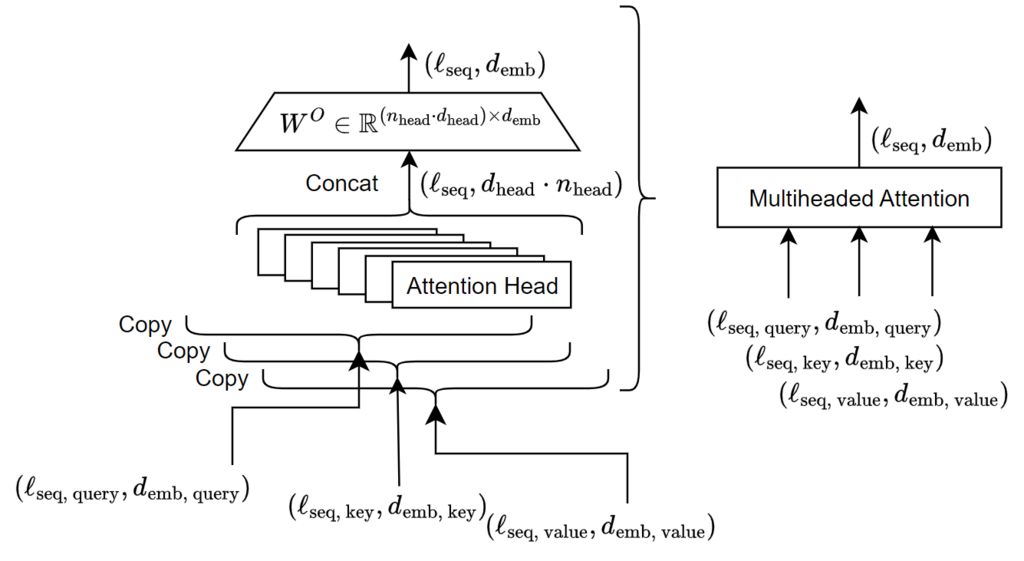
But if the model looks at all the words at once, how does it know their order? That's where Positional Encodings come in. Before the words enter the model, a piece of information—a unique vector—is added to each word's embedding. This vector acts like a timestamp, giving the model a mathematical signal of each word's position in the original sequence.
Finally, each layer in a Transformer contains a Feed-Forward Network. This is a standard neural network component that processes the output from the attention layer. Its job is to perform further transformations on the data, helping the model learn more complex patterns from the relationships identified by the attention mechanism.
What was a major limitation of early language models like RNNs that processed text sequentially?
The mechanism in a Transformer that weighs the influence of different words in a sentence to understand context, such as determining that 'it' refers to 'the bee' in 'The bee landed on the flower because it wanted nectar,' is called __________.
These components work together to form the basis of most modern large language models, setting the stage for the powerful AI tools we use today.