Transcending the Hedonic Treadmill
Introduction to the Hedonic Treadmill
The Happiness Set Point
Have you ever thought that a specific achievement—a dream job, a new car, or a big raise—would finally make you happy for good? It’s a common feeling. You work hard, you reach the goal, and for a while, you feel incredible. But eventually, the excitement fades. Life returns to normal, and that lasting joy you expected seems to have slipped away.
This experience isn’t just a personal quirk; it’s a well-documented psychological phenomenon. We all seem to have a baseline level of happiness, a sort of emotional set point that we return to regardless of what happens in our lives. This tendency is called the hedonic treadmill, or hedonic adaptation.
The term was coined by psychologists Philip Brickman and Donald T. Campbell in 1971 to describe how people's expectations rise with their gains, resulting in no permanent boost in happiness.
Imagine running on a treadmill. You can speed up, but you're not actually going anywhere. The hedonic treadmill works in a similar way. You can experience spikes of joy from positive events or dips of sadness from negative ones, but your long-term happiness level tends to remain surprisingly stable.
Why the Feeling Fades
So why don't major life improvements lead to permanent happiness? There are a few psychological mechanisms at play.
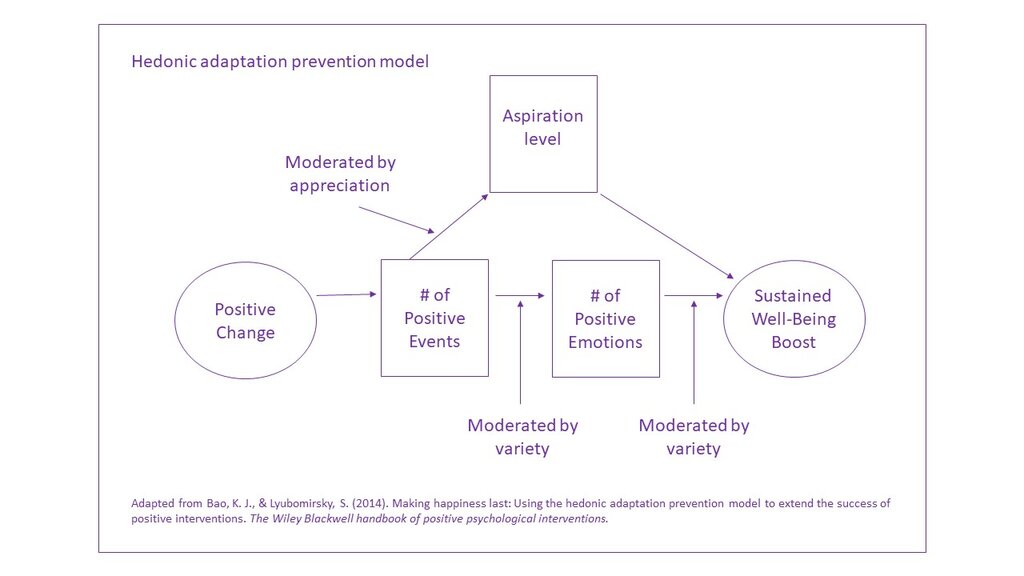
First, our aspirations change. When you get a raise, you might initially feel wealthy. But soon, your spending habits adjust. You get used to the new income, and it becomes your new normal. What once felt like a luxury now feels like a necessity, and you start aspiring to the next level.
Second, we engage in social comparison. We constantly measure our own lives against others'. You might love your new car until your neighbor buys a faster, more expensive model. This constant comparison can diminish the satisfaction we get from our own achievements.
Finally, the novelty wears off. The human brain is wired to react strongly to new stimuli. The thrill of a new experience is potent but temporary. The first week in a new city is an adventure; a year later, it’s just home. Our minds adapt to new circumstances, and what was once exciting becomes routine.
The Illusion of Permanent Change
The hedonic treadmill has a significant impact on our pursuit of happiness. It suggests that chasing lasting joy through external events or material possessions is often a futile effort. The finish line keeps moving.
Interestingly, this adaptation works both ways. Just as we adapt to positive changes, we also show incredible resilience in the face of negative ones. Studies have shown that people who experience major setbacks, like a serious injury, often return to their approximate baseline happiness level after an adjustment period. We are more emotionally resilient than we tend to believe.
Understanding hedonic adaptation isn't meant to be discouraging. Instead, it provides a crucial insight into human nature. It tells us that lasting well-being may not come from changing our circumstances, but from changing our perspective.