Training Skittish Cats for Outdoor Adventure
Gear Selection
Choosing a Second Skin
Taking a skittish cat outdoors requires gear that feels less like a restraint and more like a secure extension of their body. The goal is a 'second skin' that provides safety without triggering their sensitive freeze, flight, or fight instincts. Standard collars are a non-starter. A cat's neck is delicate, and a sudden bolt could cause serious injury. More importantly, cats are notoriously good at slipping out of collars, especially when startled.
A well-fitted harness is the only safe option. It distributes pressure across the stronger parts of the cat's body, like the chest and shoulders, instead of concentrating it on the throat. For a nervous cat, the type of harness matters immensely. The two most common styles are the H-style harness and the vest harness.
The H-style harness is minimalist, consisting of straps that loop around the neck and torso. It offers good security with minimal body contact, which can be ideal for cats sensitive to the feeling of being 'hugged' or restricted. However, the thinner straps can create pressure points if the cat pulls hard.
A vest harness, often made of mesh or soft fabric, covers more of the cat's chest and back. This design distributes pressure very evenly and can feel more secure, like a gentle hug. For many skittish cats, this can have a calming effect similar to a thunder shirt. The trade-off is that it covers more of their body, which some cats dislike, and it can be warmer in hot weather.
The Escape-Proof Fit
Regardless of style, the fit is everything. A harness that is too loose is an escape waiting to happen. A harness that is too tight is uncomfortable and restricts movement. The key is the 'two-finger' rule.
You should be able to comfortably slip two fingers, flat against your cat, between the harness and their body at the neck and chest. No more, no less.
To get the right size, you'll need two measurements: the neck girth (circumference of the neck) and the chest girth (circumference of the body just behind the front legs). Use a soft measuring tape. If you don't have one, use a piece of string and then measure the string with a ruler.
When testing the fit, try to gently pull backward from the leash attachment point. If the harness slides up towards the cat's head or if their shoulders can easily slip out, it's too loose. A cat's primary escape move is backing out, so ensuring the chest strap is snug behind their elbows is critical.
Leashes and Lines
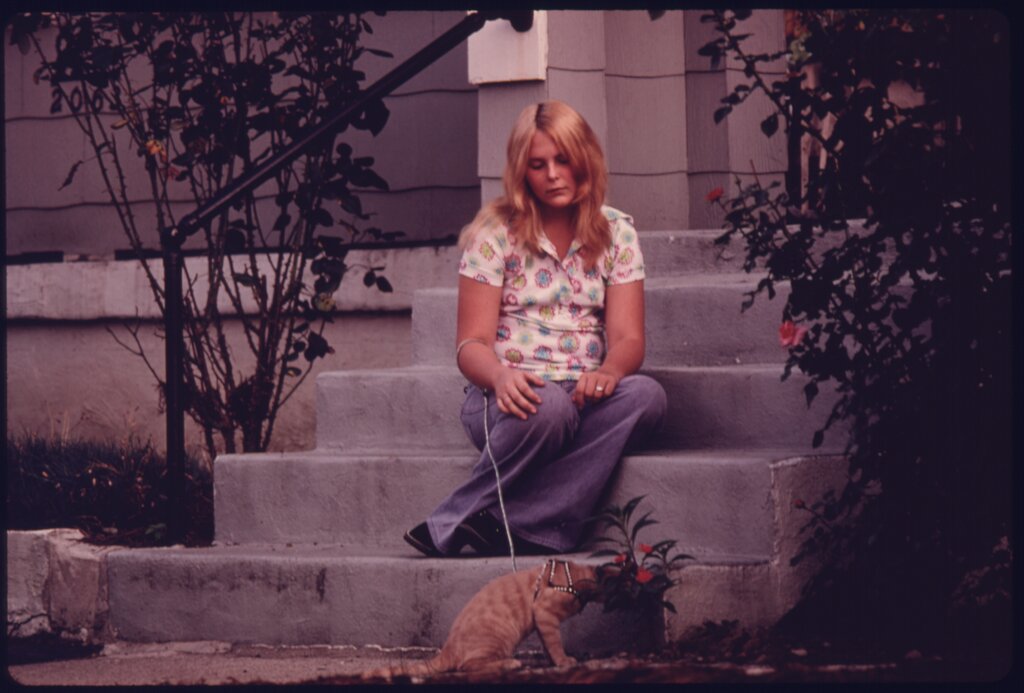
The leash is your line of communication and control. For a nervous cat, a lightweight, fixed-length lead is the best choice. A length of six to ten feet is perfect. It's long enough to give your cat some room to explore but short enough for you to regain control quickly if a car or dog appears suddenly.
Avoid retractable leashes at all costs. The plastic handle is bulky, and the locking mechanism makes a clicking sound that can easily startle a cat. Worse, the variable tension doesn't provide consistent feedback, and if you drop the handle, the sound of it retracting and bouncing toward your cat can be terrifying, potentially creating a lasting negative association with walks.
A craft leash is one of the most essential safety accessories and, in some conditions, can literally be your “life line”.
When selecting a leash, consider the material and the clasp. A lightweight nylon or cotton lead is often best, as a heavy lead can feel like a drag on a small cat. The clasp should be small and light but still strong and secure. Test it to make sure it's easy for you to open and close with one hand but won't come undone accidentally.
Ultimately, the best gear is what your cat will tolerate and what keeps them secure. The equipment is your safety net, allowing you to focus on making your cat's outdoor experiences positive and confidence-building.
Why is a standard collar considered an unsafe choice for taking a cat outdoors?
What is the primary advantage of a vest-style harness for a skittish cat?