Training Project Managers in Earned Value Metrics
Defining Training Objectives
Start with a Destination
Before you can teach project managers how to use Earned Value Management (EVM), you need to decide what “knowing” it actually looks like. A training program without clear objectives is like a project without a scope. It will drift, waste resources, and ultimately fail to deliver real value.
The goal is to move beyond vague statements like “understand EVM.” Instead, we need to define specific, observable skills that will change how a project manager works. The process starts by pinpointing what successful EVM application looks like in your organization.
Pinpoint Key Competencies
The first step is to identify the core EVM competencies your project managers need. This isn't about creating a long list of formulas to memorize. It's about defining the practical skills that lead to better project decisions. What should a manager be able to do with EVM data?
Think in terms of actions. A project manager should be able to:
- Interpret project health from variance data.
- Communicate status clearly using EVM terms.
- Identify risks based on performance trends.
- Make informed decisions to bring a project back on track.
The right competencies depend on your context. A large construction firm might prioritize skills related to meticulous cost control and resource management. A fast-moving software company, on the other hand, might focus more on schedule adherence and adapting to scope changes. The key is to make the list relevant to the projects your team actually runs.
Align with Company Goals
Training doesn't happen in a bubble. It must support the broader goals of the organization. If the company is focused on improving profitability, your EVM training should directly contribute to that. Connecting training objectives to business outcomes makes the value clear to everyone, from the project manager to the executive team.
Start by looking at the organization's strategic objectives. Then, work backward to create training goals that support them.
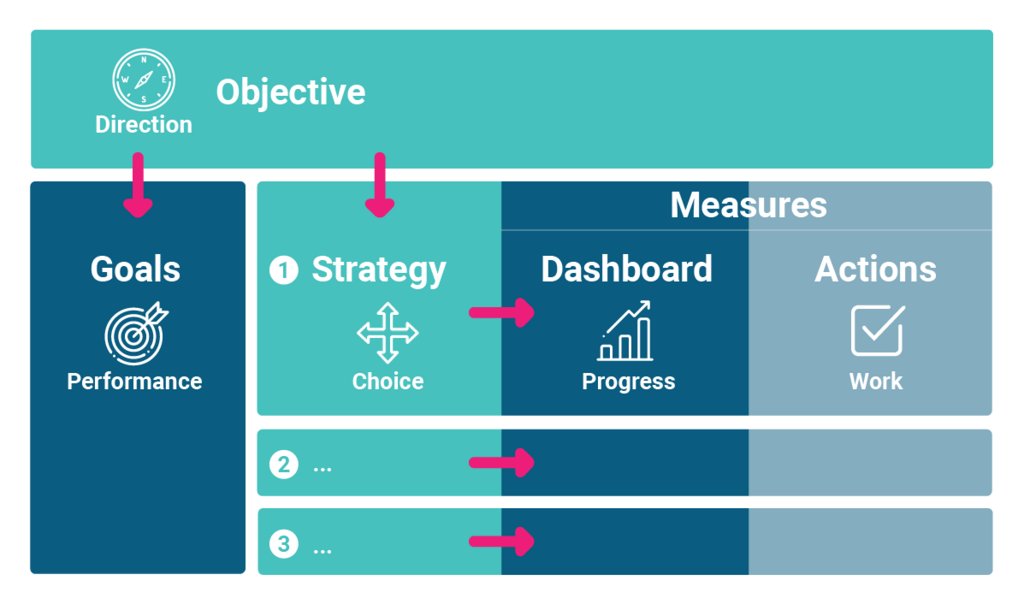
For example, if a company-wide goal is to reduce budget overruns, a corresponding training objective could be:
“After the training, project managers will use Cost Variance (CV) analysis to identify potential overruns and implement corrective action plans within five business days.”
This objective is specific, action-oriented, and directly tied to a business need.
Set Measurable Benchmarks
How will you know if the training was successful? You need to set clear, measurable benchmarks before the program begins. These benchmarks are the evidence that your objectives have been met.
Good benchmarks are quantifiable. They provide a clear before-and-after picture, demonstrating the training's impact. There are a few ways to approach this.
| Benchmark Type | Description | Example |
|---|---|---|
| Knowledge Assessment | A test or quiz given before and after training. | A pre-training quiz shows a 45% average score on EVM principles, while the post-training average is 90%. |
| On-the-Job Application | Observing whether PMs use EVM on actual projects. | Within one month, 80% of project status reports must include Schedule Variance (SV) and Cost Variance (CV). |
| Project Outcomes | Tracking changes in project performance metrics. | The average project budget overrun decreases from 12% to 5% in the six months following the training program. |
By combining these types of benchmarks, you can build a comprehensive view of the training's effectiveness. You not only confirm that participants learned the material but also that they are applying it to improve project results.
What is the primary problem with a vague training objective like "understand EVM"?
An organization's strategic goal is to increase profitability. What is the first step in creating a relevant EVM training objective to support this goal?
Defining these objectives is the critical first step. It provides the foundation for designing targeted content, delivering effective instruction, and ultimately, proving the value of your training program.