Train LLMs With Your Own Data
Introduction to Large Language Models
What Are Large Language Models?
Large Language Models, or LLMs, are advanced AI systems designed to understand, generate, and interact with human language. Think of them as incredibly sophisticated pattern recognizers, trained on vast amounts of text from the internet, books, and other sources. Their primary purpose is to process language-based tasks that would typically require human intelligence.
Large language models (LLMs) are AI systems that understand and create human language, doing tasks like summarizing articles, answering questions, writing code, and more.
The "large" in their name refers to two things: the enormous size of the datasets they are trained on and the massive number of parameters within the model itself. A parameter is like a knob the model can tune during training to improve its predictions. The more parameters, the more nuance the model can capture about language.
At their core, LLMs work by predicting the next word in a sequence. Given the text "The cat sat on the," the model calculates the most probable word to come next—likely "mat" or "couch." By repeating this process, it can generate entire sentences, paragraphs, and even complete articles that are coherent and contextually relevant.
How LLMs Work
Modern LLMs are built on an architecture called the Transformer. Introduced in 2017, the Transformer was a game-changer because it allowed models to process text more efficiently and effectively than ever before.
The key innovation of the Transformer is a mechanism called self-attention. Self-attention lets the model weigh the importance of different words in the input text as it processes them. When reading the sentence "The robot picked up the ball because it was heavy," a self-attention mechanism helps the model understand that "it" refers to the "ball," not the "robot." This ability to track relationships between words, even those far apart in a text, is crucial for understanding context and generating sensible responses.
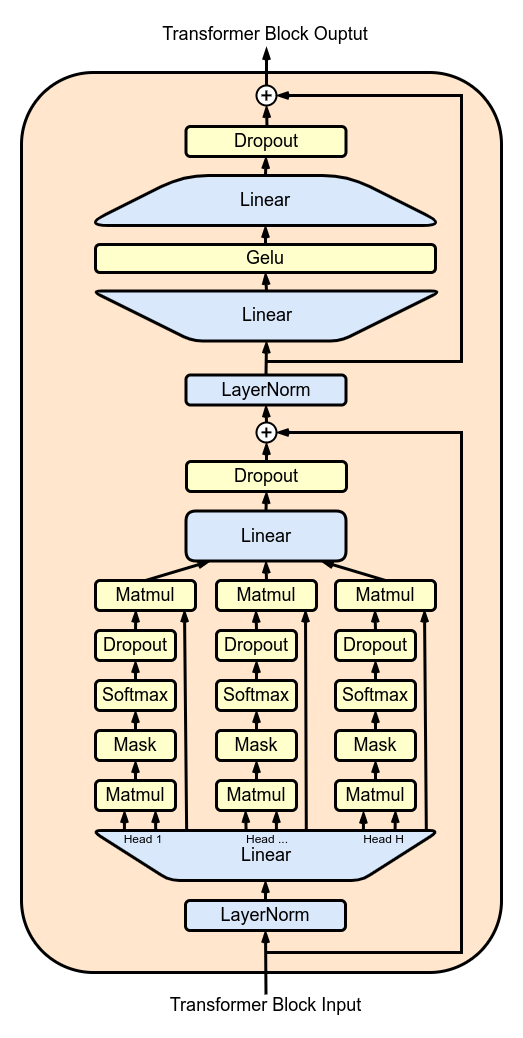
By stacking these Transformer layers, the model can build up increasingly complex representations of language, starting from simple word relationships and moving up to abstract concepts and reasoning.
Training an LLM
Creating a powerful LLM involves a two-stage process: pre-training and fine-tuning.
Pre-training is the foundational step where the model learns general knowledge about language and the world. This is a massive undertaking, requiring enormous computational power and a diverse dataset.
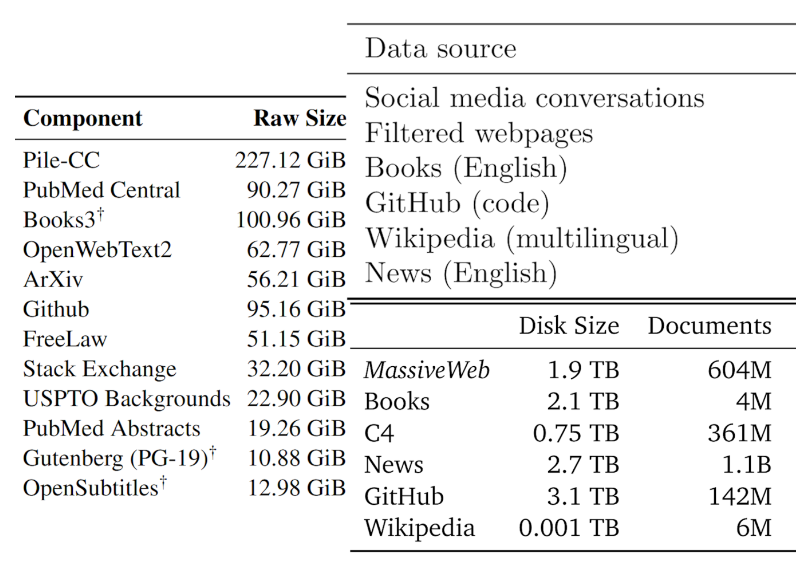
During pre-training, the model is fed trillions of words from the internet, books, and other sources. It learns grammar, facts, reasoning abilities, and even biases present in the data. The result is a base model—a powerful but general-purpose language engine.
Fine-tuning adapts the pre-trained model for a specific task or domain. It's like teaching a general expert a specialized skill.
This process uses a much smaller, curated dataset. For example, to create a chatbot that assists with medical questions, you would fine-tune a base model on a dataset of medical textbooks and Q&A pairs. This refines the model's knowledge, making it an expert in that specific area without having to retrain it from scratch.
Real-World Applications
The versatility of LLMs has led to their adoption in countless fields. They are the technology behind the conversational AI in chatbots and virtual assistants, helping users with everything from customer service inquiries to scheduling appointments.
In content creation, LLMs assist writers by generating article drafts, summarizing long documents, and brainstorming ideas. They also power advanced translation services, breaking down language barriers with remarkable fluency.
Developers use LLMs to write, debug, and explain code, significantly speeding up the software development process. From education and healthcare to entertainment and research, LLMs are becoming an integral tool for processing and generating information.
What is the primary function of a Large Language Model (LLM)?
The 'large' in Large Language Model refers to two key aspects. What are they?
Understanding these fundamentals provides a solid base for exploring how to train and customize these powerful models for your own specific needs.