Trading on Prediction Markets
Introduction to Prediction Markets
What Are Prediction Markets?
A prediction market is a place where people can trade on the outcomes of future events. Think of it like a stock market, but instead of buying shares in a company, you buy shares in a specific result. Will a certain candidate win an election? Will a movie hit a box office target? Will a company launch its product on time? These are the kinds of questions prediction markets tackle.
The core purpose is to gather information. By allowing people to put their money where their mouth is, these markets aggregate the collective knowledge and beliefs of a diverse crowd. The result is often a surprisingly accurate forecast.
At its core, a prediction market is an exchange where individuals trade contracts that pay out based on whether a future event occurs.
How They Work
The mechanics are straightforward. For any given event, the market creates shares for each possible outcome. Let’s take a simple yes-or-no question: "Will the Federal Reserve lower interest rates by the end of the year?"
There will be "Yes" shares and "No" shares. If you believe the Fed will lower rates, you buy "Yes" shares. If you think they won't, you buy "No" shares. When the event happens and the outcome is known, shares for the correct outcome pay out a fixed amount, usually $1, while shares for the incorrect outcome become worthless.
The magic is in the price. The price of a share at any given moment reflects the market's collective guess at the probability of that outcome. If a "Yes" share is trading at $0.65, it means the market believes there's a 65% chance the Fed will lower rates. A price of $0.20 would signal a 20% chance. The price isn't set by an authority; it's determined by what traders are willing to pay, constantly shifting as new information becomes available and opinions change.
Share Price = Perceived Probability. A share priced at 💲0.72 implies a 72% chance of that event happening.
A Brief History
The idea of using markets to forecast events isn't new. It has roots in betting markets that have existed for centuries. However, the modern, formalized concept took shape in the late 20th century. A major milestone was the creation of the Iowa Electronic Markets (IEM) in 1988 at the University of Iowa. It was launched as a research project to see if market mechanisms could accurately predict political election outcomes. They often did, sometimes outperforming traditional polls.
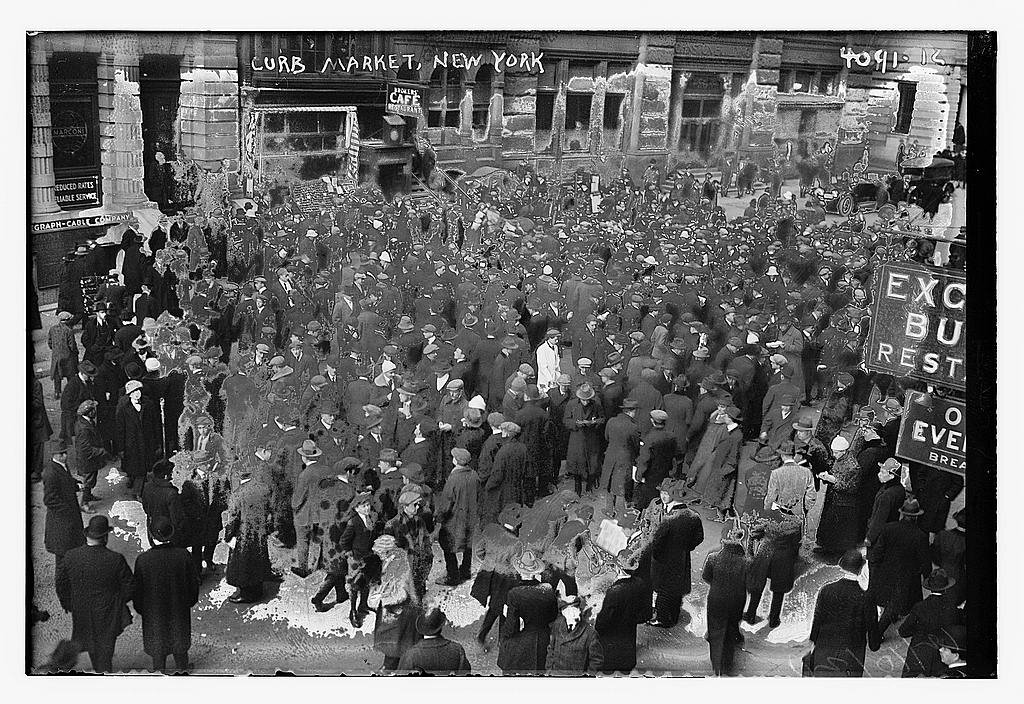
From these academic beginnings, prediction markets have grown and diversified. The rise of the internet and cryptocurrency has enabled new platforms to emerge, making these markets more accessible to the general public and expanding their scope far beyond university research.
Real-World Applications
Prediction markets are used across many different fields because of their powerful ability to distill widespread information into a single, understandable forecast. They provide a real-time pulse on what a knowledgeable crowd thinks is going to happen.
| Field | Example Application |
|---|---|
| Politics | Forecasting election results, predicting the passage of legislation. |
| Economics | Predicting GDP growth, inflation rates, or if a central bank will change interest rates. |
| Business | Internal markets to forecast project deadlines, sales figures, or the success of a new product. |
| Technology | Guessing the launch date of a new gadget or the adoption rate of a new software. |
| Entertainment | Predicting Oscar winners, box office revenues, or TV show ratings. |
By converting predictions into prices, these markets offer a clear, dynamic, and often highly accurate glimpse into the future.
What is the primary purpose of a prediction market?
In a prediction market, a share for the outcome "Company X will launch its product on time" is trading at $0.75. What does this price most likely indicate?