Trading Fundamentals
Introduction to Financial Markets
The Market's Big Picture
Think of a financial market as a huge, global network that connects people who have extra money (investors) with those who need it (like companies or governments). It's where savings are turned into investments, helping businesses grow, governments fund projects, and individuals build wealth.
This network isn't just one physical place. It's a complex system of exchanges, banks, and brokers all working together to facilitate the buying and selling of financial instruments.
Where Trading Happens
Transactions don't just happen randomly. They occur in two main types of markets: the primary market and the secondary market.
The primary market is where new securities are born. When a company decides to go public, it sells its shares to investors for the first time in an Initial Public Offering (IPO). The money from this sale goes directly to the company to fund its operations or expansion. Think of it as buying a new car directly from the factory.
The primary market is for brand-new securities. The company gets the cash.
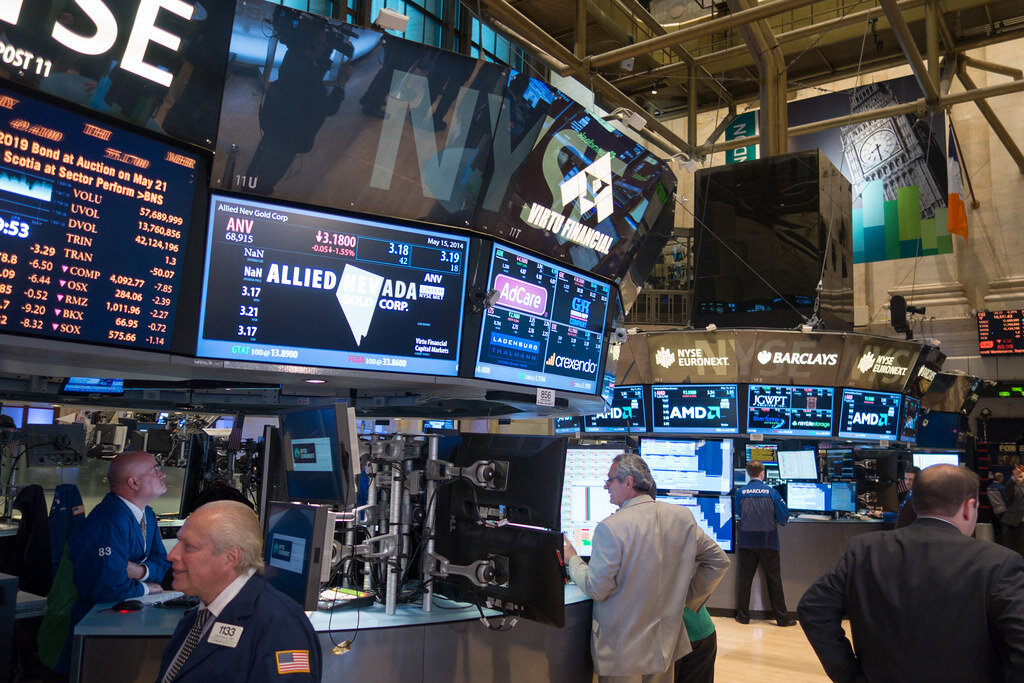
The secondary market is where those securities are traded among investors. This is what most people think of as the "stock market." When you buy shares of a company on an exchange like the New York Stock Exchange (NYSE), you're buying them from another investor, not from the company itself. The company doesn't receive any money from this transaction. This is like buying a used car from its previous owner.
The secondary market is for second-hand securities. Investors trade with each other.
These secondary market trades happen on organized exchanges (like the NYSE or Nasdaq) or Over-the-Counter (OTC). Exchanges have a physical location or a centralized electronic system with strict rules. OTC markets are a decentralized network of dealers who trade directly with one another.
The Key Players
Financial markets are bustling with different participants, each playing a crucial role.
-
Issuers: These are the entities that need capital. They can be corporations selling stocks and bonds or governments issuing bonds to fund public projects.
-
Investors: These are the providers of capital. They can be individuals (often called retail investors) or large institutions like pension funds, insurance companies, and mutual funds (institutional investors).
-
Intermediaries: These are the facilitators. Brokers are agents who execute buy and sell orders on behalf of investors. Exchanges provide the venue and framework for trading to occur in an orderly fashion.
-
Regulators: These are the referees. Government bodies like the Securities and Exchange Commission (SEC) in the U.S. create and enforce the rules to ensure markets are fair, transparent, and efficient, protecting investors from fraud.
What's Being Traded
Investors trade a wide variety of financial instruments, known as asset classes. Here are the four major ones:
Equities
noun
Also known as stocks, equities represent an ownership stake in a public company. When you own a stock, you own a small piece of that business and have a claim on its assets and earnings.
The value of a stock can go up or down based on the company's performance and broader market sentiment.
Bonds
noun
A bond is essentially a loan made by an investor to a borrower (an issuer). The issuer promises to pay the investor periodic interest payments (called coupon payments) over a set period and then return the original amount of the loan (the principal) at a specified date, known as the maturity date.
Bonds are generally considered less risky than stocks.
Commodities
noun
These are basic goods or raw materials. They can be agricultural products like corn and coffee, energy sources like oil and natural gas, or metals like gold and copper. Investors often trade commodities through futures contracts.
Commodity prices are often driven by global supply and demand.
Currencies
noun
This involves the foreign exchange (Forex or FX) market, where national currencies are traded against one another. It's the largest financial market in the world, driven by international trade, tourism, and speculation on exchange rate movements.
Now, let's test your understanding of these foundational concepts.
When a company sells its shares to the public for the very first time in an Initial Public Offering (IPO), where does this transaction take place?
In the context of financial markets, what is the primary role of an 'issuer'?
Understanding these core elements—the structure, the players, and the products—is the first step to making sense of the financial world. They form the bedrock upon which all trading and investment strategies are built.