Trade Show Booth Staffing Essentials
Understanding Trade Show Objectives
Start with Why
Participating in a trade show without clear goals is like setting sail without a map. You might have a good time, but you probably won't end up anywhere useful. Before you book a space, design a booth, or print a single brochure, you need to define what success looks like.
Your objectives are the foundation of your entire trade show strategy. They determine your messaging, your booth activities, and how you'll measure your return on investment. Are you there to generate sales leads? Build brand awareness? Nurture relationships with existing clients? Each goal requires a different approach.
Prior to attending a trade show, the objectives must be defined.
Common objectives fall into a few key categories:
- Lead Generation: This is about collecting contact information from potential customers. The focus is on quantity and, more importantly, quality. You want to connect with people who have a genuine interest in what you offer.
- Brand Awareness: Sometimes, the goal is simply to get your name out there. You want attendees to walk away remembering your brand and what it stands for, even if they aren't ready to buy today.
- Sales: This is the most direct goal: closing deals right on the show floor. It often involves special event-only pricing or demonstrations that push attendees to make a purchase decision.
- Relationship Building: Trade shows are a great place to connect face-to-face with current customers, partners, or even influential media figures. Strengthening these relationships can be just as valuable as finding new leads.
Making Your Goals SMART
It’s not enough to just have a goal. A truly effective objective is one that is clearly defined and trackable. A popular framework for this is SMART.
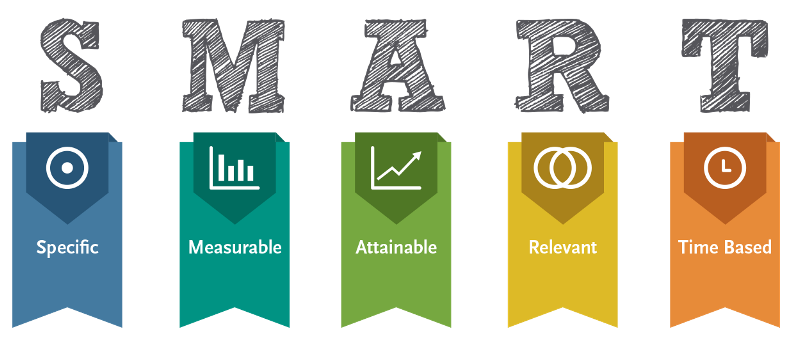
Let's break down what this means for a trade show:
- Specific: Your goal should be unambiguous. Instead of “get more leads,” try “collect leads from decision-makers in the healthcare industry.”
- Measurable: You need a number. How many leads? How many product demos? A goal like “scan 200 attendee badges” is measurable; “talk to a lot of people” is not.
- Achievable: Be realistic. If your team consists of two people, setting a goal to conduct 500 one-on-one demos might be setting yourself up for failure. Look at past results and your available resources.
- Relevant: Does this goal support your broader business objectives? If your company is trying to break into a new market, a relevant goal would be to schedule meetings with potential distributors from that region.
- Time-bound: Your goal needs a deadline. For a trade show, the timeline is usually built-in: “by the end of the third day of the expo.”
A vague goal: Increase brand awareness. A SMART goal: Secure five interviews with industry press and increase our social media follower count by 10% over the three days of the conference.
Measuring Success
How do you know if the time, effort, and money you spent were worth it? This is where your measurable objectives come into play. After the show, you need to track your performance against the goals you set.
Measuring your return on investment (ROI) is crucial. A simple way to start is by comparing the cost of the show to the value of the leads or sales generated. For example, if you spent $10,000 to exhibit and gained 50 qualified leads, the cost per lead is $200. Is that a good number for your business? Knowing your customer lifetime value helps answer this question.
For goals like brand awareness, measurement can be trickier. You can track metrics like website traffic from the geographic area of the show, mentions in social media or the press, and feedback from post-show surveys.
| Objective | How to Measure It |
|---|---|
| Lead Generation | Number of qualified leads collected; Cost per lead. |
| Brand Awareness | Website traffic spikes; Social media mentions; Press clippings. |
| Sales | Revenue from deals closed at the show; Number of units sold. |
| Relationship Building | Number of meetings held with key clients or partners. |
By setting clear goals from the start and diligently tracking them afterward, you transform your trade show participation from a hopeful expense into a strategic investment.
What is the primary reason for defining clear objectives before participating in a trade show?
A company sets a trade show goal to 'Scan the badges of 150 attendees who are decision-makers in the manufacturing sector by the end of the second day.' Which element of the SMART framework is LEAST represented by this goal?