Touch Football Tactics and Skills
Positional Roles
The Engine Room: Middles
In touch football, the middle players are the heart and soul of the team. Think of them as the engine room. Their primary job isn't about scoring flashy tries, but about doing the hard yards that make those tries possible. On attack, they are responsible for driving the team forward, taking the 'hit-up' or 'dump' to gain valuable metres and control the speed of the area. A quick, effective ruck puts the defensive line on the back foot, creating time and space for the playmakers.
Every metre a middle gains straightens the attack and forces the defence to compress. This creates the initial platform. Defensively, they are tireless workers, making the majority of the team's touches. They must communicate constantly, calling the shots and directing the defensive line's movement to shut down attacking plays before they develop. The fitness required for a middle is immense; it's a role of continuous, high-intensity effort with short recovery periods. They are often the first to defend and the first to drive the ball forward in attack.
Playmakers and Pivots: Links
Positioned between the middles and the wings, the links are the primary ball-players and decision-makers. They are the tactical hinges of the team. While the middles create the momentum, the links exploit it. Their job is to read the defensive line, identify weaknesses, and execute plays that unlock scoring opportunities. After a middle player performs a dump, the link steps in as 'first receiver' or 'dummy half' to survey the field.
This is where their skill set shines. Does the defence have a gap? Is the winger defending too close to their link? A link might throw a short pass to their winger, a 'long ball' to stretch the defence, or a to an unmarked player. Defensively, they are crucial. They must decide whether to stay with their opposing link or slide to cover runs from the middles. This positioning is a constant balancing act between covering their direct opponent and supporting the inside defenders.
Finishers and Spacers: Wings
The wingers are the team's finishers. Their primary role on attack is to score tries. To do this, they must be masters of positioning. A winger's main responsibility is to hold the team's width, stretching the defensive line as thin as possible. By staying wide, they create more space in the middle of the field for the links and middles to operate. If a winger creeps in-field too early, they bring their defender with them, 'compressing' the field and making it easier for the defence.
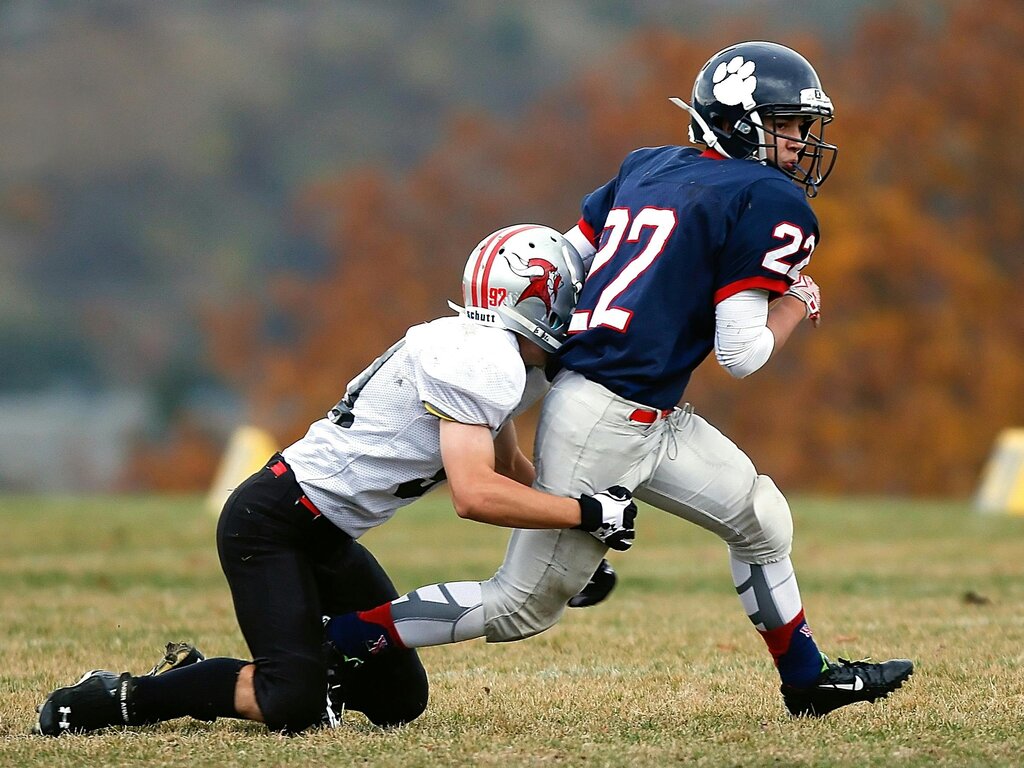
When a play develops, the winger's job is to read the cues from their link and be in the right place at the right time. This often means running hard into a hole, anticipating a cut-out pass, or supporting a line break. They need to be excellent communicators, letting their link know if they are in space or if their defender is out of position. Defensively, they mark the opposition's widest player and must make critical decisions on when to 'jam' in to help their inside defenders or when to stay wide to prevent a long ball.
Team Dynamics
These roles are not performed in isolation. The chemistry between a middle, their link, and their winger is what makes an attack flow. A middle's effective dump directly dictates the quality of the ball the link receives. The link's pass selection depends on the winger's positioning and communication. This symbiotic relationship requires constant talk and non-verbal cues developed over many games together.
Effective communication isn't just shouting; it's a simple call like 'Now!' from a winger who spots a gap, or a look from a link that signals a set play.
Given the high intensity of touch, managing substitutions is a key tactical element. Most teams use 'on the fly' interchanges, where players sub in and out during play without a stoppage. A common strategy is to sub middles more frequently due to their high work rate. A fresh middle entering the game can lift the team's tempo immediately. The interchange box becomes a strategic zone where players communicate what they're seeing on the field to the teammates about to go on, ensuring a seamless transition.
Now, let's test your understanding of these crucial roles.
What is the primary attacking role of a 'middle' player in touch football?
Why is it crucial for a winger to maintain their width on attack?
Understanding how these positions work together is the foundation of advanced touch football strategy. Each role has unique responsibilities, but it's their coordination that turns a group of players into a cohesive and dangerous team.