Top Dinosaur Species and Their Traits
Introduction to Dinosaur Diversity
One Word, Thousands of Species
The word "dinosaur" brings a lot of images to mind, from the towering long-necks to the fearsome sharp-toothed hunters. But these creatures weren't all one big, scaly family living at the same time. Dinosaurs represent a vast and wonderfully diverse group of animals that dominated the planet for over 150 million years during the Mesozoic Era. This immense stretch of time gave evolution plenty of room to experiment, leading to an incredible variety of shapes, sizes, and lifestyles.
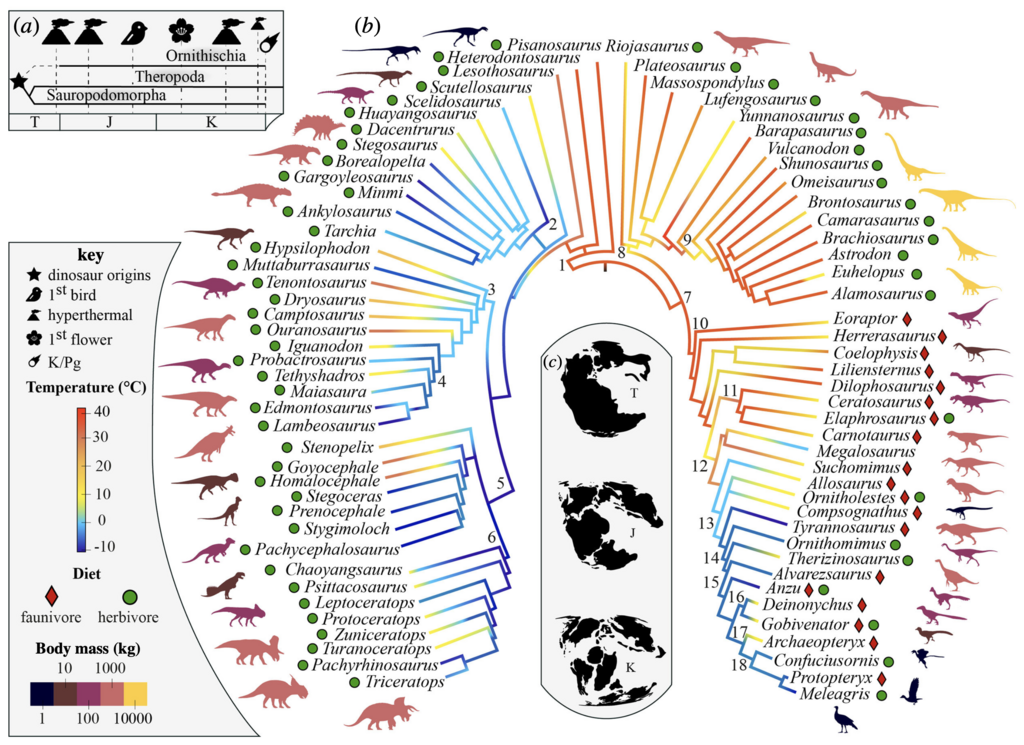
To make sense of this diversity, paleontologists classify dinosaurs into groups based on shared characteristics, much like biologists classify modern animals. It's like building a massive family tree from clues left in ancient bones. One of the most fundamental splits in this tree comes from a surprisingly important part of their anatomy: their hips.
The Great Hip Divide
Early on, dinosaurs branched into two major groups, distinguished by the structure of their pelvis. This might seem like a minor detail, but it reflects a deep evolutionary division that set the stage for all the diversity that followed. The two groups are the Saurischia ("lizard-hipped") and the Ornithischia ("bird-hipped").
Ironically, birds didn't evolve from the "bird-hipped" dinosaurs, but from the "lizard-hipped" line.
In Saurischian dinosaurs, one of the three main pelvic bones, the pubis, points forward, similar to the arrangement in modern lizards. In Ornithischian dinosaurs, the pubis points backward, lying alongside another pelvic bone called the ischium. This arrangement created a more stable, box-like pelvic structure.
This fundamental difference in body plan led these two groups down very different evolutionary paths.
The Three Main Branches
Within these two hip-based groups, we can identify three major clades, or branches, of the dinosaur family tree. The lizard-hipped Saurischia split into two famous lines, while the bird-hipped Ornithischia form the third.
| Clade | Defining Trait |
|---|---|
| Theropoda | Bipedal carnivores (mostly) |
| Sauropodomorpha | Long-necked herbivores |
| Ornithischia | Herbivores with beaks |
Theropoda: This group includes all the meat-eating dinosaurs you can think of, from the agile Velociraptor to the mighty Tyrannosaurus rex. They walked on two legs (bipedal), had sharp teeth, and possessed powerful claws. But the group was more varied than just giant predators; some were small, some were toothless, and some eventually gave rise to modern birds.
Sauropodomorpha: These were the giants of the Mesozoic. Characterized by their incredibly long necks, massive bodies, and pillar-like legs, these dinosaurs were herbivores that browsed on treetops. Brachiosaurus and Diplodocus are classic examples. Their sheer size was a key adaptation for both reaching food and defending against predators.
Ornithischia: This diverse, bird-hipped group was exclusively herbivorous. What unites them is not just their hip structure, but also the presence of a beak-like bone at the front of their mouths called a predentary, perfect for snipping off plants. This clade includes a huge variety of armored dinosaurs like Stegosaurus and Ankylosaurus, horned dinosaurs like Triceratops, and the "duck-billed" hadrosaurs.
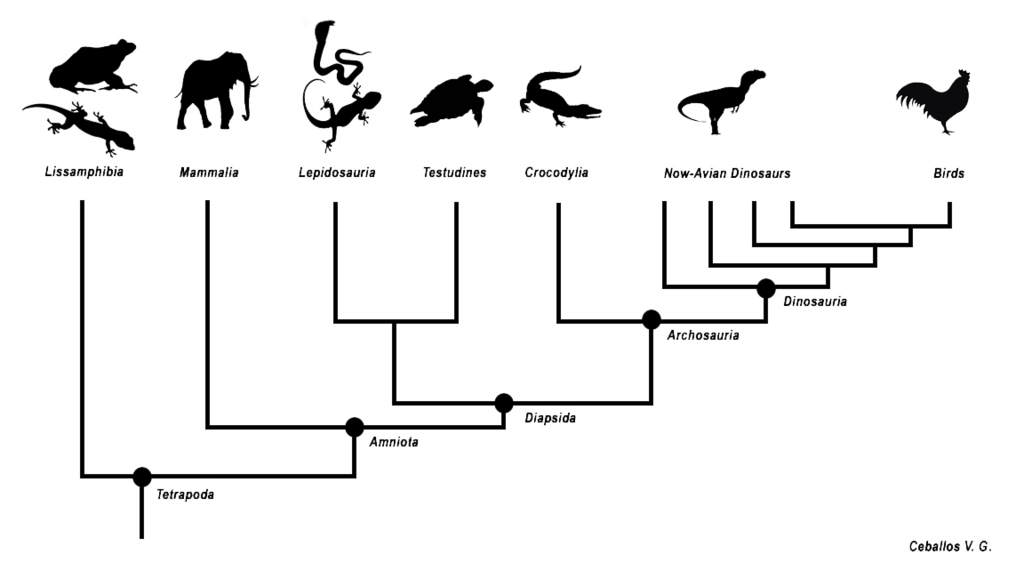
Each of these three groups represents a unique and successful evolutionary strategy. Their diverse body plans allowed them to exploit different foods, habitats, and ways of life. Understanding these major branches is the first step to appreciating the full, spectacular story of the dinosaurs.
Ready to test your knowledge?
What key anatomical feature is used for the most fundamental split in dinosaur classification, dividing them into two major groups?
A paleontologist finds a new dinosaur fossil. It has a beak-like bone at the front of its mouth and a pelvis where the pubis bone points backward. This dinosaur would be classified as a(n) __________.
Grasping these fundamental divisions helps us see dinosaurs not as a monolith, but as a dynamic and varied collection of life forms that adapted and thrived for an immense period of Earth's history.