TON Chairs and the Art of Bentwood
Introduction to Bentwood Furniture
Shaping Wood with Steam
Before the mid-19th century, creating a curve in a piece of wooden furniture usually meant one of two things. A craftsman could carve the shape from a large, solid block of wood, a process that was both wasteful and time-consuming. Or, they could join several small, straight pieces together to approximate a curve. Neither method was ideal. Carving sacrificed the natural strength of the wood grain, while joinery introduced weak points.
Bentwood furniture offered a revolutionary alternative. The technique involves heating solid wood with steam until it becomes pliable. The softened wood is then bent into a desired shape using a mold and clamped in place. As it cools and dries, it hardens into its new form permanently, retaining the full strength of its continuous grain.
This process results in furniture that is remarkably strong yet surprisingly lightweight and elegant.
Early Curves in Furniture
Wood bending itself wasn't a new concept. For centuries, shipbuilders bent massive timbers to form the hulls of ships, and coopers bent staves to make barrels. But applying these ideas to the delicate art of furniture making was a gradual evolution.
In the 18th and early 19th centuries, designers began to experiment more with curved forms to create furniture that was more graceful and ergonomic. Chairs, in particular, benefited from this shift. The classic Windsor chair, with its steam-bent back hoop and spindles, is a prime example of an early, popular bentwood design. These pieces were a departure from the rigid, rectilinear furniture that came before.
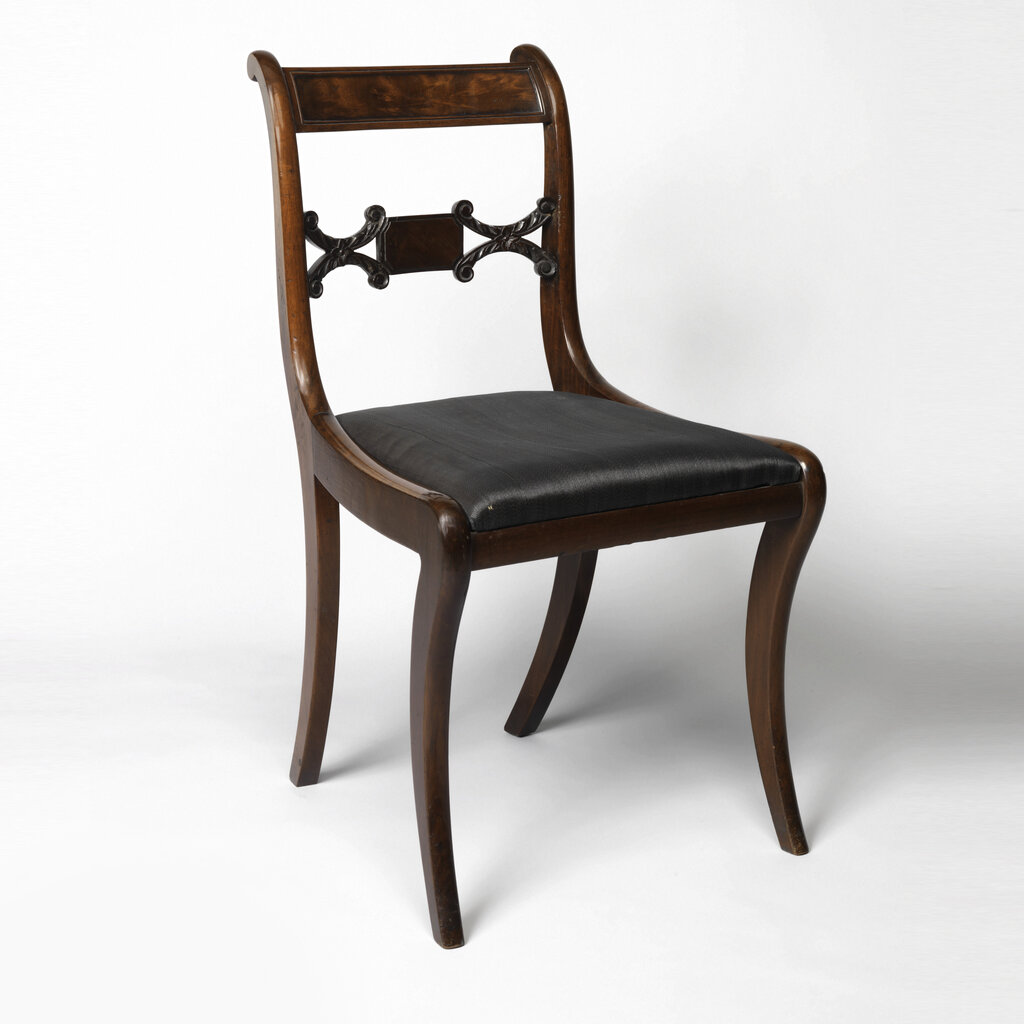
These early bentwood pieces, however, were still crafted on a small scale by skilled artisans. The process was labor-intensive, and the bends were often simple, single-plane curves. The technique showed promise, allowing for comfort and style that were difficult to achieve otherwise, but it hadn't yet been perfected for mass production. It set the stage for the innovations that would soon transform the furniture industry.