T&M Time Capture Excellence
Time & Materials Mechanics
From Hours to Revenue
In a professional services firm like EPI-USE, the journey from a consultant's daily work to the company's bottom line is direct and measurable. When you're staffed on an SAP SuccessFactors implementation project under a Time & Materials (T&M) contract, your time isn't just an activity—it's the product. Each hour you log in a system like OpenAir for client-facing tasks directly translates into revenue. This model is fundamentally different from selling a pre-built software license; here, the expertise delivered over time is what the client purchases.
The core principle at play is a specific form of revenue recognition. Unlike a fixed-fee project where a lump sum is billed for a total scope, T&M revenue is recognized as services are rendered. If you work 40 billable hours this week, the firm can recognize the revenue for those 40 hours in this financial period. This creates a predictable, transparent financial link between consultant activity and the client's invoice. The formula is simple: Billable Hours × Bill Rate = Revenue.
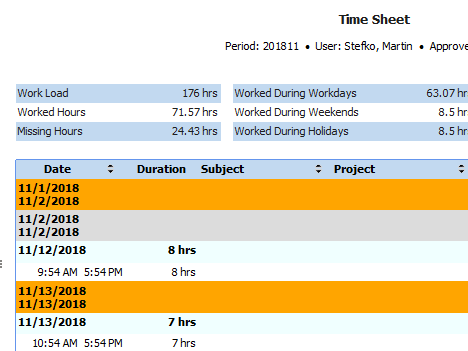
This direct link makes meticulous time tracking a contractual obligation, not just an administrative chore. Invoices sent to clients often include detailed breakdowns of hours worked by each consultant. Any inaccuracies can lead to invoice disputes, payment delays, and damage to the client relationship. Every entry must be defensible and align with the project's statement of work. Your timesheet is an auditable, financial document.
The Great Divide: Billable vs. Non-Billable
Not all work on a project is created equal. Your time is categorized into two buckets: billable and non-billable. Billable hours are spent on tasks that directly advance the client's project, such as configuring the Employee Central module, leading workshops, or developing custom reports. These are the hours the client has agreed to pay for. Everything else falls into the category. This includes internal team meetings, general administrative work, training, or time spent fixing an error made by your team ('rework'). While necessary, non-billable hours do not generate revenue.
| Category | Description | Revenue Impact |
|---|---|---|
| Billable Time | Client-facing work directly related to project deliverables (e.g., configuration, testing support, client meetings). | Directly generates revenue. |
| Non-Billable Time | Internal tasks, training, sales support, or rework. | Does not generate revenue; it is a cost to the firm. |
| Bench Time | Time when a consultant is between projects and not assigned to any billable work. | Represents a significant cost with zero associated revenue. |
Professional services firms live and die by their utilization rate—the percentage of a consultant's total working hours that are billed to a client. A healthy billable-to-non-billable ratio is a key performance indicator for both the individual and the organization. It directly reflects efficiency and profitability.
T&M vs. Fixed-Fee Projects
Understanding the T&M model is clearer when compared to its common alternative: the contract. In a fixed-fee project, the firm agrees to deliver a specific scope of work for a single, pre-determined price. For example, implementing the SAP SuccessFactors Onboarding module for $100,000.
The risk profile is inverted between the two models. In a T&M project, the client assumes more financial risk; if the project scope expands or complexities arise, they pay for the additional hours required to complete the work. In a fixed-fee project, the consulting firm assumes the risk. If the team takes longer than estimated to deliver the agreed-upon scope, those extra hours are non-billable and eat directly into the project's profit margin.
T&M offers flexibility for clients when project requirements are likely to evolve. Fixed-Fee provides budget certainty for a clearly defined scope.
Protecting the Profit Margin
In a T&M model, revenue might seem guaranteed, but profitability is not. The project margin—the difference between the revenue generated and the cost of delivering the service—is influenced by two primary factors: the bill rate and the consultant's cost.
The bill rate is negotiated at the start of the contract and varies based on the consultant's experience level, role, and skills. A senior architect will have a much higher bill rate than a junior analyst. The firm's goal is to maximize the spread between the bill rate and the consultant's loaded cost rate. Accurate time tracking is paramount because every unrecorded billable hour is lost revenue, and every hour spent on non-billable rework directly shrinks the margin.
Learning how man-hours, change orders, and delays affect job cost prepares you for project management and estimating positions that drive revenue for contractors.
Ultimately, for a consultant working on a T&M project, your timesheet is more than just a record of your work. It is the fundamental mechanism that drives revenue, demonstrates value to the client, and secures the profitability of the engagement.
Under a Time & Materials (T&M) contract, what is the direct formula used to calculate revenue?
A consultant spends 8 hours on a project: 5 hours developing a client-requested report, 2 hours attending an internal company-wide meeting, and 1 hour fixing a configuration error they made the previous day (rework). How many hours are typically considered billable to the client?