Tin Extraction from Cassiterite
Introduction to Tin and Cassiterite
The Story of Tin
Tin is a chemical element with the symbol Sn and atomic number 50. You've likely encountered it without even realizing. It's a soft, silvery-white metal that is highly resistant to corrosion. This resistance is why it's often used as a protective coating for other metals, like in tin-plated steel cans.
One of tin's most useful properties is its malleability. It can be hammered or pressed into thin sheets without breaking. It also has a low melting point, which makes it easy to work with and combine with other metals to form alloys.
Alloy
noun
A metal made by combining two or more metallic elements, especially to give greater strength or resistance to corrosion.
A Metal Through the Ages
Tin's role in human history is immense. Its discovery more than 5,000 years ago ushered in a new era: the Bronze Age. By adding a small amount of tin to copper, early metallurgists created bronze, an alloy much harder and more durable than either of its components. This breakthrough transformed societies, leading to superior tools, weapons, and armor.
Another important tin alloy is pewter, which is mostly tin mixed with small amounts of copper and antimony. For centuries, pewter was used to make plates, cups, and other household items before being largely replaced by pottery and glass.
From Ore to Metal
Tin is rarely found as a pure, native element in nature. Instead, it must be extracted from minerals known as ores. The primary ore for tin is a mineral called cassiterite.
Ore
noun
A naturally occurring solid material from which a metal or valuable mineral can be extracted profitably.
Cassiterite is a tin oxide mineral. Chemically, it's quite simple.
Physically, cassiterite is very dense and hard. Its color can range from black or reddish-brown to yellow. These hard, heavy crystals often accumulate in riverbeds and streams after eroding from their source rock, forming what are known as placer deposits.
Where in the World is Tin?
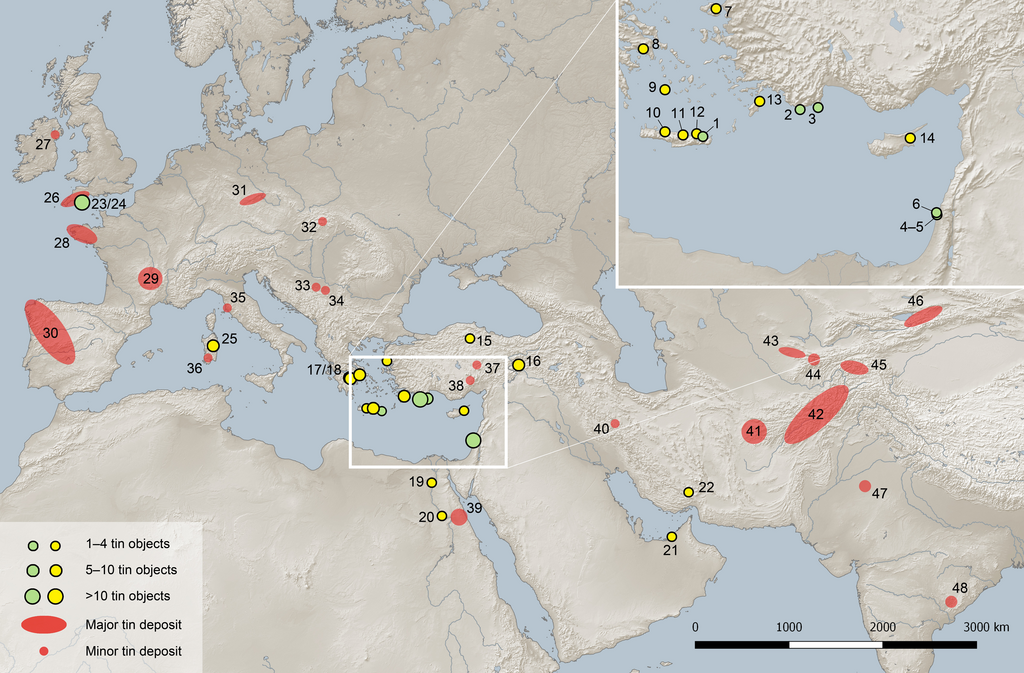
Cassiterite deposits are found in specific regions across the globe. For centuries, the main sources were in Cornwall, England, and the Erzgebirge mountains in Germany. Today, the landscape of tin production has shifted dramatically.
Most of the world's tin now comes from a wide belt in Southeast Asia and parts of South America. China, Indonesia, and Myanmar are the largest producers.
| Country | Recent Annual Production (approx. tonnes) |
|---|---|
| China | 85,000 |
| Indonesia | 80,000 |
| Myanmar | 54,000 |
| Peru | 18,000 |
| Bolivia | 17,000 |
| Brazil | 15,000 |
Understanding what tin is and where it comes from is the first step. The next is to learn how we get from a dark, heavy rock like cassiterite to the shiny metal used in countless applications.
Let's check your understanding of these fundamental concepts about tin.
What is the primary ore from which tin is extracted?
The historical period known as the Bronze Age is named for the creation of bronze, which is an alloy of copper and what other metal?
Now that you've grasped the basics of tin and its primary ore, you're ready to explore how this crucial metal is extracted and refined for modern use.