Tijuana-San Diego Economic Partnership
Introduction to Binational Economics
When Economies Are Neighbors
Think about two towns right next to each other, but in different countries. People, ideas, and money flow back and forth across the border every day. Workers might live in one country and commute to the other. Shoppers might cross over for better prices or different products. This special relationship is the focus of binational economics.
Binational Economics
noun
The study of the economic interactions and interdependence between two neighboring countries, particularly in their border regions.
It’s more than just a tally of imports and exports. It’s about how two distinct economies become intertwined, creating a single, larger economic zone. This interdependence can make both countries more resilient and prosperous. When one side thrives, the other often does too.
The Principles of Cross-Border Trade
At its heart, trade between neighboring countries works on a simple principle: do what you do best, and trade for the rest. This idea is called comparative advantage. Even if one country could make everything more cheaply, it still makes sense to specialize in what it produces most efficiently and import other goods. This specialization lowers costs and increases the variety of goods available for everyone.
Imagine Country A has a climate perfect for growing avocados, while neighboring Country B has factories skilled at producing electronics. Instead of struggling to grow avocados in greenhouses, Country B can focus on making phones and TVs. Country A does the opposite. They trade, and both end up with more avocados and more electronics than they could have produced on their own.
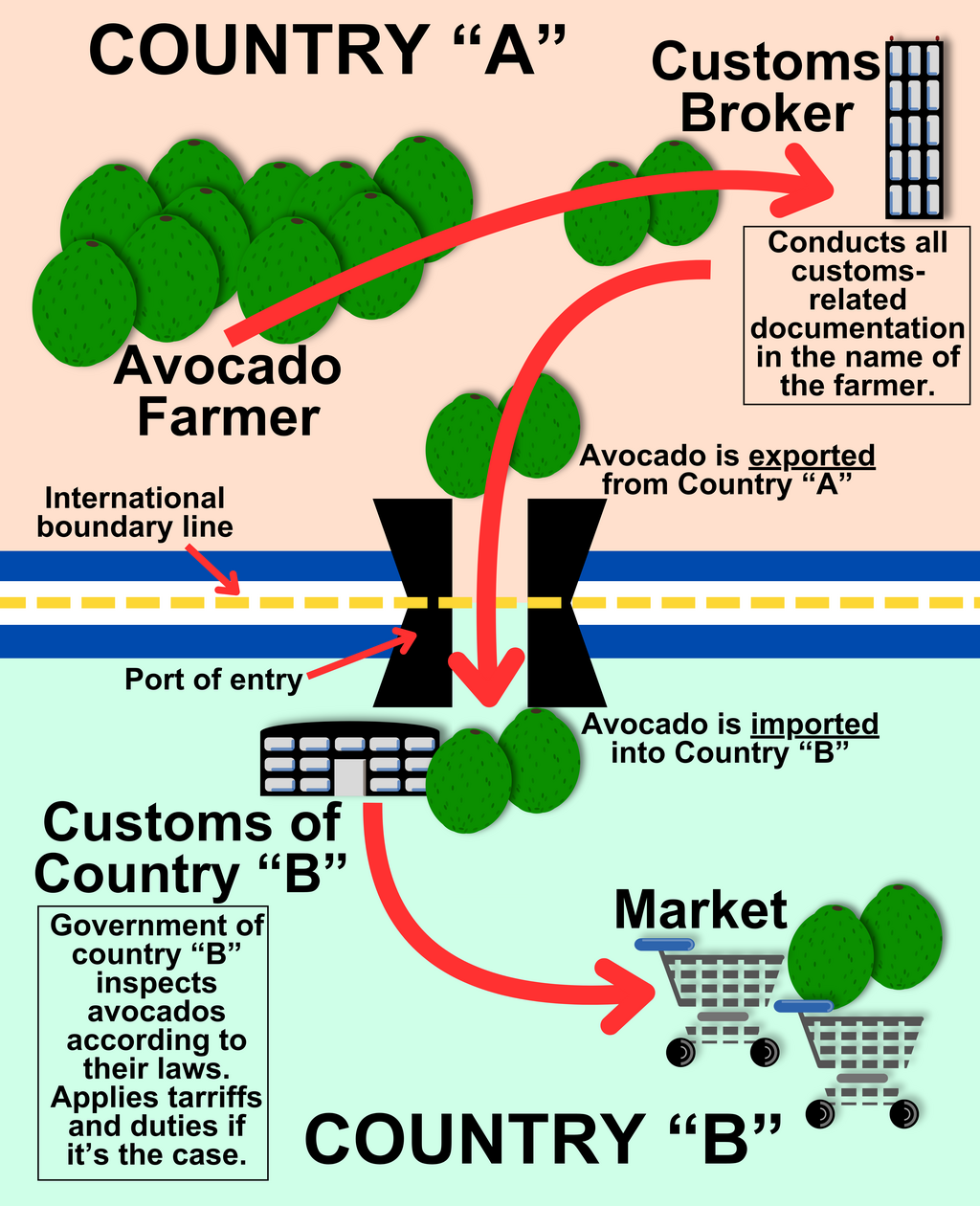
This flow isn't just about finished products. It also includes raw materials, components for manufacturing, and services like tourism and banking. The easier it is for these things to cross the border, the stronger the economic ties become.
Building Things Together
In today's global economy, many products aren't made in just one country. Instead, they are built through integrated supply chains that span borders. A single item, like a car or a medical device, might cross back and forth multiple times during production.
Think of it as a cross-border assembly line. A company might design a product in Country A, source raw materials from Country B, assemble components back in Country A, and then send the final product to Country B for packaging and distribution. Each step is done where it is most cost-effective or where the specialized skills exist.
This integration makes businesses on both sides of the border more competitive. They can tap into a wider pool of talent, resources, and suppliers, ultimately creating better products at lower prices.
The Role of Policy
Binational economic relationships don't just happen on their own. They are shaped by government policies. Trade agreements, tariffs, customs procedures, and infrastructure investments all play a crucial role.
Policies that make cross-border movement easier can supercharge a binational economy. For example, a trade agreement that eliminates tariffs (taxes on imported goods) makes it cheaper to move parts and products back and forth. Investing in modern, efficient border crossings reduces wait times, saving businesses time and money. On the other hand, complicated customs rules or high tariffs can act like a brake, slowing down trade and making supply chains less efficient.
Think of it this way: good policy builds bridges, both literally and figuratively. Bad policy builds walls.
The key is for both countries to coordinate. When regulations are aligned and infrastructure is planned jointly, the economic region can function as a single, powerful unit, attracting investment and creating jobs that might not exist otherwise.
Ready to test your understanding of these core concepts?
What is the primary characteristic of a binational economic zone?
The principle that countries should 'do what they do best and trade for the rest' is known as _________.
Understanding these foundations—trade, integrated supply chains, and the role of policy—is the first step to analyzing the powerful economic engine created when two countries work together across a shared border.