Tidal Power Energy Storage and Hydrogen Systems
Tidal Energy Basics
The Pull of the Tides
Twice a day, all over the world, the oceans rise and fall. This rhythmic movement is the tide, and it's driven by the gravitational pull of the moon and, to a lesser extent, the sun. As Earth rotates, these celestial bodies pull on the planet's water, creating bulges that result in high and low tides.
The energy behind this massive movement of water is immense. Unlike solar or wind power, which depend on weather conditions, the tides are incredibly predictable. We know exactly when high and low tides will occur for centuries into the future. This reliability makes tidal energy a very attractive source of renewable power.
Harnessing the Current
Tidal power generation is all about converting the kinetic energy of moving water into electricity. As the tide flows in or out, it creates strong currents. By placing turbines in the path of these currents, we can capture their energy. The moving water spins the turbine blades, which in turn drive a generator to produce electricity.
These turbines convert the energy from flowing or falling water into mechanical power, which is then transformed into electrical energy using generators.
There are two main approaches to harnessing this power: tidal barrages and in-stream turbines.
A tidal barrage is essentially a large dam built across a river estuary or bay. As the tide rises, gates in the barrage open, allowing the incoming water to fill the basin. At high tide, the gates are closed, trapping the water. Once the tide on the other side has dropped, the stored water is released through turbines, generating electricity.
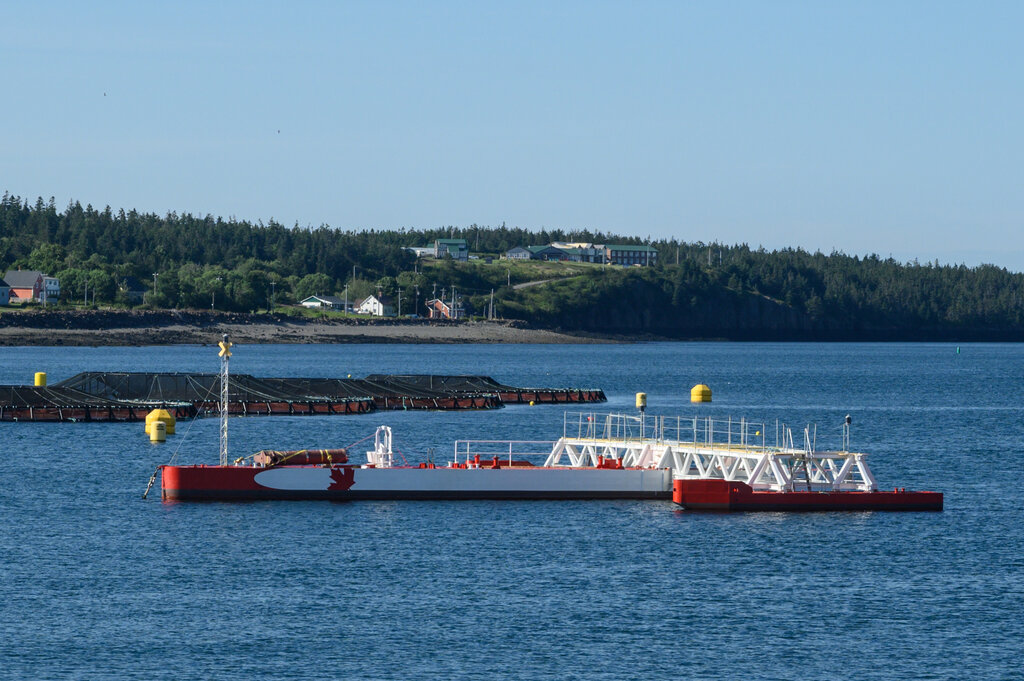
The other method uses tidal stream generators, which are like underwater wind turbines. These devices are placed directly into fast-flowing tidal currents. The moving water spins the blades of the turbine, generating power without the need for a large dam structure. They can be fixed to the seabed or mounted on floating platforms.
Weighing the Options
Like any energy source, tidal power has both benefits and drawbacks. Its biggest advantage is its predictability. This allows grid operators to know exactly how much power will be generated and when, making it easier to manage the electricity supply.
However, the challenges are significant. Building tidal energy projects, especially large barrages, is extremely expensive. There are also only a limited number of locations in the world with strong enough tides to make power generation feasible. Furthermore, constructing large dams in estuaries can have a major impact on marine ecosystems, affecting fish migration and local habitats. In-stream turbines have a smaller footprint but can still pose risks to marine life.
| Advantages | Challenges |
|---|---|
| Highly predictable and reliable | High initial construction costs |
| Long lifespan (barrages can last 100+ years) | Limited number of suitable locations |
| High power density compared to wind or solar | Potential negative impact on marine ecosystems |
| Zero greenhouse gas emissions during operation | Maintenance can be difficult and expensive |
What is the primary driver of ocean tides?
Which of the following describes the main advantage of tidal power compared to solar and wind power?
Understanding these fundamentals is the first step in seeing how tidal power can fit into a larger, more complex energy system.