Thyroid Function and Metabolic Regulation
Endocrine System Basics
The Body's Wireless Network
Your body has two major systems for communication and control: the nervous system and the endocrine system. Think of the nervous system as a high-speed fiber-optic network, sending instant, targeted messages through nerves. The endocrine system, on the other hand, is like a wireless broadcast network. It sends its messages far and wide, using chemical messengers called hormones that travel through the bloodstream.
This long-distance intercellular communication, coordination, and control are critical for homeostasis, and it is the fundamental function of the endocrine system.
These hormones are produced by a collection of glands and organs. Unlike exocrine glands (like salivary glands) that use ducts to deliver their products, endocrine glands are ductless. They release hormones directly into the bloodstream, which then carries them to target cells throughout the body. This process is slower than a nerve impulse but has longer-lasting effects, regulating everything from your growth and metabolism to your mood and sleep cycle.
Hormone
noun
A chemical substance produced in the body that controls and regulates the activity of certain cells or organs.
The Major Glands
The endocrine system is made up of several glands, each with a specific job. Think of them as specialized factories, each producing unique hormones to manage different aspects of your body's operations.
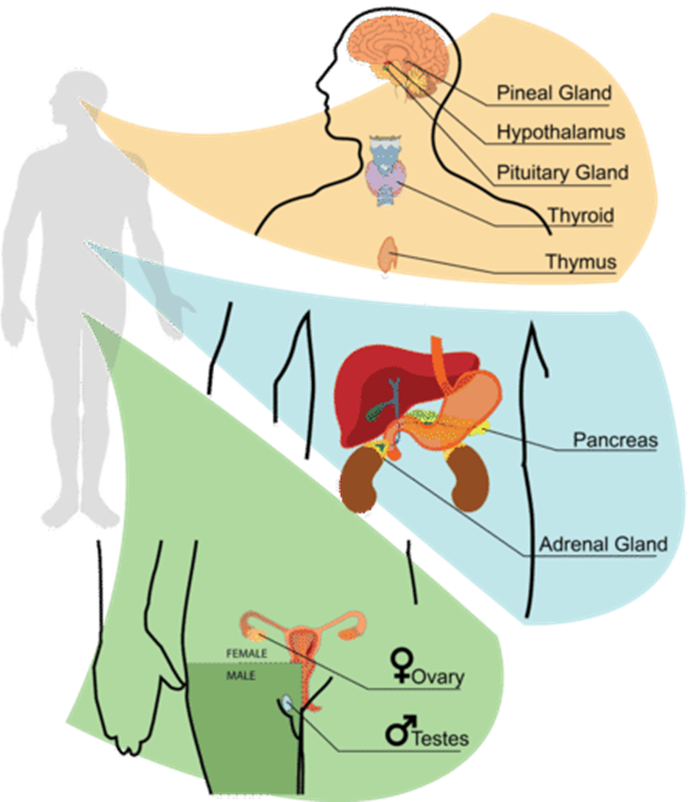
While there are many glands, a few key players do most of the heavy lifting. The brain houses the command center, and other glands are located throughout the torso.
| Gland | Location | Primary Role |
|---|---|---|
| Hypothalamus | Brain | Links the nervous and endocrine systems; controls the pituitary gland. |
| Pituitary Gland | Brain | The "master gland"; regulates many other endocrine glands. |
| Thyroid Gland | Neck | Controls the body's metabolism. |
| Adrenal Glands | On top of kidneys | Manages stress response by releasing adrenaline and cortisol. |
| Pancreas | Abdomen | Regulates blood sugar levels with insulin and glucagon. |
| Ovaries/Testes | Pelvic region | Produce reproductive hormones like estrogen and testosterone. |
How Hormones Work
Hormones are incredibly precise. Although they travel everywhere the blood goes, they only affect specific "target cells." These cells have receptors that fit a particular hormone perfectly, like a key fits a lock. When a hormone binds to its receptor, it triggers a change inside the cell, telling it what to do.
To prevent hormone levels from getting too high or too low, the body uses a process called a negative feedback loop. It's similar to how a thermostat controls the temperature in your house. When the room gets too warm, the thermostat signals the air conditioner to turn on. Once the room cools to the right temperature, the thermostat shuts the AC off. The endocrine system works the same way to maintain a stable internal environment, a state known as homeostasis.
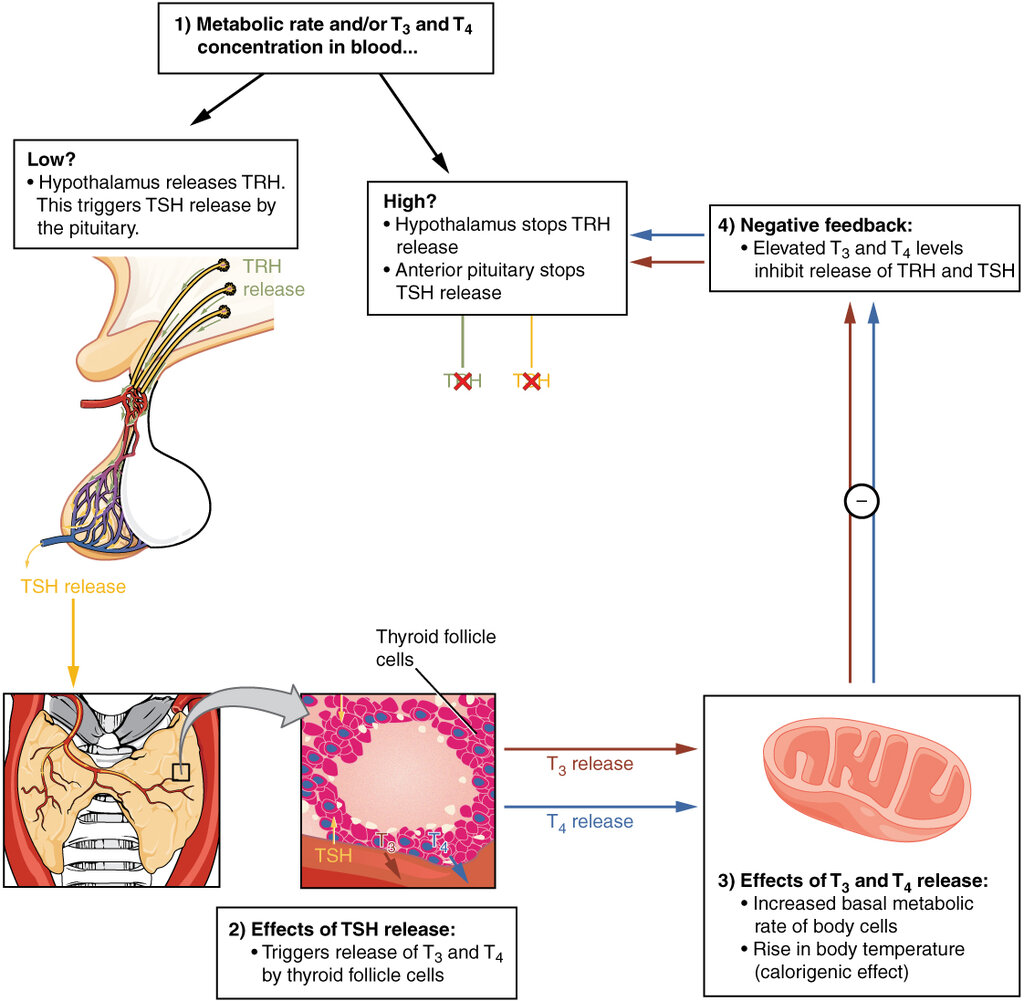
For example, the hypothalamus might sense that hormone levels are low and signal the pituitary gland to release a stimulating hormone. This hormone then tells another gland, like the thyroid, to produce its hormone. As the level of thyroid hormone in the blood rises, the hypothalamus and pituitary detect this increase and stop sending their signals. This elegant system ensures that hormone levels stay within a narrow, healthy range.
Spotlight on the Thyroid
The thyroid is a butterfly-shaped gland located in the front of your neck, just below the Adam's apple. Though small, it has a massive impact on your health. Its primary job is to regulate your body's metabolism, which is the process of converting the food you eat into energy.
The hormones produced by the thyroid influence nearly every cell in your body. They help control how fast your heart beats, how deeply you breathe, and your body temperature. They also play a crucial role in the growth and development of the brain, especially in infants and children.
The thyroid doesn't act alone. It takes its orders from the pituitary gland, which in turn is controlled by the hypothalamus. This chain of command ensures your metabolism runs smoothly, speeding up or slowing down as needed to keep your body in balance.
Now, let's test your understanding of the body's chemical messaging system.
How does the endocrine system's communication method primarily differ from the nervous system's?
The 'lock and key' analogy is used to describe how...
Understanding the endocrine system is key to appreciating how your body maintains balance day in and day out.