Three Statement Financial Modeling
Financial Statements
The Three Core Financial Statements
Every business tells a story through its numbers. To understand that story, you need to read its financial statements. These documents provide a structured overview of a company's financial health and performance. Think of them not just as records, but as the essential tools for making smart business decisions.
The three key financial statements work together. The Balance Sheet, Income Statement, and Cash Flow Statement form a complete picture of profitability, stability, and cash management.
Let's break down each of these three core statements.
The Income Statement
The income statement, also known as the profit and loss (P&L) statement, shows a company's financial performance over a specific period, like a quarter or a year. If a balance sheet is a snapshot, the income statement is a movie, showing what happened between two points in time.
Its structure is straightforward. It starts with total revenue and subtracts all the costs and expenses incurred to generate that revenue. The final result is the company's net income, or profit.
| Component | Description |
|---|---|
| Revenue | The total amount of money generated from sales of goods or services. |
| Cost of Goods Sold (COGS) | Direct costs tied to the production of goods sold. |
| Gross Profit | Revenue minus COGS. It shows how efficiently a company produces its goods. |
| Operating Expenses | Costs not directly related to production, like salaries, marketing, and rent. |
| Operating Income | Gross profit minus operating expenses. |
| Net Income | The final profit after all expenses, including taxes and interest, are deducted. This is the famous "bottom line." |
A rising net income over several periods is a good sign, showing the company is growing its profitability.
The Balance Sheet
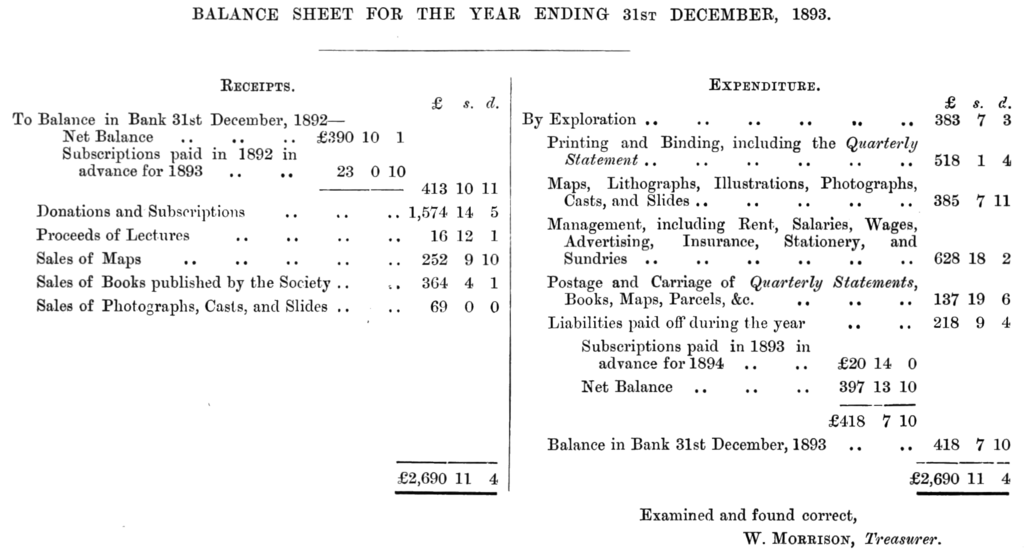
The balance sheet offers a snapshot of a company's financial position at a single point in time. It reveals what a company owns (assets), what it owes (liabilities), and the owners' stake (equity).
The structure of the balance sheet is based on a fundamental equation that must always, as the name implies, balance.
Let's look at each component:
- Assets are economic resources the company owns. They are usually listed in order of liquidity, starting with current assets like cash and inventory that can be converted to cash within a year. Non-current assets include long-term items like property, plant, and equipment.
- Liabilities are what the company owes to others. Current liabilities, like accounts payable, are due within one year. Non-current liabilities are long-term debts, such as a business loan.
- Equity represents the owners' residual claim on assets after deducting liabilities. It includes things like the initial capital invested by owners and the accumulated profits, known as retained earnings.
The Cash Flow Statement
A company can be profitable on its income statement but still run out of cash. The cash flow statement explains how cash moved in and out of the company during a period. It bridges the gap between the income statement and the balance sheet by tracking the actual cash transactions.
It's broken down into three main activities:
1. Operating Activities: Cash generated from the company's main business operations. This is often seen as the most important section, as it shows if a company can generate enough cash to sustain itself.
2. Investing Activities: Cash used for or generated from investments. This includes buying or selling long-term assets like equipment or other businesses.
3. Financing Activities: Cash flow between the company and its owners and creditors. This includes issuing stock, paying dividends, or taking out loans.
The sum of the cash flows from these three activities equals the net change in cash for the period. This final number tells you whether the company's cash balance increased or decreased.
Putting It All Together
These three statements are not independent; they are deeply interconnected and tell a cohesive story. Understanding how they link together is essential for building any financial model.
Here's the flow:
- Net Income from the income statement is the starting point for the cash flow statement. It also flows into the balance sheet under equity as an increase in retained earnings.
- Changes in balance sheet items, such as accounts receivable or inventory, are used to calculate cash flow from operations.
- The ending cash balance on the cash flow statement becomes the cash balance on the current period's balance sheet.
By analyzing these statements together, you get a complete and dynamic view of a company's financial story. Mastering them is the first step to building robust financial models.
Which financial statement provides a snapshot of a company's assets, liabilities, and equity at a single point in time?
The primary result of the Income Statement, calculated by subtracting all costs and expenses from total revenue, is known as: