Thomas Hobbes's Leviathan Explained
Introduction to Hobbes
The Man and His Times
Thomas Hobbes was an English philosopher who lived from 1588 to 1679. His life spanned a period of intense political and social upheaval in England, and these experiences profoundly shaped his thinking. He wasn't just a philosopher in an ivory tower; he was a tutor, a traveler, and a sharp observer of the world around him.
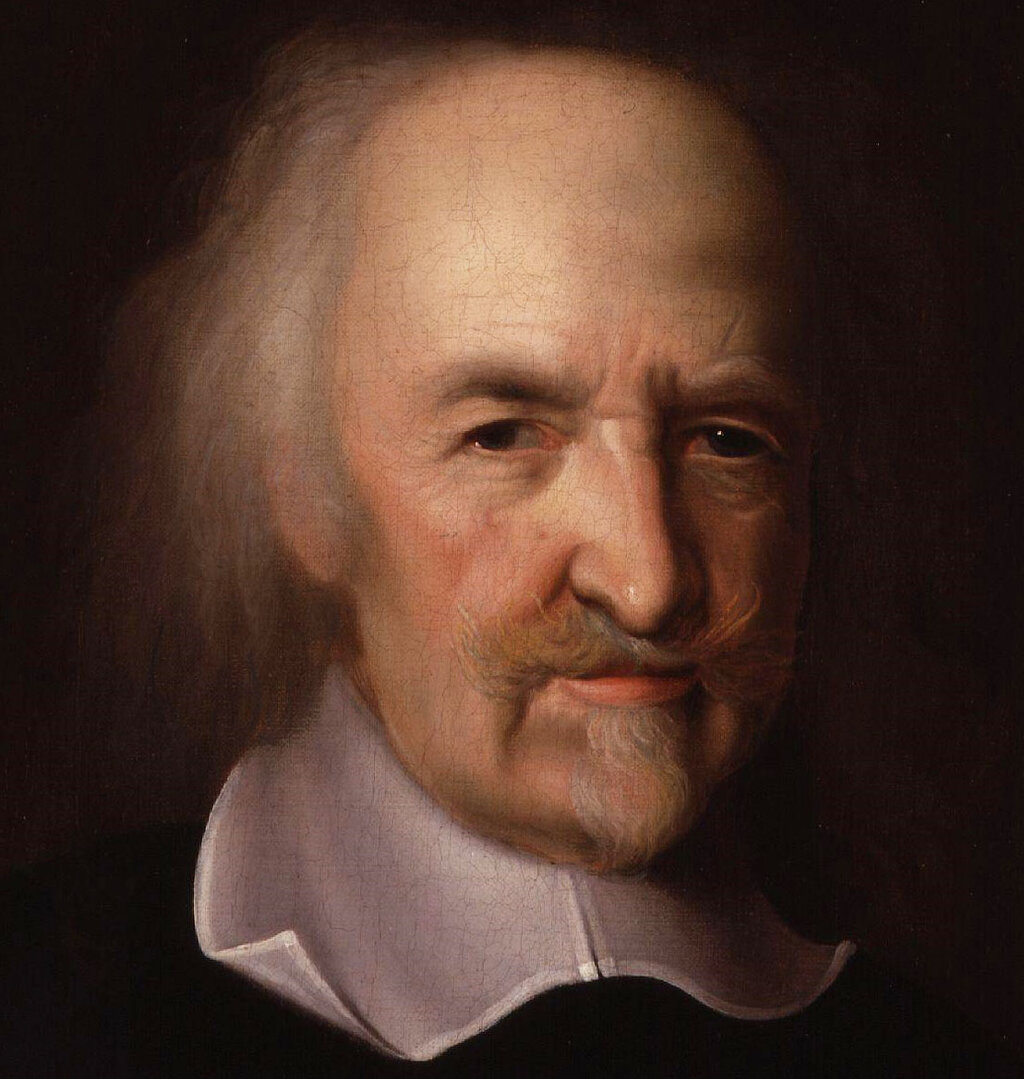
Born in a small village in Wiltshire, England, Hobbes received an education at Oxford University. He later worked for the influential Cavendish family, which gave him the opportunity to travel across Europe and meet leading thinkers of his day, including Galileo Galilei. These encounters exposed him to new scientific and philosophical ideas that challenged traditional beliefs.
A World Turned Upside Down
To understand Hobbes, you have to understand the English Civil War (1642–1651). This wasn't a distant conflict for him; it was the defining event of his life. The war was a brutal struggle between the supporters of King Charles I and the supporters of Parliament. It tore the country apart, leading to the king's execution and years of instability.
Hobbes saw firsthand what happens when political order breaks down. He witnessed chaos, fear, and violence on a massive scale. This experience led him to ask a fundamental question: How can we prevent society from collapsing into a "war of all against all"? He fled to Paris during the conflict, fearing for his safety due to his royalist sympathies.
The chaos of the English Civil War convinced Hobbes that a strong, undivided government was essential for peace and security.
Hobbes's Major Works
Hobbes's most famous work is Leviathan, published in 1651. The book lays out his political philosophy, arguing that people must give up some of their freedoms to a sovereign authority—like a king or a government—in exchange for protection and order. He wasn't necessarily a fan of kings, but he was a fan of stability.
The title Leviathan comes from a monstrous sea creature mentioned in the Bible, symbolizing the immense power Hobbes believed the state must have to keep human nature in check. While Leviathan is his best-known book, it was part of a larger philosophical project. Other important works include De Cive (On the Citizen) and The Elements of Law, Natural and Politic, which explore similar themes about government, law, and human society.
Let's review what you've learned about Hobbes and his world.
Which major historical event was the most significant influence on Thomas Hobbes's political philosophy, as described in the text?
What is the central argument of Hobbes's most famous book, Leviathan?
Hobbes's writings were a direct response to the turmoil he lived through, offering a powerful argument for why we need government in the first place.