Third Worldism's Legacy and Evolution
Origins and Definition
The World in Three Parts
During the Cold War, the world was often divided into three categories. The "First World" referred to the United States and its capitalist allies in Western Europe and beyond. The "Second World" included the Soviet Union and its communist allies.
So, what was the "Third World"? Originally, the term wasn't about economic status. It was a political definition for nations that refused to align with either of the two major power blocs. These countries, many of them newly independent, chose a path of neutrality in the East-West conflict.
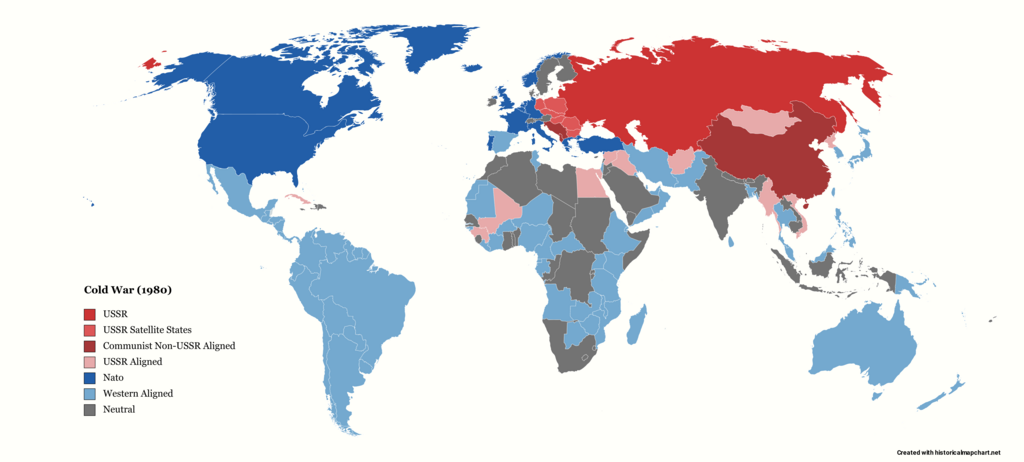
This idea of a third way gave rise to a political ideology known as Third Worldism. It was a shared project among nations in Asia, Africa, and Latin America to assert their independence and pursue their own interests, free from the influence of the superpowers.
A Wave of New Nations
The mid-20th century saw the collapse of old European empires. After World War II, a wave of decolonization swept across the globe, leading to the birth of dozens of new countries. These nations emerged from colonial rule with a strong desire to forge their own destinies.
They were wary of the Cold War rivalry between the U.S. and the USSR. They saw it as a new form of imperialism, where powerful countries sought to control weaker ones. Instead of choosing a side, they sought solidarity with one another.
Decolonization
noun
The process by which a colony becomes independent of its colonizing country.
This shared experience of colonialism and the struggle for independence became the foundation for a new political movement.
The Non-Aligned Movement
The political expression of Third Worldism was the Non-Aligned Movement (NAM), founded in 1961. Leaders from countries like India, Egypt, Ghana, Indonesia, and Yugoslavia brought together nations that wanted to remain independent of the Cold War's geopolitical chess game.
For these countries, the primary global conflict wasn't between the East and West. It was between the "North" and the "South"—the industrialized, wealthy nations of the northern hemisphere and the poorer, developing nations, many of which were in the southern hemisphere.
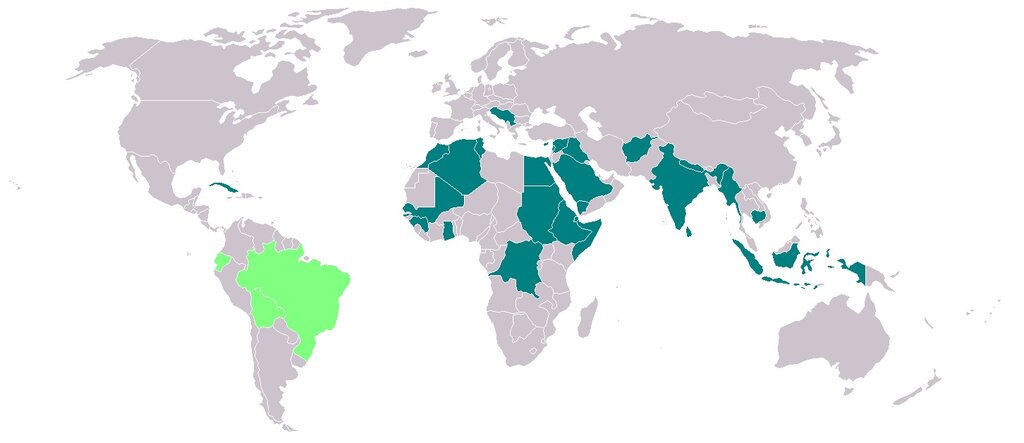
They argued that the international economic system was rigged in favor of the former colonial powers. Third Worldism, therefore, was not just about political neutrality. It was also a call for economic justice and a rebalancing of global power.
The North-South Dialogue refers to the process through which the developing and newly independent nations of the “third world,” predominantly in Asia, Africa, and Latin America, engaged the industrialized countries of North America and Western Europe in negotiations over changes to the international economic system during the 1970s.
By banding together, these nations hoped to create a powerful bloc that could advocate for their collective interests on the world stage.
What was the original meaning of the term "Third World" when it was coined during the Cold War?
The political ideology of Third Worldism found its main expression in which organization, founded in 1961?