Thermodynamics Laws Revision for Engineers
Thermodynamic Systems
Defining the System
Thermodynamics is the study of energy, heat, and work. To make sense of it, we first need to focus our attention. We can't study the entire universe at once, so we isolate the part we're interested in. This part is called the system.
Everything else that can interact with our system is called the surroundings. The line, real or imaginary, that separates the system from its surroundings is the boundary. Think of a cup of hot coffee. The coffee itself is the system. The cup, the air around it, and the table it sits on are the surroundings. The inner surface of the cup is the boundary.
The boundary is crucial because it determines what the system can exchange with its surroundings. This leads to three fundamental types of systems.
Types of Systems
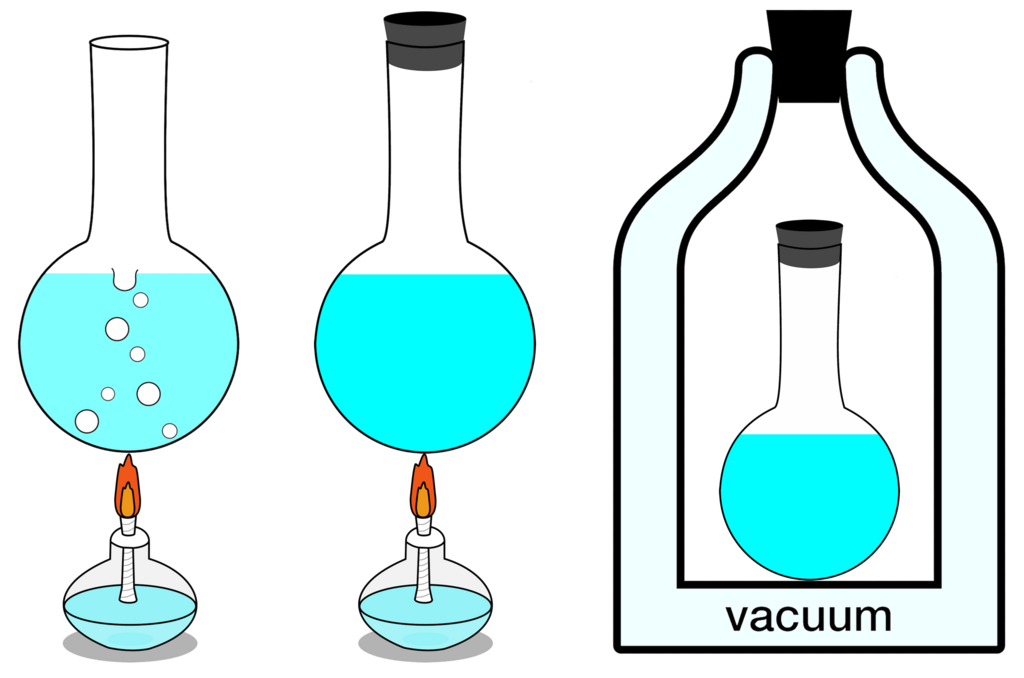
Systems are classified based on what can cross their boundaries: matter and energy.
An open system can exchange both matter and energy with its surroundings. A pot of boiling water on a stove is a perfect example. It gains energy from the stove's heat and loses matter as steam escapes into the air.
A closed system can exchange energy but not matter. If you put a tight lid on that pot of boiling water, steam (matter) can no longer escape, but heat (energy) can still transfer through the pot to the surrounding air.
An isolated system cannot exchange either matter or energy with its surroundings. A perfectly sealed, perfectly insulated thermos is the classic example. In reality, no system is perfectly isolated, but it's a useful concept for understanding thermodynamic principles.
State and Equilibrium
To describe a system, we use its properties. Macroscopic properties like temperature, pressure, and volume are called state properties or state variables. They tell us the condition, or state, of the system at a specific moment. For example, we could describe a system of gas in a container by saying its pressure is 1 atmosphere, its volume is 2 liters, and its temperature is 25°C.
These properties are independent of the path the system took to reach its current state. It doesn't matter if the gas was heated or compressed to get there; its current state is defined only by its current properties.
A system is in thermodynamic equilibrium when its state properties are constant and uniform throughout the system. Nothing is changing.
This means a few things have to be true at once:
- Thermal equilibrium: The temperature is the same everywhere in the system. There are no hot or cold spots.
- Mechanical equilibrium: The pressure is uniform. There are no unbalanced forces causing parts of the system to move.
- Chemical equilibrium: The chemical composition is stable and not undergoing any net change.
When a system is in equilibrium, its properties are well-defined and can be described with a single value for temperature, a single value for pressure, and so on. This stable state is the starting point for analyzing most thermodynamic processes.
In thermodynamics, what is the term for the specific part of the universe that is the focus of study?
A sealed can of soda is placed in a refrigerator. From a thermodynamic perspective, what type of system is the can of soda?