Theravada Buddhism Unveiled
Introduction to Theravada Buddhism
The School of the Elders
Theravada Buddhism is the oldest surviving branch of Buddhism. The name itself, in the Pali language, means "The Way of the Elders." It's a direct reference to the original disciples of the Buddha, whose teachings Theravada aims to preserve in their purest form. Followers of this school believe its doctrines come directly from the collective memory of these first-generation monks.
This tradition traces its roots to the Third Buddhist Council, held around 250 BCE in India. During this meeting, a group of monks committed to codifying and preserving the Buddha's original teachings, resisting any new interpretations or additions. This conservative approach became the hallmark of Theravada.
Core Teachings
The central goal in Theravada is personal liberation from suffering, or dukkha. This is achieved by following the path laid out by the Buddha, focusing on self-discipline, meditation, and wisdom. The ideal figure is the arahant, a person who has attained enlightenment and escaped the cycle of rebirth, or samsara.
arahant
noun
In Theravada Buddhism, an individual who has attained full enlightenment, peace, and freedom from the cycle of rebirth (samsara).
The scriptures of Theravada Buddhism are collected in the Pali Canon, known as the Tipiṭaka, which means "Three Baskets." These texts are considered the most authentic record of the Buddha's words.
| Basket (Piṭaka) | Content |
|---|---|
| Vinaya Piṭaka | The code of conduct and disciplinary rules for monks and nuns. |
| Sutta Piṭaka | The collection of the Buddha's discourses and sermons. |
| Abhidhamma Piṭaka | A systematic analysis of Buddhist philosophy and psychology. |
Where Theravada Flourished
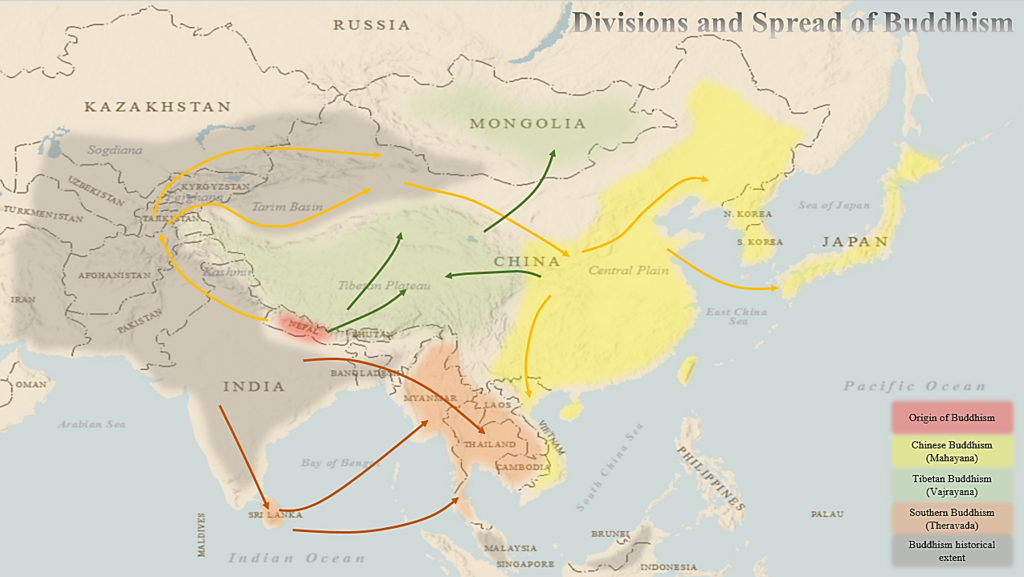
From its origins in India, Theravada Buddhism spread south. Missionaries, most notably the son of Emperor Ashoka, brought the teachings to Sri Lanka, which became a vital center for the tradition. From there, it expanded into Southeast Asia.
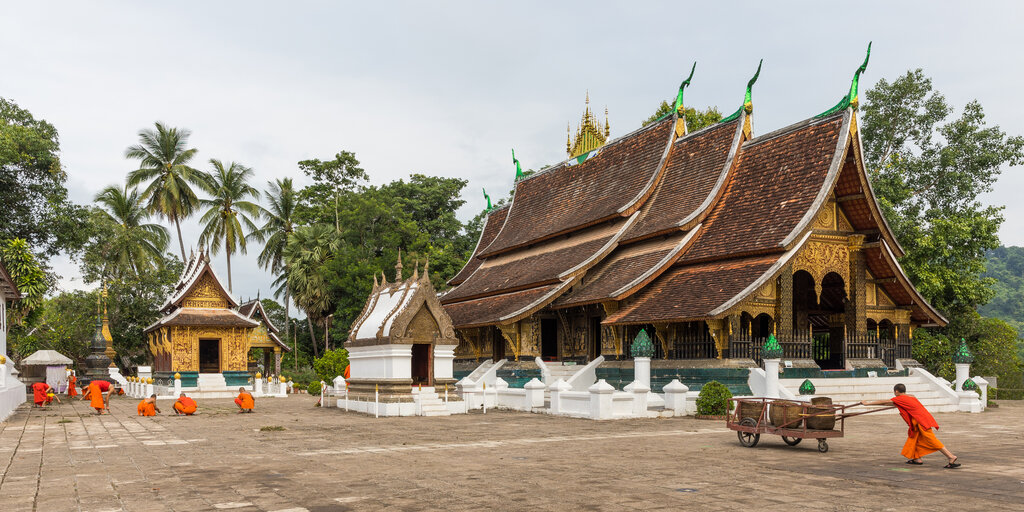
Today, Theravada is the dominant form of Buddhism in Sri Lanka, Cambodia, Laos, Myanmar, and Thailand. In these countries, it's not just a religion but a core part of the culture, influencing art, ethics, and social structures. The monastery often serves as the center of community life and education.
Time to review the key concepts from this introduction to the oldest school of Buddhism.
Let's check your understanding.
What does the name 'Theravada' mean in the Pali language?
The ideal figure in Theravada Buddhism, who has attained personal enlightenment and escaped the cycle of rebirth, is known as the __________.
Theravada provides a direct line to the earliest Buddhist teachings, focusing on a path of individual discipline and wisdom to achieve enlightenment.