Theravada Buddhism Explained
Introduction to Theravada Buddhism
The Way of the Elders
Of the many schools of Buddhist thought that have developed over the centuries, one stands out for its claim to be the oldest and most direct lineage from the Buddha himself. This is Theravada Buddhism, a name that translates from the Pali language to "The Teaching of the Elders."
Theravada focuses on preserving the original teachings of Siddhartha Gautama. Its followers believe it represents the purest form of the Buddha's message. This tradition emphasizes self-liberation through one's own efforts, primarily through monastic discipline, meditation, and wisdom. The ideal figure is the arahant, a person who has attained enlightenment and escaped the cycle of rebirth.
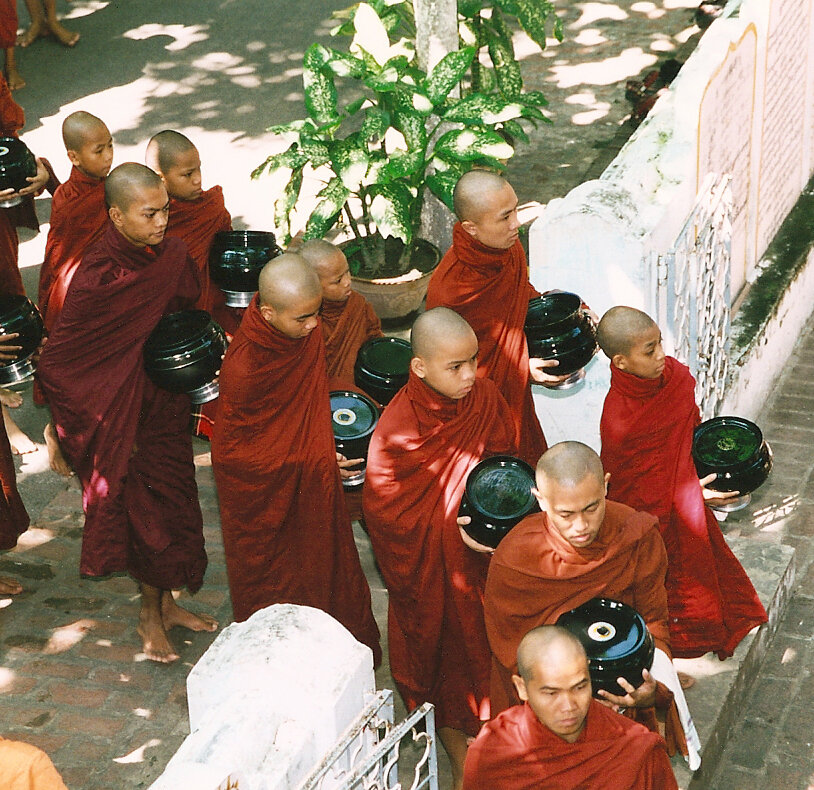
The school's roots go back to the First Buddhist Council, held shortly after the Buddha's passing. Here, his senior monastic disciples gathered to recite and agree upon his teachings to ensure they wouldn't be lost. As Buddhism grew, different interpretations naturally emerged, leading to the formation of various schools. The Theravada tradition traces its lineage to the group that upheld the original doctrines without modification.
From India to Southeast Asia
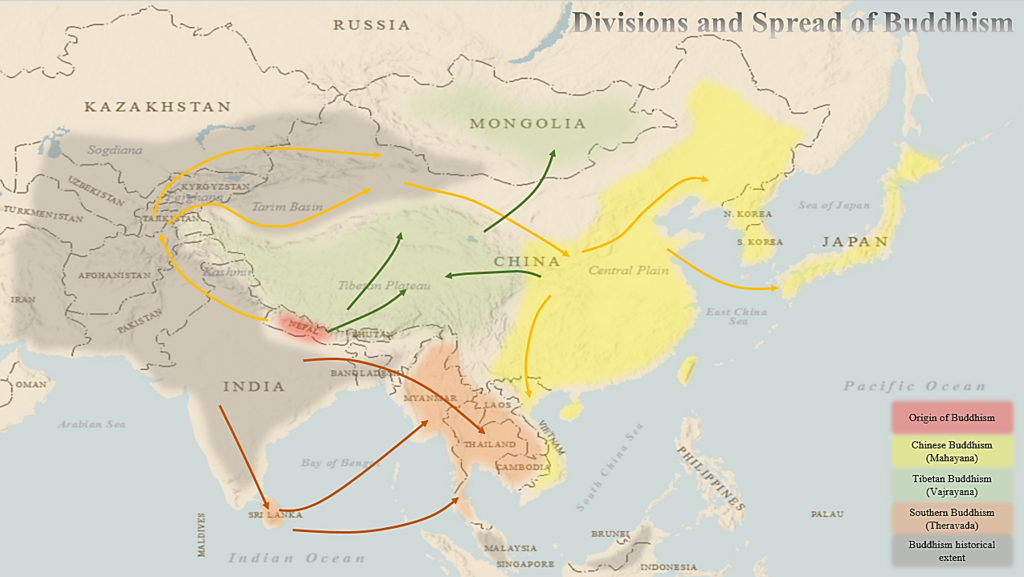
While Buddhism began in India, Theravada found its most enduring home in Southeast Asia. A pivotal moment came in the 3rd century BCE when the Indian Emperor Ashoka sent missionaries to spread the Buddha's teachings. His son, Mahinda, traveled to Sri Lanka and established a monastic community that has survived to this day.
Sri Lanka became the heartland of Theravada Buddhism. From there, it spread to Myanmar, Thailand, Cambodia, and Laos, where it became the dominant religious tradition. Each country integrated these teachings into its own culture, yet the core principles and texts remained remarkably consistent across the region.
The Three Baskets
The foundational scripture of Theravada Buddhism is the Pali Canon, also known as the Tipiṭaka. The name literally means "Three Baskets," which refers to the way the original texts, written on palm leaves, were stored.
Three Baskets
The Pali Canon is vast and organized into three main sections:
1. Vinaya Piṭaka (The Basket of Discipline): This contains the rules and guidelines for monks and nuns. It covers everything from basic ethical conduct to the procedures for monastic community meetings and ceremonies.
This basket is the foundation of the sangha, or monastic community, ensuring it functions smoothly and preserves the lifestyle established by the Buddha.
2. Sutta Piṭaka (The Basket of Discourses): This is the largest and most important section, containing thousands of the Buddha's sermons and teachings, as well as those of his main disciples. It's the primary source for understanding Buddhist doctrine and meditation.
If you wanted to read the Buddha's own words on topics like mindfulness or the nature of suffering, you would look in the Sutta Piṭaka.
3. Abhidhamma Piṭaka (The Basket of Higher Doctrine): This section is a systematic analysis and philosophical elaboration of the teachings found in the Sutta Piṭaka. It reorganizes the doctrines into a highly detailed framework, exploring the nature of consciousness, matter, and time.
The Abhidhamma is more technical and abstract than the other two baskets, representing a scholarly effort to map out the intricate workings of the mind and reality according to Buddhist principles.
Ready to check your understanding?
What does the name 'Theravada' translate to from the Pali language?
In Theravada Buddhism, the ideal figure who has attained enlightenment and escaped the cycle of rebirth is known as an arahant.
Together, these three baskets form the complete scriptural authority for Theravada Buddhism, guiding followers on the path to enlightenment just as they have for millennia.