The World of Video Games
Origins of Video Games
The First Sparks
Video games didn't appear overnight. Before they were a business, they were a curiosity. In the 1950s and 60s, scientists and engineers with access to massive, room-sized computers started creating simple games and simulations. These weren't for profit; they were experiments to test the capabilities of new technology and, sometimes, just for fun.
Burnham traces the birth of video games back to the Brookhaven National Laboratory in 1958, where William Higinbotham used Tennis For Two -- an early version of what would become Pong -- as a distraction to visitors who might otherwise have been concerned about the nuclear tests at the research center.
Games like Tennis for Two and 1962's Spacewar! were groundbreaking but were tied to expensive, specialized hardware. They were accessible only to a handful of researchers and students. For video games to reach the public, they had to leave the lab.
Gaming Comes Home
The journey from the laboratory to the living room was pioneered by an engineer named Ralph Baer. In the late 1960s, he envisioned a device that could play games on a standard television set. His prototype, nicknamed the "Brown Box," was a simple console that could play a handful of games, mostly involving moving dots around the screen.
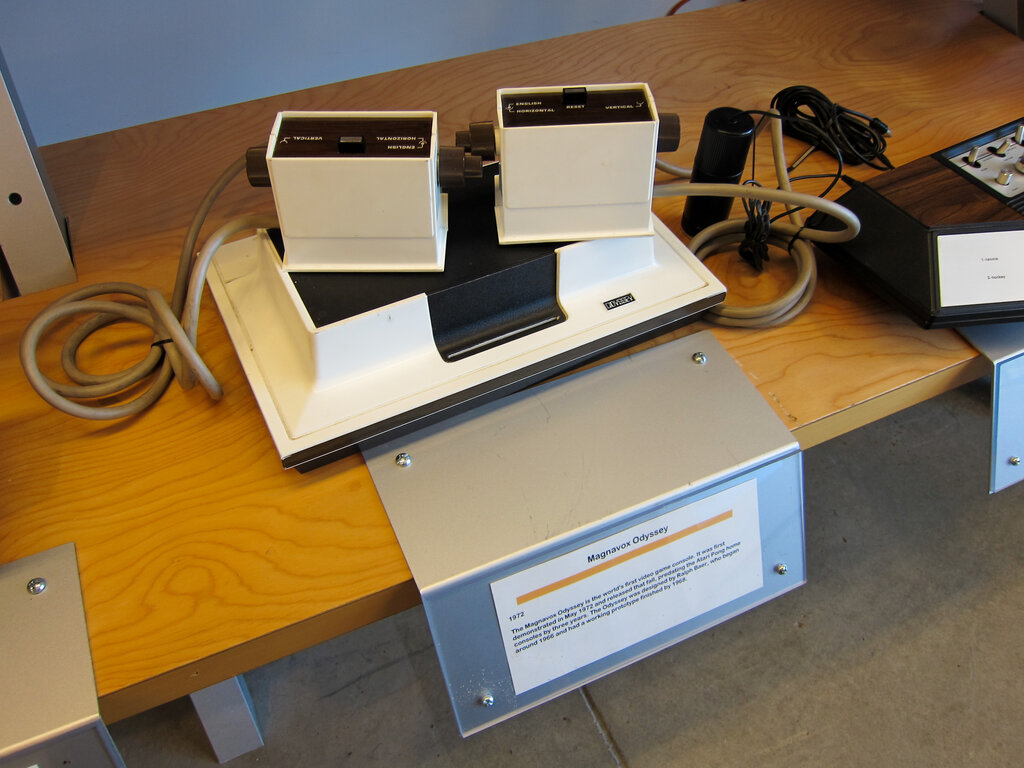
Baer's invention was licensed to Magnavox and released in 1972 as the Odyssey. It was a primitive system by today's standards. The console couldn't generate color or complex graphics, so it came with plastic overlays you'd place on your TV screen to create the illusion of a game board or tennis court. While it wasn't a huge commercial hit, the Odyssey proved that a market for home video games existed.
The Arcade Revolution
While the Odyssey was a quiet first step, the explosion that truly launched the video game industry happened in public spaces. In 1972, a new company called Atari, founded by Nolan Bushnell and Ted Dabney, installed a simple table tennis game in a local tavern. The game was Pong.
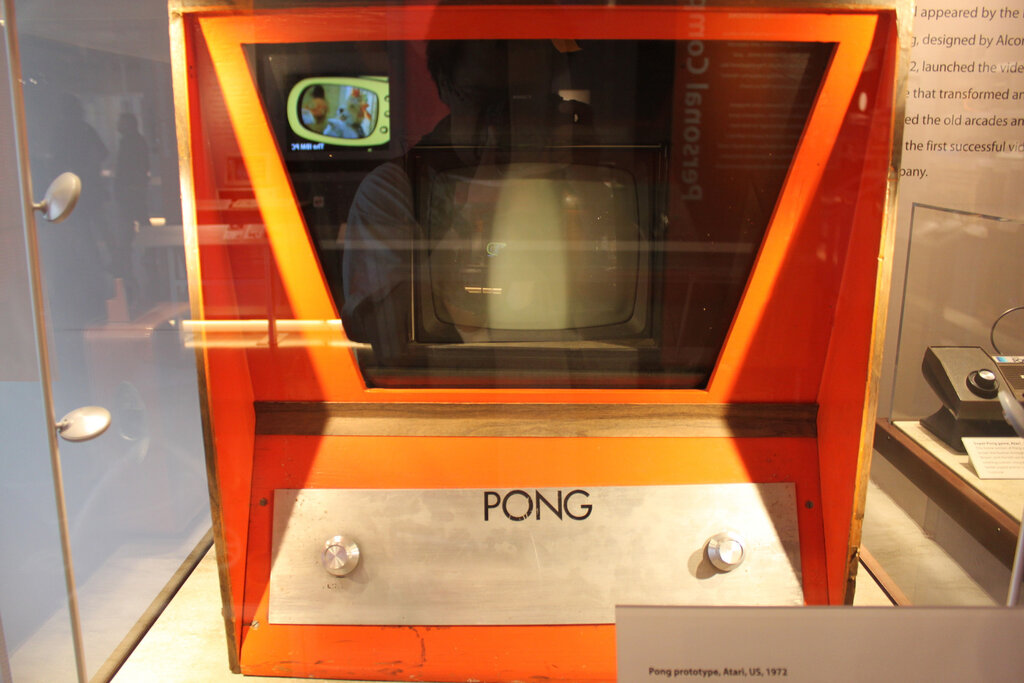
The public response was immediate and overwhelming. Pong's appeal was its simplicity. Unlike the Odyssey, which required some setup, anyone could understand Pong instantly: move the paddle, hit the ball. The game became a social phenomenon, drawing crowds in bars, bowling alleys, and shopping malls. It turned arcades into a cultural destination for a new generation.
Pong wasn't the first video game, but its massive commercial success proved gaming could be a profitable business. It sparked an arcade boom, with competitors rushing to create their own coin-operated hits. Games like Space Invaders (1978) followed, introducing new concepts like high scores and pushing the industry's creative and technological boundaries forward.
From lab experiments to home consoles and arcade cabinets, these early innovations laid the entire foundation for the video game world we know today.