The World of Tarot
Origins of Tarot
From Game to Guidance
Tarot cards didn't start as a mystical tool for peering into the future. Their story begins in 15th-century Italy, where they were part of a card game called trionfi, or "triumphs." This game was popular among the wealthy and nobility, and the hand-painted decks were works of art.
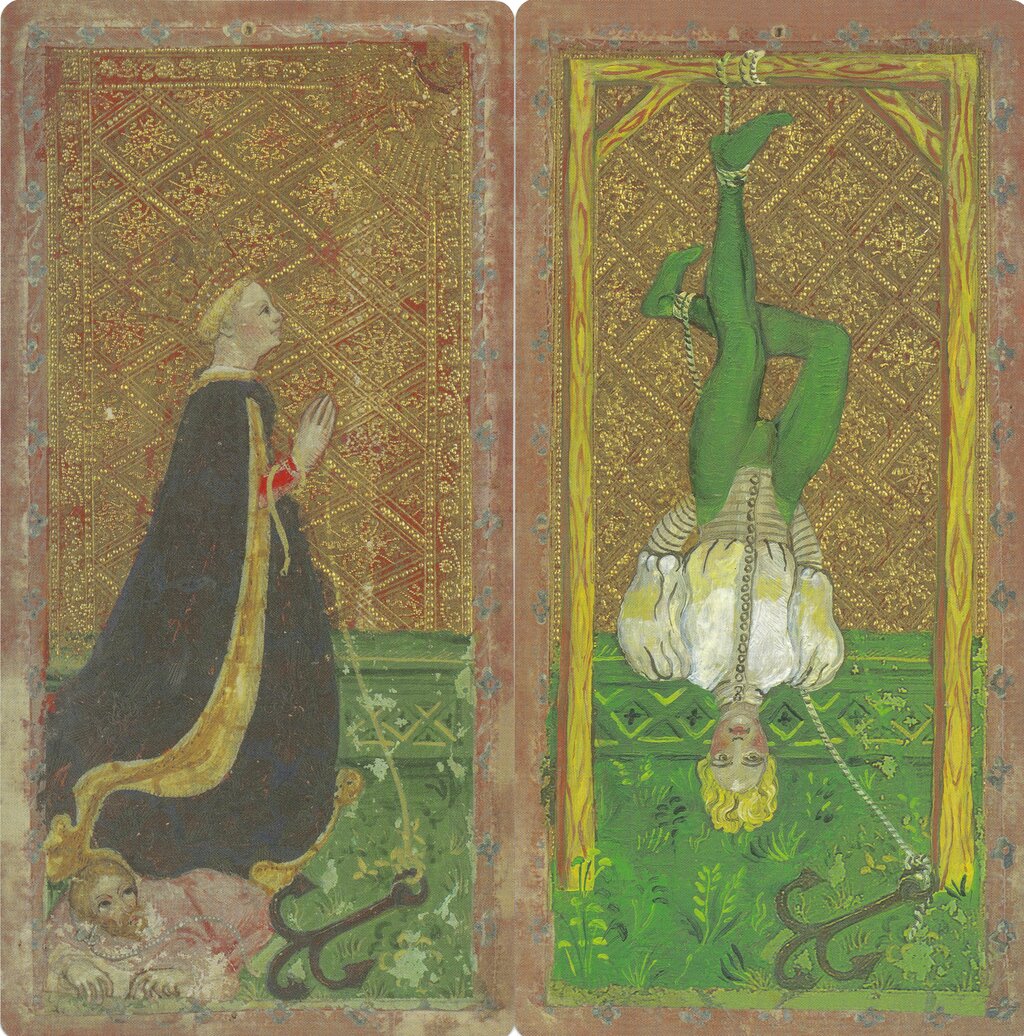
These early decks had four suits, similar to modern playing cards, plus an extra set of trump cards adorned with allegorical illustrations. For a long time, that's all they were: beautifully crafted cards for a game. It wasn't until the 18th and 19th centuries that people started to see them differently.
A Mystical Makeover
The shift from gameplay to divination happened gradually. European occultists began to connect the cards' imagery to deeper, mystical systems. A French scholar named Antoine Court de Gébelin, for example, famously (and incorrectly) claimed the cards held the secret wisdom of the ancient Egyptians. While his theory wasn't based on historical fact, it captured the public's imagination and permanently linked Tarot to esoteric traditions.
The cards were no longer just for play; they became a symbolic language for exploring life's questions.
This new perspective transformed the Tarot. Secret societies and mystical thinkers layered their own ideas onto the cards, creating the foundation for the divinatory tool we know today. But one specific deck would make this practice accessible to everyone.
The Deck That Changed Everything
In 1909, a deck was published that would become the most popular and influential in the world. Known as the Rider-Waite-Smith deck, it was a collaboration between scholar Arthur Edward Waite, who directed the project, and artist Pamela Colman Smith, who drew the illustrations.
What made this deck revolutionary? Before its creation, only the 22 Major Arcana (the trump cards) had full, illustrative scenes. The other 56 cards, the Minor Arcana, were simple pip cards, showing just the suit symbols, like a six of cups displaying six cups.
Pamela Colman Smith created rich, symbolic scenes for every single card. This innovation was a game-changer. Suddenly, anyone could look at a card and intuitively grasp its story and potential meaning, without needing to memorize abstract definitions. This accessibility is why the Rider-Waite-Smith deck defined the future of Tarot.
That leaves today’s tarot student with two choices of ‘tradition’: the long-standing (but currently neglected) French tradition and the more recent (and immensely popular) modern tradition allied to the Waite-Smith card designs.
From a parlor game in Italian courts to a powerful tool for self-reflection, the Tarot has had a fascinating journey. Understanding its history helps us appreciate how it evolved into the complex and intuitive system it is today.
Ready to check your understanding?
What was the original purpose of Tarot cards when they were created in 15th-century Italy?
What key innovation did the Rider-Waite-Smith deck introduce that made it so influential?