The World of Supply Chain Analysis
Introduction to Supply Chain Management
What Is a Supply Chain?
Think about the journey your morning coffee takes before it reaches your cup. It starts as a bean on a farm, gets picked, processed, shipped across oceans, roasted, packaged, and finally delivered to your local store. That entire network of people, companies, and activities is a supply chain.
A supply chain is the entire system involved in creating and moving a product or service, from the initial raw materials all the way to the final customer.
Supply Chain Management (SCM) is the art and science of managing this flow. The goal is to make the journey as smooth, efficient, and cost-effective as possible. When done well, SCM ensures products are available when and where customers want them, without costing a fortune to get there. It's a balancing act that directly impacts a company's profitability and a customer's happiness.
Supply chain management plays a very significant role in most organizations because it directly affects efficiency, costs, and customer satisfaction.
The Key Players
Every supply chain has a cast of key players, each with a specific role. While the exact players vary by industry, they generally fall into a few core categories.
Imagine a company that makes wooden chairs. The suppliers are the lumberyards that provide the wood and the factories that make screws and varnish. The manufacturer is the company that cuts the wood, assembles the chairs, and applies the finish.
Distributors might buy the chairs in bulk and transport them to different regions, while retailers are the furniture stores that sell the chairs directly to customers. Each link in this chain depends on the others to function.
Core Components and Flows
Behind the scenes, supply chain management juggles several core activities to keep everything running. These can be grouped into a few key areas:
| Component | Description |
|---|---|
| Procurement | The process of acquiring the goods and services the company needs. This involves finding suppliers and negotiating prices. |
| Production | The transformation of raw materials into finished goods. This is the 'making' part of the supply chain. |
| Distribution | The system for storing and moving finished products. This includes warehousing and inventory management. |
| Logistics | The practical side of moving goods from one point to another. It involves transportation, scheduling, and coordination. |
These components don't operate in a vacuum. They are connected by three critical flows that move in different directions through the chain.
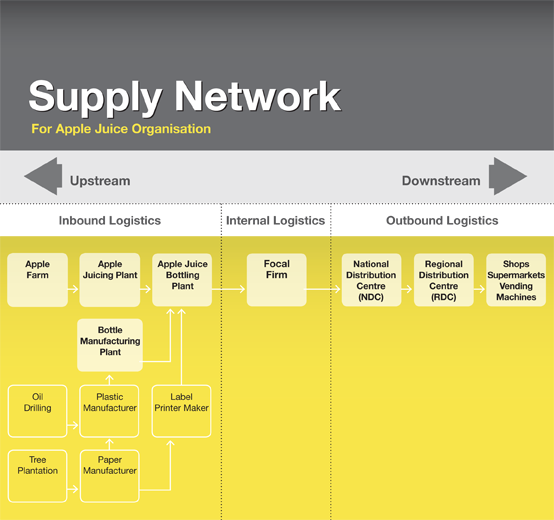
The Product Flow: This is the most obvious one, the physical movement of goods from suppliers down the chain to customers.
The Information Flow: This moves in both directions. Retailers send sales data and forecasts back to distributors and manufacturers. Suppliers send shipment updates forward. This data is the lifeblood of an efficient supply chain, allowing all players to plan and react.
The Financial Flow: This primarily moves from customers back up the chain to suppliers. When you buy a product, your money triggers a cascade of payments to the retailer, the distributor, the manufacturer, and all the raw material suppliers.
Coordinating these three flows across different companies and locations is the central challenge of supply chain management. By mastering this coordination, businesses can reduce waste, lower costs, and ultimately deliver better value to the customer.