The World of Schnitzel
Modern Interpretations
The Schnitzel Reimagined
While the classic schnitzel holds a special place in culinary history, it's far from a static dish. Chefs and home cooks around the world are constantly finding new ways to reinvent it. This evolution keeps the beloved cutlet exciting, adapting it to modern tastes, dietary needs, and creative culinary ideas.
Beyond Veal and Pork
One of the most significant changes in modern schnitzel is the move beyond traditional meats. While veal (Wiener Schnitzel) and pork (Schnitzel Wiener Art) are the classics, chicken and turkey have become incredibly popular alternatives, offering a leaner option.
More recently, the rise of plant-based eating has introduced a whole new category of schnitzel. Creative cooks are now using ingredients like thick slices of celeriac, large mushrooms, seitan, or tofu. These are pounded thin, breaded, and fried just like their meat counterparts, creating a dish that's both familiar and completely new.
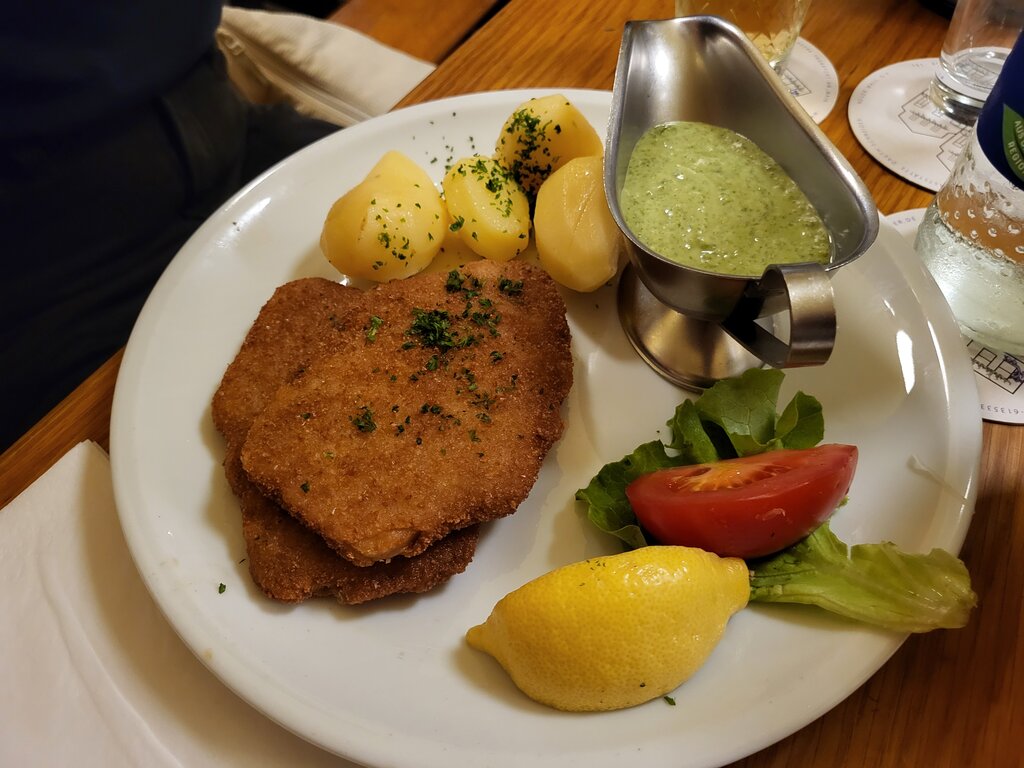
This expansion of ingredients makes schnitzel accessible to a wider audience, including vegetarians and vegans, without sacrificing the satisfying crunch that defines the dish.
Global Fusion
Modern schnitzel isn't just about changing the main ingredient; it's also about incorporating flavors from around the globe. This culinary crossover, or fusion, leads to exciting new creations.
Imagine a schnitzel seasoned with Japanese togarashi spice and served with a side of pickled ginger, or a schnitzel tucked into a tortilla and served as a taco with salsa and avocado. Some chefs add Parmesan cheese or herbs to the breading for an Italian twist, while others might use panko breadcrumbs for an extra-crispy texture reminiscent of Japanese tonkatsu. These fusion dishes respect the core technique of schnitzel while pushing its boundaries.
Even the presentation is changing. Traditionally a rustic, hearty meal, schnitzel is now appearing in more refined settings. Chefs might slice it elegantly, stack it creatively, or pair it with delicate microgreens and artistic sauce drizzles. The focus is on making the dish as visually appealing as it is delicious.
Healthier cooking methods are also gaining traction. Instead of pan-frying in a lot of butter or oil, many people now bake or air-fry their schnitzel. This technique uses significantly less fat but can still achieve a wonderfully crispy crust.
These modern takes ensure that schnitzel remains a relevant and beloved dish for generations to come, proving that even the most traditional foods can have a place in the contemporary kitchen.
Ready to test your knowledge on the modern world of schnitzel?
According to the text, which of the following is NOT a common plant-based ingredient used for modern schnitzel?
What is the term used to describe the incorporation of global flavors, like adding Japanese togarashi spice or serving schnitzel as a taco?
From plant-based alternatives to global fusion, the simple schnitzel continues to be a canvas for culinary creativity.