The World of Music
Rhythm
The Heartbeat of Music
Rhythm is the lifeblood of music. It’s the pattern of sounds and silences arranged in time. Think of it as music's internal clock or the steady beat of a heart. It gives music its forward momentum, making you want to tap your foot, clap your hands, or get up and dance.
At the core of rhythm is the beat, a steady, repeating pulse that runs through a piece of music. It’s the constant you can count along to, like “one, two, three, four.” This pulse provides the fundamental grid upon which all other musical events are placed.
Beat
noun
The basic, repeating pulse in music that divides time into equal segments.
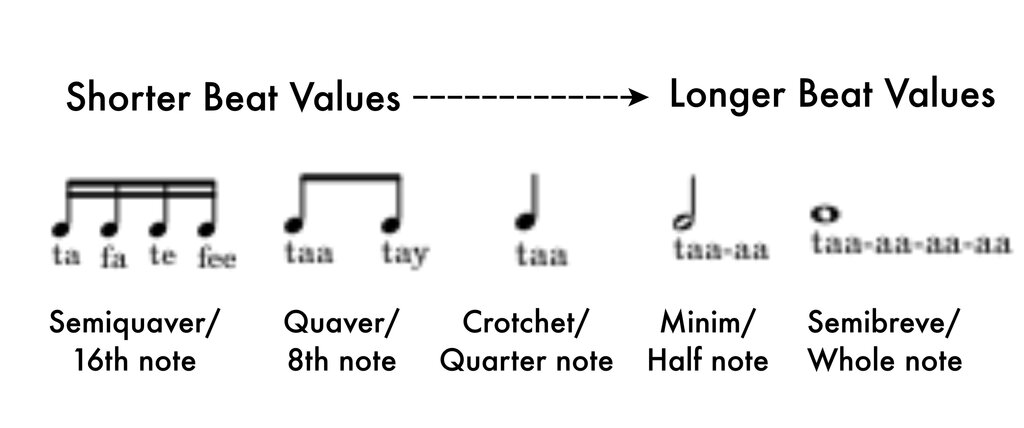
The length of a sound or silence is its duration. In music, we use different types of notes to show how long a sound should last relative to the beat. A whole note lasts for four beats, a half note for two, a quarter note for one, and so on. These durations are the building blocks of rhythmic patterns.
Grouping the Beat
While the beat is a constant pulse, music rarely just plods along one beat after another. Instead, beats are organized into repeating groups, creating a feel or groove. This grouping is called meter. Most of the music you hear groups beats into twos, threes, or fours.
We show this grouping with a time signature, which looks like a fraction at the beginning of a piece of music. The top number tells you how many beats are in each measure (or bar), and the bottom number tells you what kind of note gets one beat.
For example, in 4/4 time, there are four beats per measure, and a quarter note gets one beat. This is the most common meter in pop, rock, and country music. A waltz, on the other hand, is usually in 3/4 time, which gives it its familiar “one-two-three, one-two-three” feel.
Think of a march (ONE-two-three-four) versus a waltz (ONE-two-three). The meter completely changes the feeling of movement in the music.
Setting the Pace
How fast or slow is the beat? That’s the tempo. Tempo sets the overall speed of the music, and it has a huge impact on the mood. A slow tempo, or Adagio, can feel calm, sad, or majestic. A fast tempo, or Allegro, often feels energetic, happy, or urgent.
Musicians use a device called a metronome to practice keeping a steady tempo. It produces a consistent click at a set speed, measured in beats per minute (BPM).
Use a metronome to develop a steady sense of rhythm and timing.
Playing with Expectation
Rhythm isn't just about steady, predictable beats. The most interesting rhythms often play with our expectations by emphasizing notes that don't fall directly on the main beats. This is called syncopation.
Imagine counting “one-AND-two-AND-three-AND-four-AND.” The numbers are the downbeats, and the “ands” are the off-beats. Syncopation happens when the emphasis is placed on the off-beats. It creates a rhythmic tension and excitement that is central to genres like jazz, funk, and reggae. It’s what makes a rhythm feel groovy and less predictable.
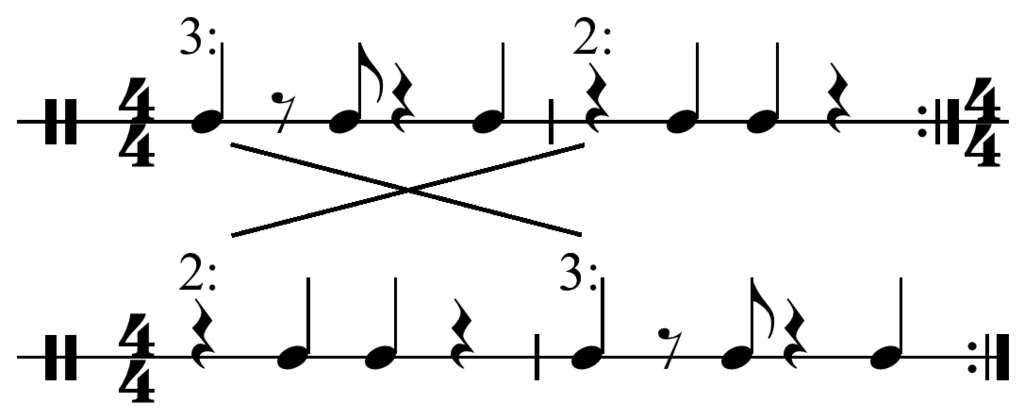
By combining different note durations, organizing them into meters, setting a tempo, and adding syncopation, composers create the rhythmic patterns that define the character of a piece of music.
Now, let's check your understanding of these rhythmic concepts.
What is the steady, repeating pulse that runs through a piece of music, which you can count along to?
In a time signature like 4/4 or 3/4, what does the top number signify?
Rhythm is the essential framework that gives music its structure and feel, from the simplest pulse to the most complex syncopated pattern.