The World of Miniature Drones
Drone Basics
The Parts of a Drone
At its core, a remote-controlled miniature drone, or RMD, is a flying machine with a few essential parts working together. Think of it like a body: it needs a skeleton, muscles, a power source, and a brain to tell everything what to do.
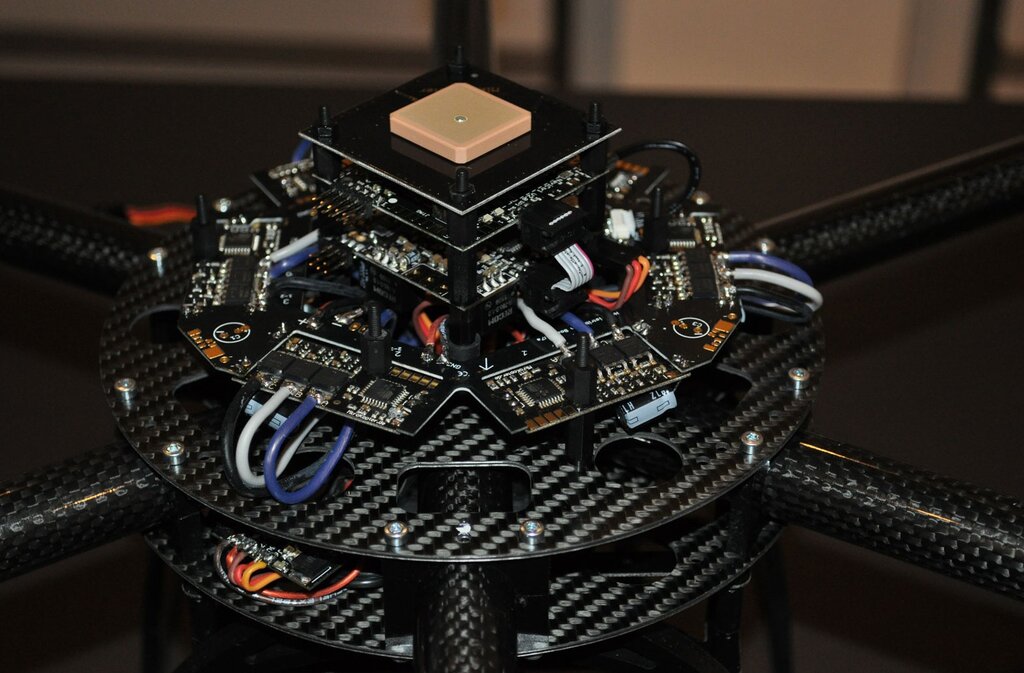
The frame is the drone's skeleton. It's the physical structure that holds everything together, usually made of lightweight materials like carbon fiber or plastic to keep the drone agile.
Attached to the frame are the motors and propellers, which act as the muscles. They are the parts that do the heavy lifting, literally.
Propellers and motors are crucial as they generate lift, allowing the drone to take off, hover, and maneuver in the air.
The battery is the heart, pumping power to the motors and all the electronics. Most drones use rechargeable lithium polymer (LiPo) batteries because they pack a lot of power into a small, light package.
Finally, the most important component is the flight controller.
This small circuit board receives commands from the pilot's remote control. It also takes in data from onboard sensors to keep the drone stable in the air. The most critical sensor is the Inertial Measurement Unit (IMU), which acts like the drone's inner ear. It combines an accelerometer and a gyroscope to sense motion, orientation, and gravity, telling the flight controller if the drone is tilted or accelerating.
The Physics of Flight
To understand how a drone flies, we need to look at four fundamental forces: lift, weight, thrust, and drag. These same forces apply to everything that flies, from a jumbo jet to a paper airplane.
- Weight is the force of gravity pulling the drone down.
- Lift is the upward force generated by the propellers that counteracts weight.
- Thrust is the horizontal force that moves the drone forward, backward, or sideways.
- Drag is the force of air resistance that opposes the drone's motion.
For a drone to hover perfectly still, lift must exactly equal weight. To climb, lift must be greater than weight. It's a constant balancing act managed by the flight controller.
Basic Maneuvers
A drone's movement is controlled by precisely adjusting the speed of its individual propellers. Quadcopters, the most common type of RMD, have four propellers. Two spin clockwise (CW) and two spin counter-clockwise (CCW). This pairing cancels out rotational forces, so the drone doesn't just spin in circles.
Here’s how the basic maneuvers work:
| Maneuver | Action | Result |
|---|---|---|
| Hover | All four motors spin at the same balanced speed. | Drone stays in one place. |
| Ascend | All four motors increase speed equally. | Drone goes straight up. |
| Descend | All four motors decrease speed equally. | Drone goes straight down. |
| Yaw | Two diagonal motors (e.g., front-right and back-left) speed up, while the other two slow down. | Drone rotates left or right while hovering. |
| Pitch | The two rear motors speed up, and the two front motors slow down. | Drone tilts and moves forward. |
| Roll | The two motors on one side (e.g., right side) speed up, and the two on the other side slow down. | Drone tilts and moves sideways. |
Pitch and roll are what create thrust. By tilting, the drone directs some of its lift horizontally, pushing it in that direction. The flight controller makes thousands of tiny adjustments per second to the motor speeds to execute these commands smoothly and keep the drone stable, even in a breeze.
These are the fundamentals behind every move a drone makes. By mastering how these simple inputs work together, a pilot can perform complex and precise maneuvers in the air.
What is the primary function of the Inertial Measurement Unit (IMU) in a drone?
For a drone to climb straight up, the upward force of lift must be __________ the downward force of weight.
Understanding these core components and principles is the first step to becoming a confident drone pilot.