The World of Electronica
Origins of Electronic Dance Music
Before the Beat Dropped
Long before massive festivals and superstar DJs, the seeds of electronic dance music were sown in the dimly lit dance clubs of the 1970s. The story of EDM doesn't begin with a bang, but with a steady, pulsing beat that took over the world: disco.
Disco, with its emphasis on a steady four-on-the-floor beat, was the precursor to much of what would later define EDM.
Disco wasn't just about glitter balls and flashy outfits. It was a revolution in rhythm. The relentless, hypnotic "four-on-the-floor" kick drum pattern, where the bass drum hits on every beat of a 4/4 measure, created a powerful foundation for dancing. This rhythmic structure became the DNA of nearly all dance music that followed. It was simple, effective, and designed to keep people moving all night long.
The New Machines
While disco provided the rhythmic blueprint, a technological revolution provided the new sound palette. For the first time, musicians had access to instruments that could create sounds no one had ever heard before. Synthesizers, once the domain of experimental composers and university labs, became more accessible. These machines allowed artists to sculpt sound waves from scratch, creating futuristic textures and melodies.
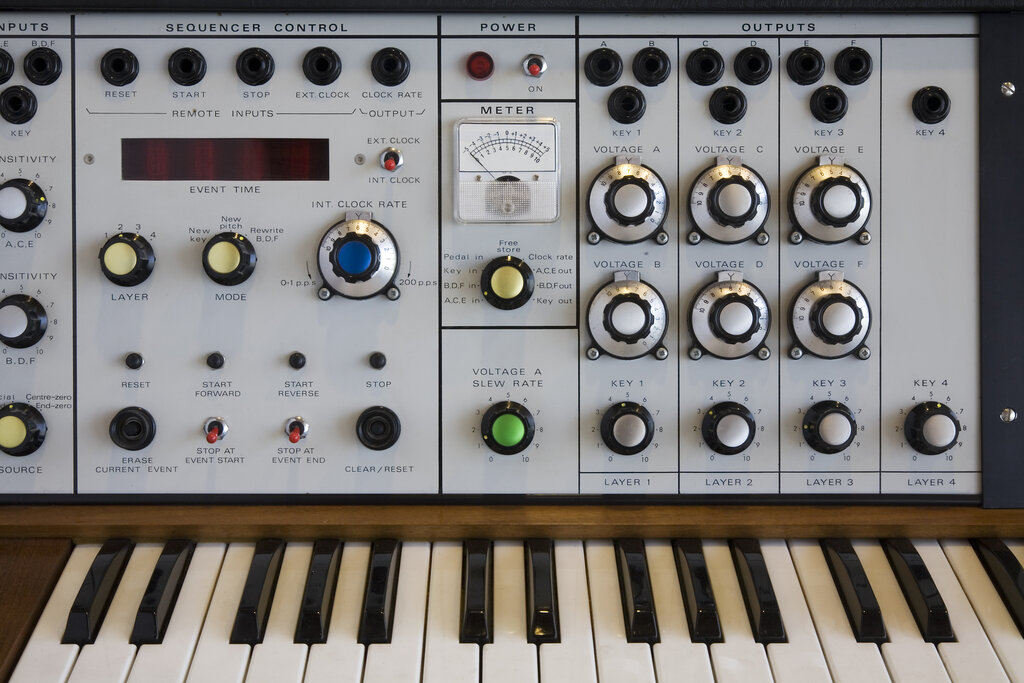
At the same time, the drum machine arrived. Early models like the Roland TR-77 and Eko ComputeRhythm offered producers perfectly timed, consistent rhythms that a human drummer couldn't replicate. This precision and hypnotic quality became a hallmark of the emerging electronic sound. These weren't just tools; they were collaborators, pushing music in a new, electronic direction.
Synthesizer
noun
An electronic musical instrument that generates audio signals through methods such as subtractive, additive, and frequency modulation synthesis.
Pioneers of the Pulse
New technology needs visionaries to unlock its potential. In the world of dance music, one of the first was Italian producer Giorgio Moroder. Working with singer Donna Summer, Moroder crafted a sound that would change music forever. Their 1977 hit, "I Feel Love," was a landmark track. It was one of the first disco songs created entirely with electronic instruments, swapping the typical lush orchestra for a swirling, pulsating wall of synthesizers.
The hypnotic, futuristic groove of "I Feel Love" was a glimpse into the future of dance music. It proved that electronic instruments could be funky, soulful, and pack a dance floor.
Meanwhile, in Germany, a group of artists were taking electronics in a different direction. Kraftwerk, a band from Düsseldorf, abandoned traditional rock instruments altogether. They created a cool, minimalist, and entirely electronic sound that explored themes of technology and modern life. Songs like "Trans-Europe Express" and "The Robots" were built on precise, machine-like rhythms and synthesized melodies. Kraftwerk's influence was immense, shaping not only future dance music but also hip hop and pop.
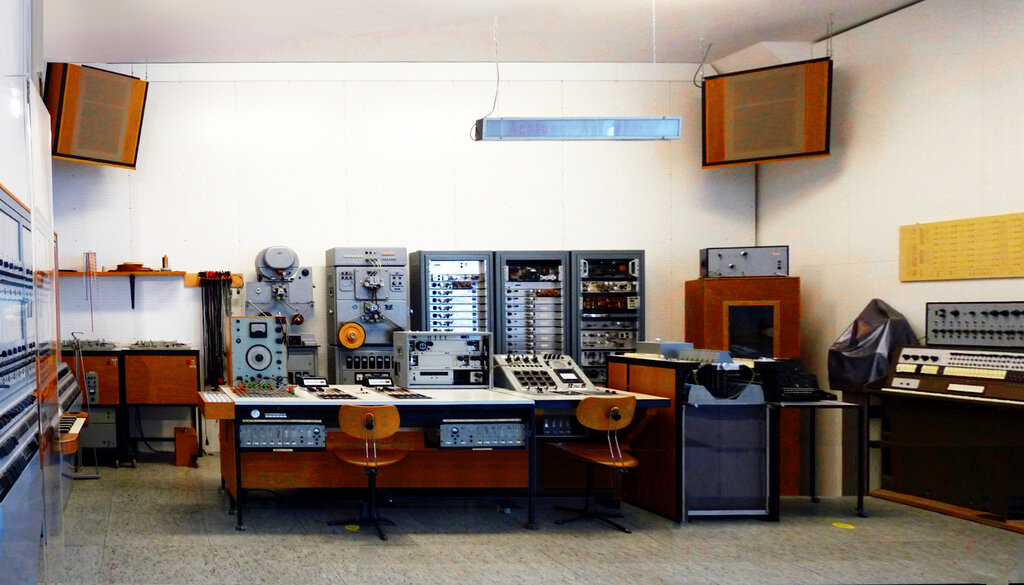
The sounds pioneered by Moroder and Kraftwerk laid the groundwork for a new genre: synth-pop. Bands like The Human League, Depeche Mode, and New Order took the electronic baton and ran with it, creating pop hits built around synthesizers and drum machines. They brought the futuristic sounds of the electronic underground to the top of the charts, making synthesizers a staple of 1980s music and paving the way for the next wave of electronic innovation.
What is the defining characteristic of the "four-on-the-floor" rhythm pattern that disco introduced to dance music?
Which Italian producer, famous for his work with Donna Summer on the track "I Feel Love," was a key pioneer in using synthesizers to create disco hits?
These early experiments in disco clubs and German studios were the first steps. The combination of a steady, danceable beat and the limitless possibilities of electronic instruments created a new language for music, one that would soon evolve into the diverse world of house, techno, and beyond.