The World of Data Brokering
Introduction to Data Broking
What is a Data Broker?
A data broker is a company that specializes in collecting personal information about consumers and selling that information to other businesses. Think of them as information middlemen. They don't have a direct relationship with the people whose data they collect. Instead, they operate in the background, gathering and packaging data for others to use.
Their primary function is aggregation. They piece together thousands of small data points from different sources to create detailed individual profiles. These profiles go far beyond basic demographics, painting a comprehensive picture of a person's life, habits, and preferences.
The core business of a data broker is to know as much as possible about as many people as possible.
How They Work
The process can be broken down into three main steps: collecting, analyzing, and selling.
First, they collect data from a huge number of sources. This includes publicly available information, such as property records, court filings, and voter registration lists. It also involves commercial sources, like your purchase history from store loyalty cards, warranty registrations, and magazine subscriptions. A major source is online activity, gathered through web cookies, social media profiles, and mobile app usage.
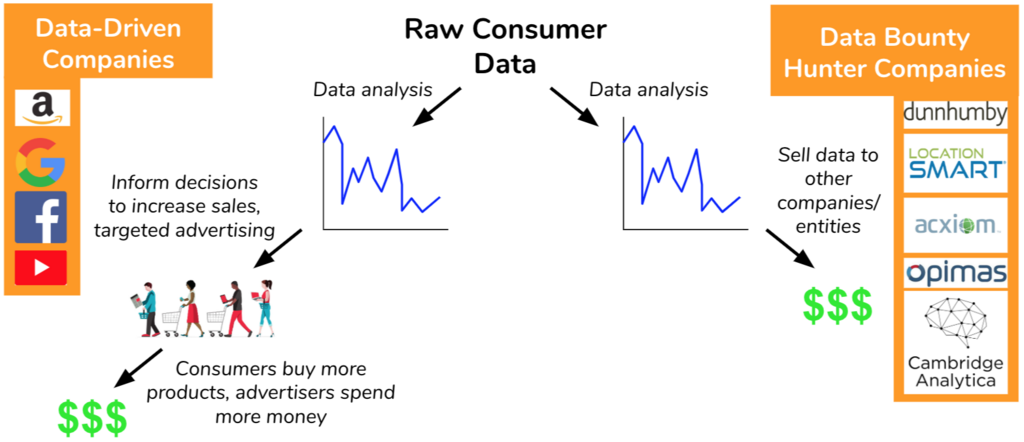
Next, they analyze this raw data. They clean, sort, and combine it to make it more valuable. Using algorithms and statistical models, they make inferences and predictions about you. They might place you into specific categories like “fitness enthusiast,” “likely to move soon,” or “in the market for a new car.” These categories, or segments, are the real product.
Finally, they sell these refined datasets and profiles. The buyers are typically other companies that want to target specific types of consumers for advertising, marketing campaigns, or risk assessment. For example, a new organic food company might buy a list of people categorized as “health-conscious shoppers” in a particular city.
The Data They Collect
Data brokers collect a vast range of information. It's often organized into a few key categories.
| Data Category | Examples |
|---|---|
| Identifying Information | Name, address (current and previous), email, phone number |
| Demographic Data | Age, gender, race, marital status, number of children, education level |
| Financial Data | Estimated income, property value, creditworthiness, investment interests |
| Behavioral Data | Purchase history, web browsing habits, loyalty program activity, hobbies |
| Life Events | Getting married, buying a home, having a child, changing jobs |
By combining these different types of data, brokers can build surprisingly accurate and detailed profiles for millions of individuals. These profiles are constantly updated as new information becomes available, making them a dynamic and valuable resource in the digital economy.
What is the primary function of a data broker in the digital economy?
Which of the following is NOT a typical source of information for data brokers?