The World of Computer Software
Introduction to Computer Software
The Ghost in the Machine
A computer's hardware is all the physical stuff you can touch: the screen, the keyboard, the chips inside. But without instructions, this hardware is just a collection of plastic and metal. It doesn't know what to do.
That's where software comes in. Software is the set of instructions that tells the hardware how to operate. Think of it like a recipe. The ingredients and the oven are the hardware, but the recipe itself—the step-by-step instructions—is the software. It tells the hardware what to combine and when, turning raw materials into a finished cake.
Software is an ordered sequence of instructions that change the state of a computer’s hardware.
Every action you take on a digital device, from sending a text message to watching a video, is powered by software. The app on your phone is software. The operating system that runs the phone is software. Even the program that tells your microwave how long to heat your food is a simple form of software.
Hardware vs Software
The easiest way to remember the difference is that hardware is tangible, while software is not. You can physically hold a hard drive (hardware), but you can't hold the word processing program (software) stored on it.
Hardware provides the physical platform, and software brings that platform to life.
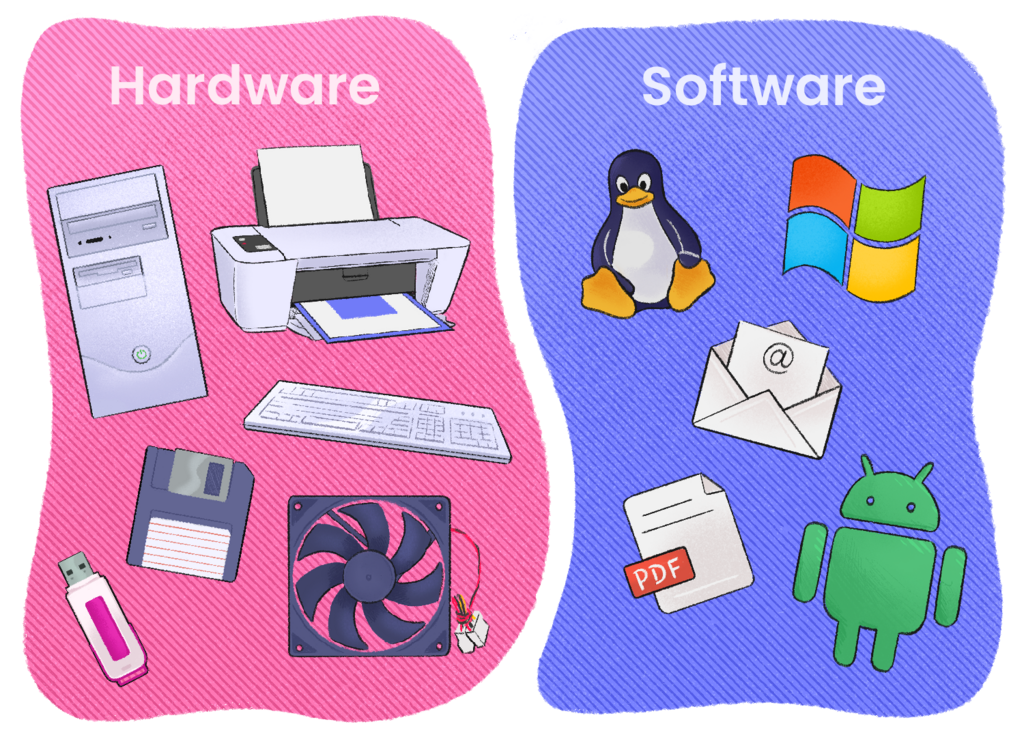
Here's a quick breakdown of the key differences.
| Feature | Hardware | Software |
|---|---|---|
| Nature | Physical components | Intangible instructions |
| Function | Performs tasks | Tells hardware what tasks to perform |
| Example | CPU, keyboard, monitor | Web browser, operating system, mobile app |
| Analogy | A piano | The sheet music |
Why Software Matters
Without software, modern life would be unrecognizable. It’s the invisible force behind almost everything we do. The banking systems that manage our money, the navigation apps that guide our cars, and the social media platforms that connect us with friends are all complex software systems.
Software allows hardware to be versatile. The same smartphone (hardware) can be a camera, a calculator, a gaming device, or a music player, all depending on the software you run. This flexibility is what makes computers so powerful. By simply changing the instructions, we can make the same physical object perform a completely different function.
In short, hardware gives a computer its potential, but software is what unlocks it.
Ready to check your understanding?