The World of Cats
Cat Anatomy
The Cat's Skeleton
Cats are masters of movement, and their skeleton is the key. While a human has 206 bones, a domestic cat has around 244. This difference isn't just about numbers; it's about structure and function, especially in the spine.
A cat's spine is incredibly flexible. It has nearly 60 vertebrae, compared to our 33. The discs cushioning the bones are softer and more elastic, allowing for amazing rotation. This lets a cat arch its back, twist its body almost 180 degrees, and perform its famous mid-air righting reflex.
Another key feature is the clavicle, or collarbone. Unlike our rigid, connected collarbones, a cat's are tiny, unattached bones floating in muscle. This allows their shoulders to move independently and squeeze through any opening they can fit their head into.
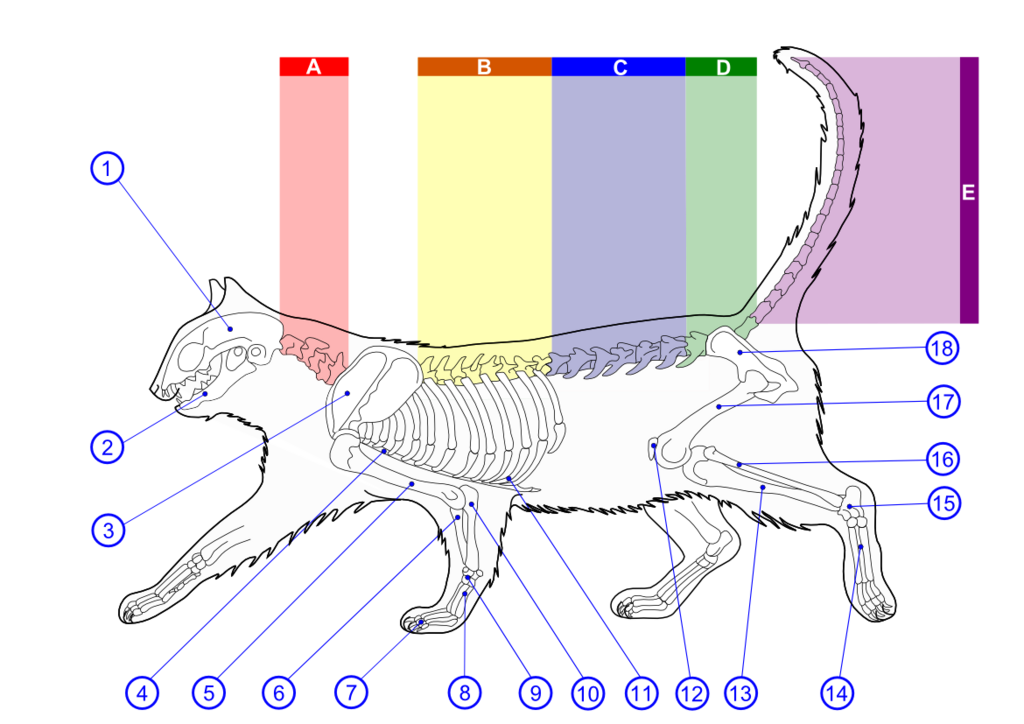
This unique skeletal design gives cats their fluid, graceful movements and remarkable contortion abilities.
Muscles and Agility
A flexible skeleton requires a sophisticated muscular system to control it. Cats possess powerful muscles, particularly in their hind legs, which enable them to jump up to six times their own length. These muscles are packed with fast-twitch fibers that contract rapidly for short, explosive bursts of speed, perfect for pouncing on prey.
This muscular power, combined with their sharp senses and flexible spine, grants cats their renowned agility and balance. They can navigate narrow ledges, make sharp turns at high speed, and almost always land on their feet.
Specialized Tools
Beyond the basic framework, cats have specialized anatomical tools for survival and predation. Their retractable claws are a prime example.
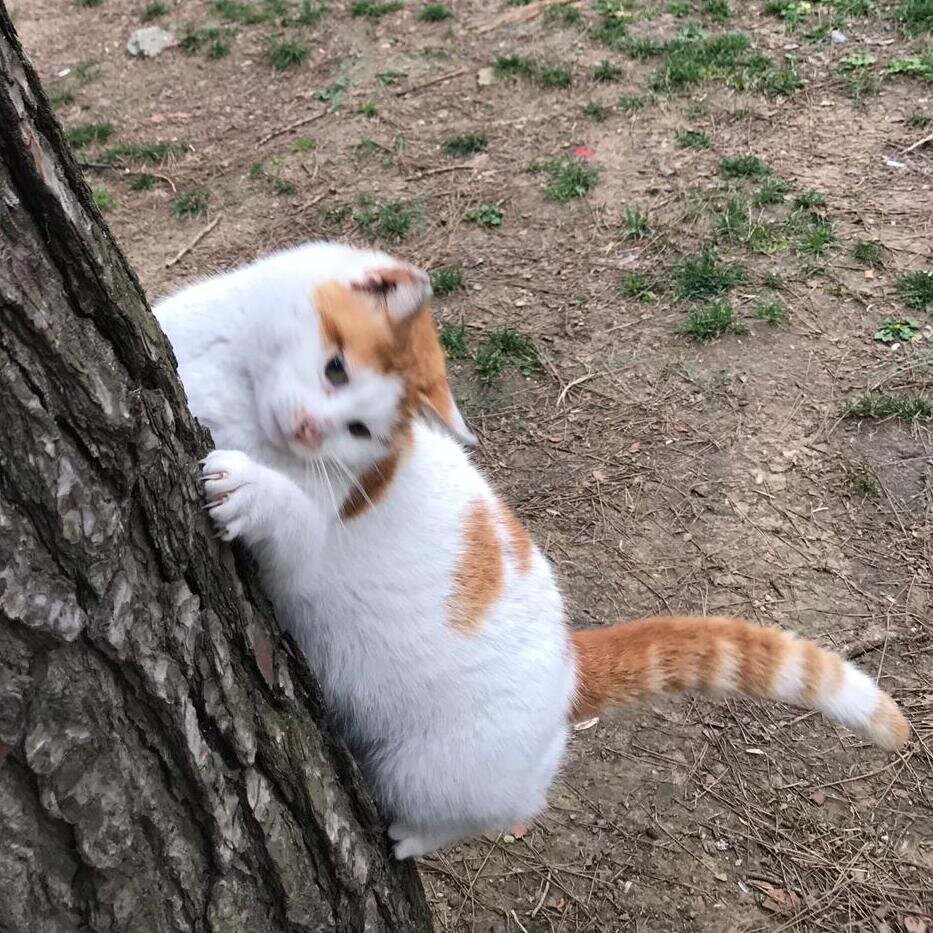
Unlike dogs, whose claws are always out, a cat's claws are normally sheathed. This keeps them sharp for climbing, hunting, and self-defense.
The retraction mechanism is passive. Elastic ligaments hold the claws neatly tucked away inside the paw. To extend them, a cat must consciously contract muscles in its toes, pulling the tendons taut and unsheathing the claws. This means no energy is wasted keeping them hidden.
Whiskers, or vibrissae, are another essential tool. They are not just hair; they are complex sensory organs rooted deep in nerve-rich follicles.
Vibrissae
noun
Thick, specialized hairs that function as tactile sensors, found on the muzzle and other parts of a cat's body.
Whiskers are as wide as the cat's body, helping it determine if it can fit through a narrow space. They also detect subtle changes in air currents, which helps them navigate in the dark and sense the location of prey. The slightest touch to a whisker triggers a nerve impulse, providing the cat with a detailed 3D map of its immediate surroundings.
Let's review these key anatomical features.
What is a key reason for a cat's exceptional spinal flexibility?
A cat's unique, 'floating' clavicle allows it to...
From their super-flexible spine to their sensitive whiskers, every part of a cat's anatomy is finely tuned for a life of athletic and predatory prowess.