The World of Cannabis
Cannabis Botany
Classifying Cannabis
The cannabis plant belongs to a family of flowering plants called Cannabaceae, which also includes hops and hackberries. Within this family, there's some debate about how to classify cannabis. For years, botanists have discussed whether there are multiple distinct species or just one species with several subspecies.
Traditionally, three main types are recognized: Cannabis sativa, Cannabis indica, and Cannabis ruderalis. Each has been associated with different physical traits and growth patterns.
| Type | Typical Height | Leaf Shape | Origin |
|---|---|---|---|
| Sativa | Tall, lanky | Narrow, finger-like | Hot, dry climates (e.g., Southeast Asia, Central America) |
| Indica | Short, bushy | Broad, wide | Harsh, dry climates (e.g., Afghanistan, India) |
| Ruderalis | Very short | Small, few leaflets | Cold, northern regions (e.g., Siberia) |
Cannabis ruderalis is unique because its flowering is triggered by age, not by changes in the light cycle. This trait, known as auto-flowering, is valuable to breeders.
However, centuries of cultivation and cross-breeding mean that most cannabis plants today are hybrids. These hybrids combine traits from all three types, so the old classifications are more of a guideline than a strict rule.
Plant Anatomy
Like any other plant, cannabis has a distinct structure with specialized parts, each playing a vital role in its survival and reproduction. Understanding these parts is key to understanding how the plant grows.
Cannabis is a dioecious plant, which means individual plants are either male or female. This is crucial for cultivation.
Female plants produce the large, resinous flower clusters, often called buds. These flowers contain high concentrations of cannabinoids. Key parts of the female flower include:
- Calyx: A teardrop-shaped pod that forms the base of the flower and contains the reproductive parts.
- Pistils: These are the vibrant, hair-like strands that emerge from the calyx. They start white and darken to yellow, orange, or brown as the plant matures. Their job is to catch pollen.
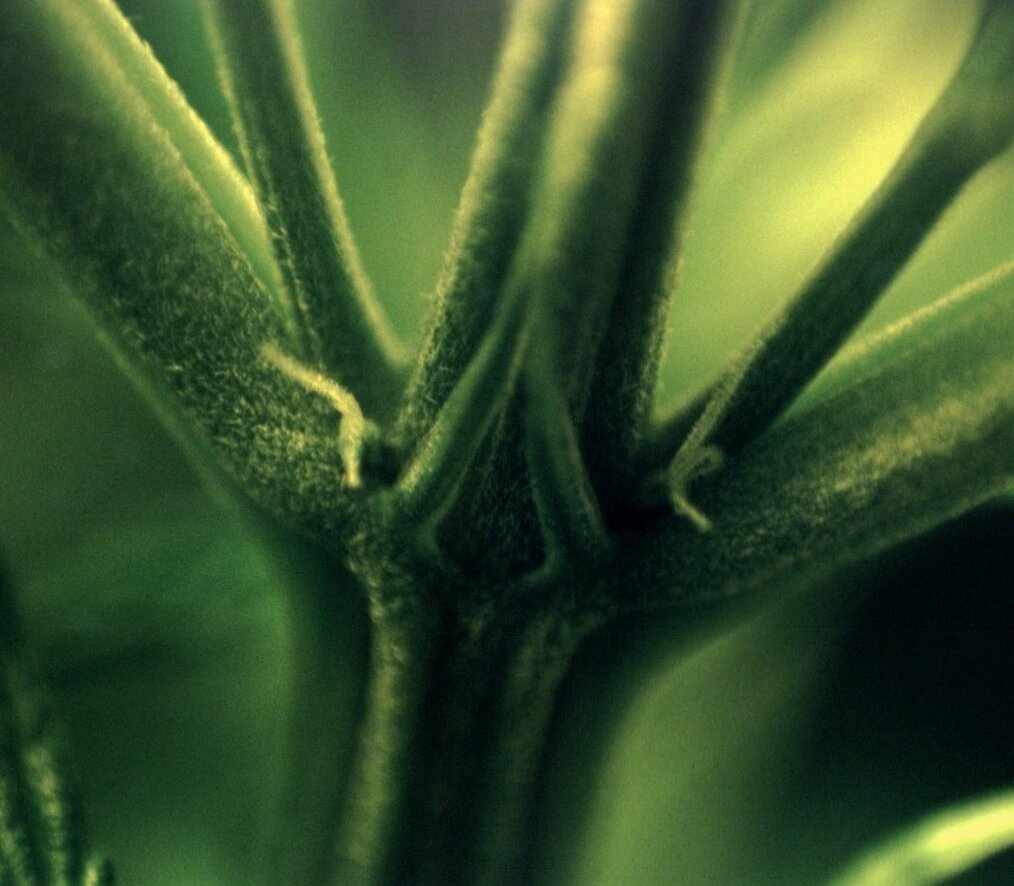
- Trichomes: These are the microscopic, mushroom-shaped glands that cover the surface of the flowers (and to a lesser extent, the leaves). They produce the plant's resin, which contains cannabinoids and terpenes.
Male plants produce pollen sacs that look like small clusters of grapes. When mature, these sacs open to release pollen. Most growers remove male plants to prevent them from pollinating the females. A pollinated female plant will focus its energy on producing seeds instead of cannabinoid-rich flowers. The result of keeping females unpollinated is known as sinsemilla, which is Spanish for "without seeds."
The Cannabis Life Cycle
A cannabis plant goes through four distinct stages from seed to harvest. The length of each stage can vary depending on the strain and growing environment.
1. Germination (3-10 days) The life cycle begins when a seed sprouts. The seed's shell cracks open, and a single root, called a taproot, grows downward. Shortly after, a stem emerges, pushing two small, rounded leaves (cotyledons) upwards.
2. Seedling (2-3 weeks) During this stage, the plant develops its first iconic fan leaves. The plant is fragile and requires moderate light and stable conditions to build a strong root system.
3. Vegetative (3-16 weeks) This is the plant's main growth period. It rapidly produces new stems, branches, and leaves, growing taller and bushier. In this stage, the plant is focused on photosynthesis and accumulating resources for flowering. The length of the vegetative stage is controlled by the photoperiod—the amount of light it receives each day. As long as it gets long days (e.g., 18+ hours of light), it will remain in this stage.
4. Flowering (8-11 weeks) Flowering is the final stage. For most cannabis varieties, this stage is triggered by a change in the light cycle to shorter days (e.g., 12 hours of light and 12 hours of uninterrupted darkness). The plant stops its vertical growth and directs all its energy into producing flowers. Male plants will develop pollen sacs, while females will grow buds covered in sticky trichomes.
Understanding these botanical basics provides the foundation for successful cultivation and a deeper appreciation for the plant's complexity.