The World of Birds An Ornithology Primer
Introduction to Ornithology
The Science of Birds
Most of us can recognize a bird. We see them every day, perched on wires, soaring overhead, or hopping across a lawn. But what does it mean to truly study them? That's where ornithology comes in.
Ornithology
noun
The branch of zoology that focuses on the scientific study of birds.
Ornithology is more than just birdwatching. It’s a formal science that digs into every aspect of avian life. Ornithologists ask big questions: How did birds evolve? Why do they migrate thousands of miles? How do they communicate? They work in labs, museums, and out in the field, from dense rainforests to frozen tundra, trying to understand these feathered animals.

A World of Birds
The bird world is incredibly diverse. Scientists have identified over 11,000 species, ranging from the tiny bee hummingbird to the towering ostrich. To make sense of this variety, ornithologists use a system of classification called taxonomy. It organizes life into a hierarchy of nested groups, from broad to specific.
Every bird belongs to the class Aves. From there, they are sorted into orders, families, genera, and finally, individual species.
This system helps us understand the relationships between different birds. For example, the American Robin is in the order Passeriformes, a massive group known as the perching birds, which also includes sparrows and crows. Meanwhile, eagles are in Accipitriformes, and ducks are in Anseriformes. Each group shares distinct characteristics.
From Dinosaurs to Doves
Where did all these birds come from? The story begins with dinosaurs. Modern birds are the direct descendants of a group of two-legged dinosaurs called theropods, which included giants like Tyrannosaurus rex. This isn't just a theory; it's supported by a mountain of fossil evidence.
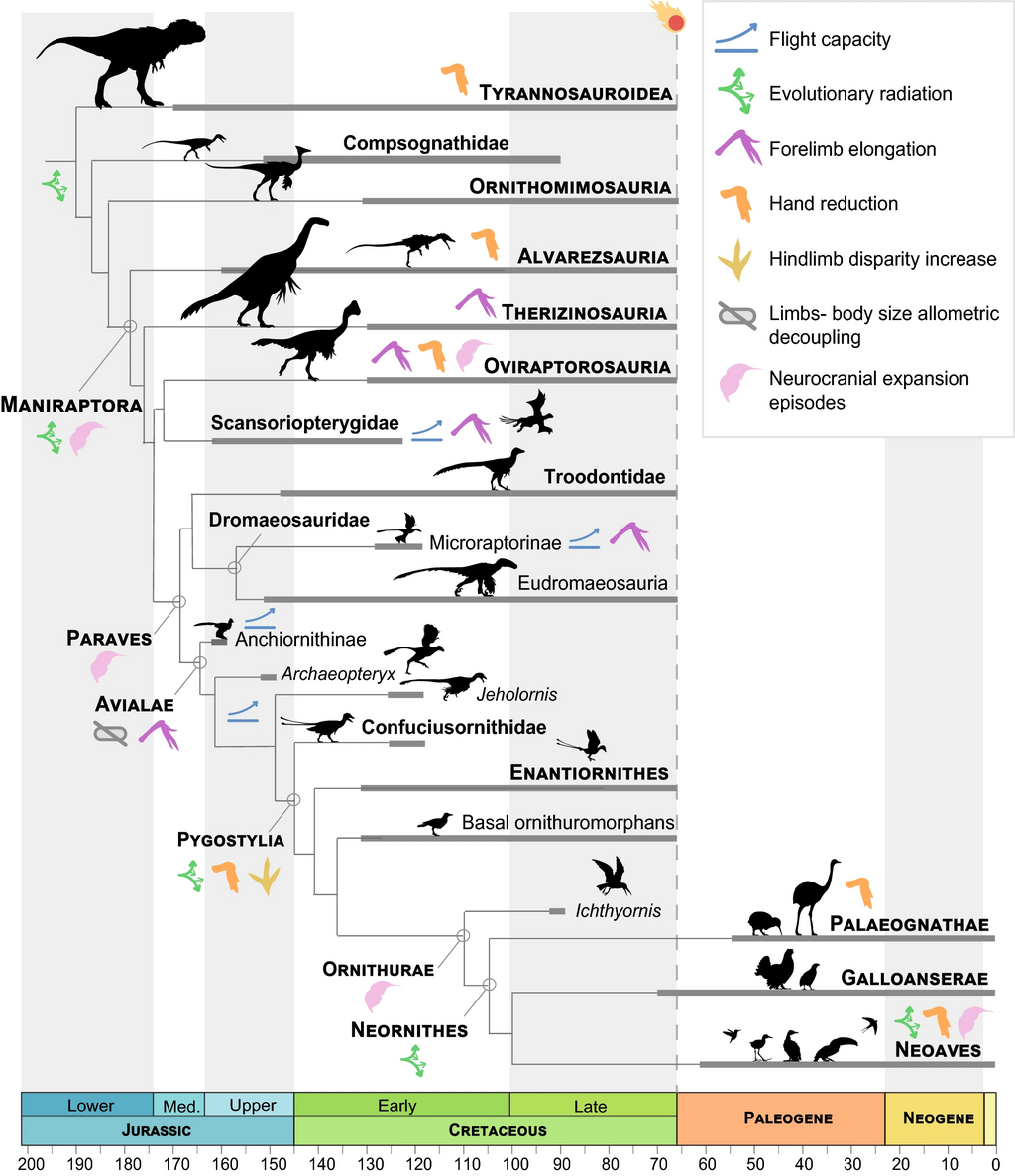
Fossils like Archaeopteryx, discovered in 1861, show a clear mix of dinosaur and bird features: teeth and a long bony tail alongside feathered wings. Over millions of years, these early bird-like dinosaurs evolved. They lost their teeth in favor of beaks, their heavy tails became shorter, and their skeletons grew lighter and stronger for flight. This incredible transformation created the birds we see today.
Masters of Adaptation
Birds have conquered nearly every habitat on Earth, from oceans to deserts, because of their remarkable adaptations. These are unique traits that help them survive and thrive.
| Adaptation | Purpose | Example |
|---|---|---|
| Feathers | Flight, insulation, display, and camouflage | The peacock's elaborate tail feathers |
| Hollow Bones | Reduces weight to make flight easier | The skeleton of a soaring eagle |
| Specialized Beaks | Adapted for specific diets | A hummingbird's long, thin nectar probe |
| Efficient Lungs | One-way airflow provides constant oxygen | Allows geese to fly at high altitudes |
These aren't just random features. Each adaptation is a solution to a challenge. An eagle’s sharp, hooked beak is perfect for tearing meat, while a finch’s short, stout beak is ideal for cracking seeds. These differences are what allow so many species to coexist.
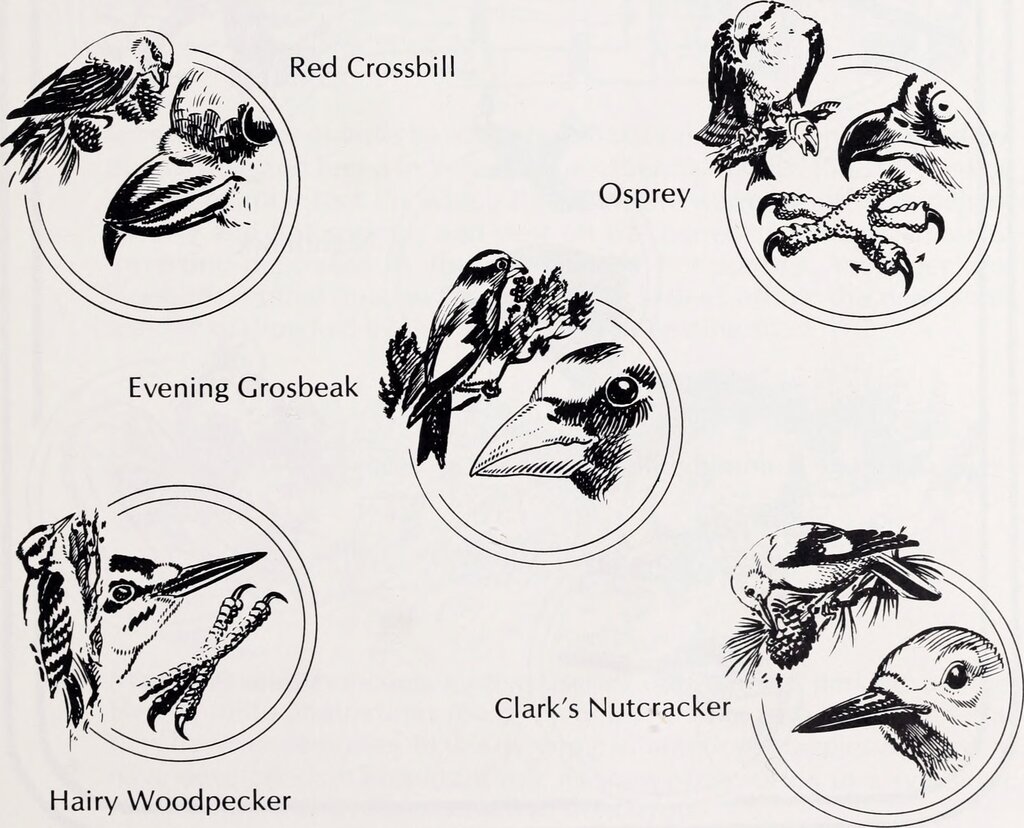
Birds also play vital roles in their ecosystems. They are pollinators, seed dispersers, predators, and scavengers. Think of hummingbirds pollinating flowers as they drink nectar, or jays burying acorns and forgetting some, effectively planting new oak trees. Vultures clean up the environment by eating carcasses. By controlling insect populations and helping plants reproduce, birds are essential threads in the web of life.
Let's review what we've covered.
What is the primary focus of ornithology?
The fossil Archaeopteryx is significant because it shows a clear mix of dinosaur and bird features.
This is just the beginning of the study of birds. Understanding their classification, evolution, and adaptations provides a foundation for appreciating their complex and fascinating lives.