The World of Artificial Intelligence
Introduction to AI
What Is Artificial Intelligence?
At its core, Artificial Intelligence (AI) is the science of making machines smart. It's a broad field of computer science focused on creating systems that can perform tasks that typically require human intelligence. This includes things like learning from experience, solving problems, understanding language, and recognizing objects.
Artificial Intelligence
noun
A field of computer science dedicated to creating systems capable of performing tasks that normally require human intelligence.
Think of it this way: we don't program an AI with rigid, step-by-step instructions for every possible scenario. Instead, we create frameworks that allow the machine to learn on its own, adapting and improving over time. The ultimate goal is to build machines that can reason and act with a level of flexibility and nuance that mirrors our own.
AI isn't about replacing human thought, but augmenting it by automating complex tasks and finding patterns we might miss.
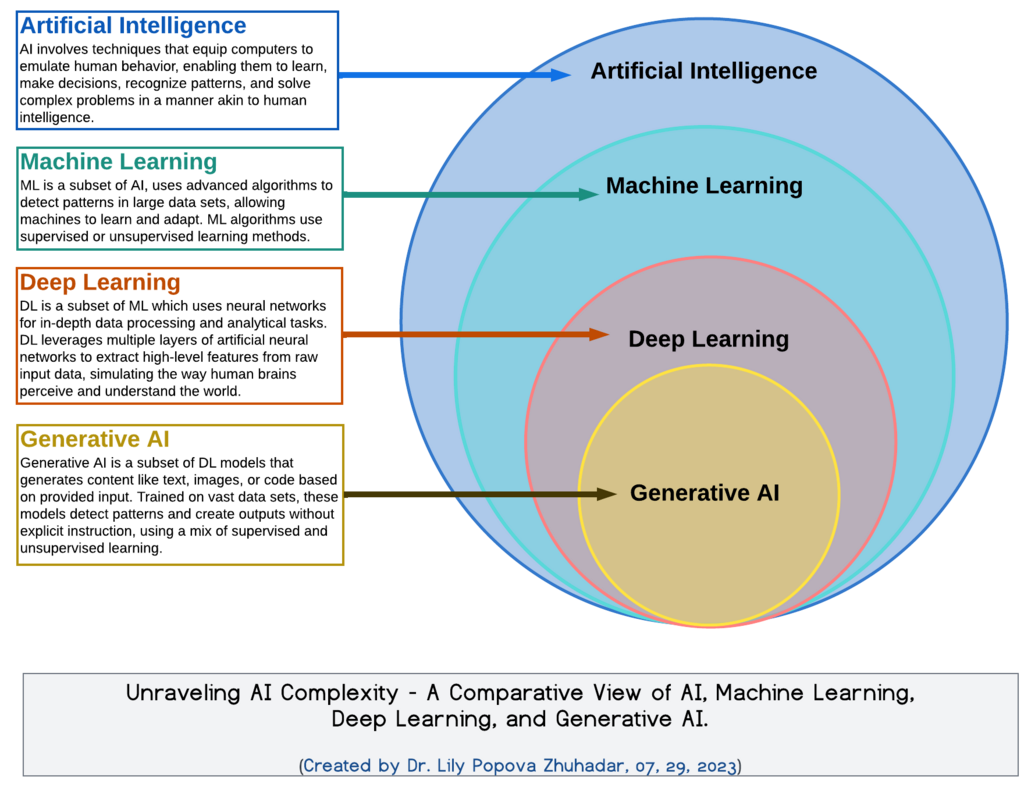
AI isn't one single thing; it's an umbrella term that covers many different approaches and subfields, like machine learning and deep learning. Each of these is a progressively more specific way to achieve artificial intelligence.
A Quick Trip Through Time
The idea of intelligent machines has been around for centuries in myths and stories, but the actual scientific pursuit of AI is much more recent. The field was officially born in the summer of 1956 at a conference at Dartmouth College. It was there that the term "Artificial Intelligence" was first coined.
Early researchers were incredibly optimistic. They believed that a machine as intelligent as a human being was only a generation away. This initial excitement led to a wave of funding and research, resulting in programs that could solve algebra problems and prove theorems in logic. However, the early promises were harder to fulfill than expected.
Progress slowed in the 1970s and again in the late 1980s. These periods, known as "AI winters," saw funding dry up as the technology couldn't keep up with the hype.
So what changed? Two key factors brought about the AI spring we're experiencing today: a massive increase in computing power and the availability of huge amounts of data. Modern computers are millions of times more powerful than their predecessors, and the internet has created a nearly endless supply of data for AIs to learn from. These two ingredients allowed old ideas to finally work in the real world and fueled the development of new, more powerful techniques.

Understanding the history of artificial intelligence is crucial for grasping its current capabilities and future potential.
Why AI Matters Today
AI has become one of the most significant technologies of our time because it changes how we solve problems. It's a general-purpose tool, much like electricity or the internet, that can be applied to nearly every field and industry. Its main power lies in its ability to analyze massive datasets and uncover patterns that are too complex for the human brain to detect.
This allows us to tackle challenges in new ways. Instead of just automating repetitive physical tasks, AI can automate cognitive tasks. It can help us make more accurate predictions, understand complex systems, and create new content. This shift from manual to intelligent automation is what makes AI so transformative.
By handling complex data analysis and pattern recognition, AI frees up human creativity and strategic thinking for higher-level challenges. Its growing importance is not just about building smarter machines, but about extending our own capabilities.
Now, let's test your knowledge on these foundational concepts.
What is the fundamental goal of Artificial Intelligence?
The term "Artificial Intelligence" was first coined at a conference in 1956 held at which institution?
Understanding these core ideas provides the foundation needed to explore the more complex and fascinating aspects of Artificial Intelligence.