The World of Artificial Intelligence
Introduction to Artificial Intelligence
What Is Artificial Intelligence?
Artificial intelligence, or AI, is the science of making machines that can perform tasks that typically require human intelligence. This includes abilities like learning from experience, solving problems, understanding language, and recognizing objects and sounds.
Think of AI not as a single technology, but as a broad field of study, similar to biology or mathematics. Its goal is to create systems that can operate intelligently and autonomously. These systems can be purely software, like a chatbot, or embedded in hardware, like a self-driving car.
At its core, AI is about building systems that can sense their environment, think, learn, and take action in response.
The ultimate ambition of some researchers is to create an Artificial General Intelligence (AGI), a machine with the ability to understand or learn any intellectual task that a human being can. However, the AI we interact with today is considered 'narrow' AI. It's designed to perform a specific task, like playing chess or identifying faces in photos, and it often does so with superhuman skill.
The Branches of AI
AI is an umbrella term that covers several specialized subfields. Understanding these branches helps clarify what AI can do.
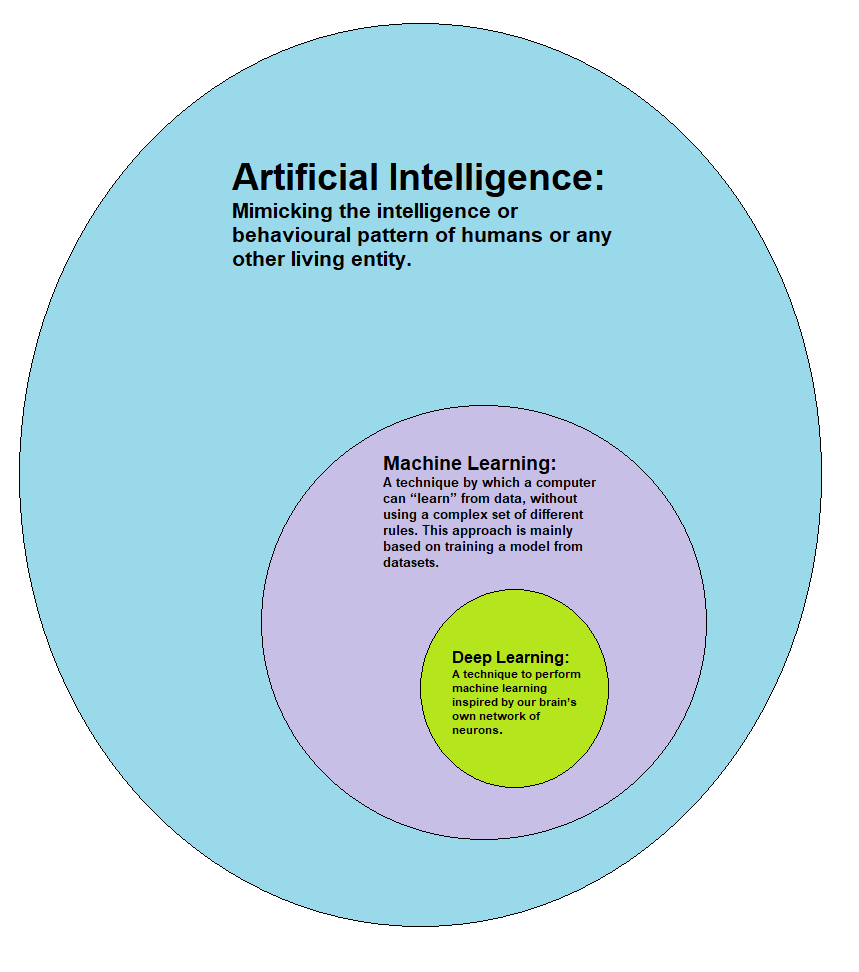
Machine Learning (ML) is the most common type of AI today. Instead of being explicitly programmed with rules, ML systems are trained on large amounts of data. They learn to identify patterns and make predictions on their own. For example, your email's spam filter learns to recognize junk mail by analyzing thousands of examples of spam and legitimate emails.
Natural Language Processing (NLP) gives machines the ability to understand, interpret, and generate human language. It's the technology behind virtual assistants like Siri and Alexa, translation services like Google Translate, and chatbots that answer customer service questions. NLP bridges the communication gap between humans and computers.
Computer Vision is the field that enables machines to 'see' and interpret the visual world. It uses cameras and algorithms to identify and process objects, people, and places in images and videos. This is the technology that allows for facial recognition to unlock your phone, helps doctors analyze medical scans, and enables cars to detect obstacles.
A Brief History of AI
The dream of creating intelligent machines is ancient, but the scientific pursuit of AI is relatively new. The field officially began in 1956 at a conference at Dartmouth College, where the term "artificial intelligence" was first used.
The early years were filled with optimism. Researchers created programs that could solve algebra word problems and play games. This era was dominated by symbolic AI, or 'Good Old-Fashioned AI,' which relied on programmers to hand-craft rules for the machine to follow. It worked for well-defined, logical problems but struggled with the messiness of the real world.
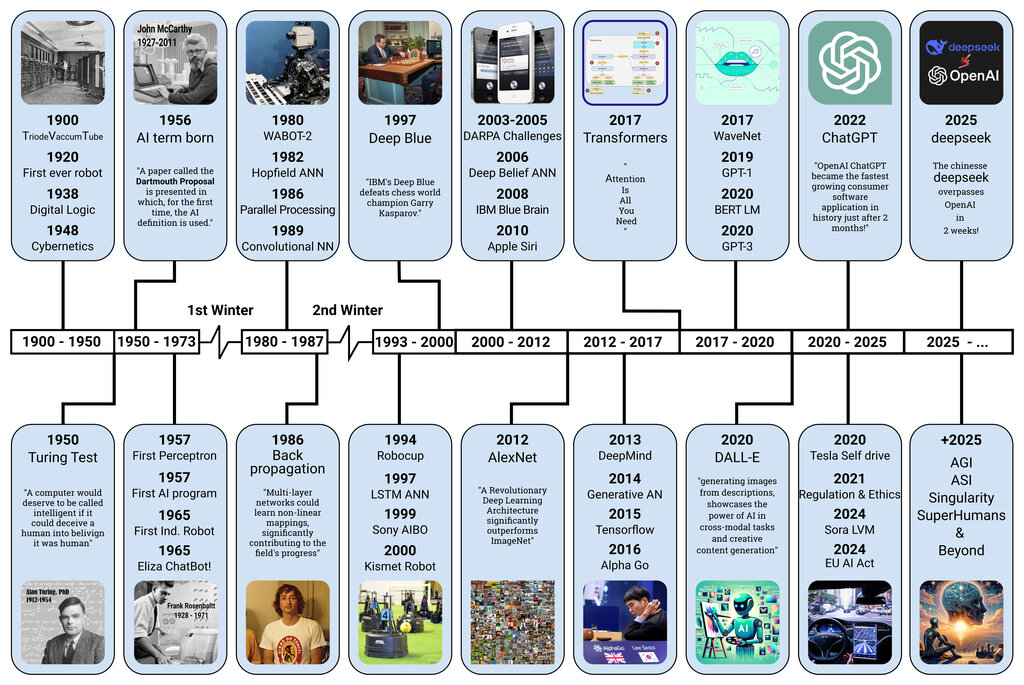
Progress slowed in the 1970s and again in the late 1980s, leading to periods known as 'AI winters.' Funding dried up as the initial excitement outpaced the available computing power and data.
A renaissance began in the 1990s and accelerated dramatically in the 2010s. This resurgence was driven by three key factors:
- Big Data: The internet created vast amounts of data to train AI models.
- Powerful Hardware: The development of specialized processors (like GPUs) made it possible to run complex AI models quickly.
- Better Algorithms: Breakthroughs in machine learning, particularly deep learning, allowed for huge leaps in capability.
This convergence has brought AI out of the research lab and into our daily lives, powering everything from search engines to streaming service recommendations.
Now you have a foundational understanding of what AI is, its main branches, and how it came to be.