The World of Artificial Intelligence
Introduction to AI
What Is Artificial Intelligence?
Artificial intelligence, or AI, is a field of computer science focused on creating machines that can perform tasks that typically require human intelligence. This includes things like learning from experience, understanding language, recognizing objects, and solving complex problems.
At its core, AI is about building systems that can think, reason, and learn.
Think about how you learn to ride a bike. You don't follow a strict set of rules. Instead, you try, you fall, and you adjust until you get it right. AI systems, particularly a subset called machine learning, work in a similar way. They process vast amounts of data, identify patterns, and make predictions or decisions without being explicitly programmed for every possible scenario.
A Brief History of AI
The idea of intelligent machines has been around for centuries, but the modern field of AI officially began in the summer of 1956. A group of researchers gathered at Dartmouth College for a workshop where they coined the term "artificial intelligence" and laid out the field's ambitious goals.
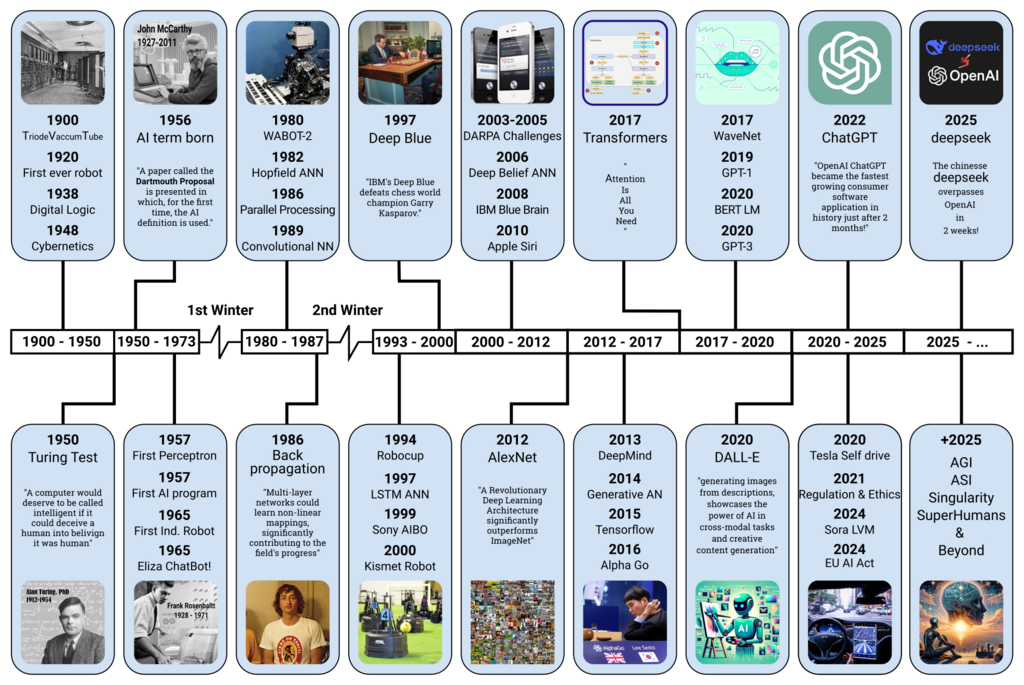
The years that followed were a mix of incredible excitement and frustrating setbacks. Early successes led to bold predictions, but the complexity of creating true intelligence was underestimated. This led to periods known as "AI winters," when funding and interest dwindled.
However, recent breakthroughs in computing power and the availability of massive datasets have fueled a resurgence. Today, AI is advancing faster than ever, moving from research labs into our daily lives.
Two Kinds of AI
It's important to distinguish between the AI we have today and the AI often seen in movies. The field is broadly divided into two categories: Narrow AI and General AI.
Artificial Narrow Intelligence (ANI), sometimes called Weak AI, is what we have now. These systems are designed to perform a single, specific task exceptionally well. Your phone's voice assistant, the recommendation engine on a streaming service, and the AI that helps doctors detect diseases in medical images are all examples of ANI. They are powerful tools, but they operate within a limited, pre-defined range.
Artificial General Intelligence (AGI), or Strong AI, is the stuff of science fiction. This refers to a machine with the ability to understand, learn, and apply its intelligence to solve any problem, much like a human being. AGI does not yet exist, and creating it remains one of the most profound challenges in science.
Why AI Matters Now
AI is no longer just a theoretical concept. It's a powerful force that is actively reshaping our world, from how we work and communicate to how we solve major global challenges in medicine, climate change, and exploration. Its influence is woven into the fabric of modern society.
Understanding the fundamental ideas behind AI is becoming essential for everyone. It helps us appreciate the technology we use every day, engage in important conversations about its ethical implications, and prepare for a future where intelligent systems play an even larger role. This knowledge empowers you to be an informed user and citizen in an increasingly AI-driven world.
Now, let's test your understanding of these core concepts.
What is the primary focus of the field of artificial intelligence (AI)?
The type of AI that can perform a wide variety of tasks at a human level of intelligence, but does not yet exist, is known as:
By grasping these basics, you've built a solid foundation for exploring the more complex and fascinating aspects of artificial intelligence.