The World of AI Agents
Introduction to AI Agents
More Than Just Code
Think about your favorite navigation app. You tell it where you want to go, and it gives you directions. It's helpful, but it doesn't do much on its own. It's a tool that waits for your command. Now, imagine a self-driving car. It doesn't just know the route; it perceives the world around it—other cars, pedestrians, traffic lights—and makes decisions in real time to get you to your destination safely. That's the difference between a simple program and an AI agent.
An AI agent is an entity that perceives its environment, makes decisions, and takes actions to achieve specific goals.
Unlike traditional software that follows a rigid set of instructions, an agent operates with a degree of independence. It's designed to be a problem-solver in a dynamic world, not just a calculator waiting for numbers. This capability comes from a few core characteristics that all agents share.
The Core Traits of an Agent
What truly sets an AI agent apart can be broken down into four key traits: autonomy, reactivity, proactivity, and social ability.
Autonomy
noun
The ability to operate without direct human intervention or control.
Autonomy is the cornerstone of any AI agent. An autonomous agent has control over its own actions and internal state. It can make choices and perform tasks to meet its objectives without needing a person to guide every step. Think of a robotic vacuum cleaner. You don't steer it with a remote control; it navigates the room by itself, avoiding obstacles and cleaning the floor based on its programming and sensors.
Action and Initiative
Agents must also be able to respond to their surroundings and take initiative. This is where reactivity and proactivity come in.
Reactivity is about responding to changes in the environment in a timely way. If a self-driving car's sensors detect a sudden obstacle, it must react immediately by braking or swerving. It doesn't wait for a command; it responds to the stimulus.
Proactivity is the flip side of the coin. Instead of just reacting, a proactive agent takes goal-directed initiative. Your email's spam filter is a good example. It doesn't just wait for you to flag junk mail (a reactive approach). It proactively identifies and files away suspicious messages to keep your inbox clean, working toward its goal of protecting you from unwanted content.
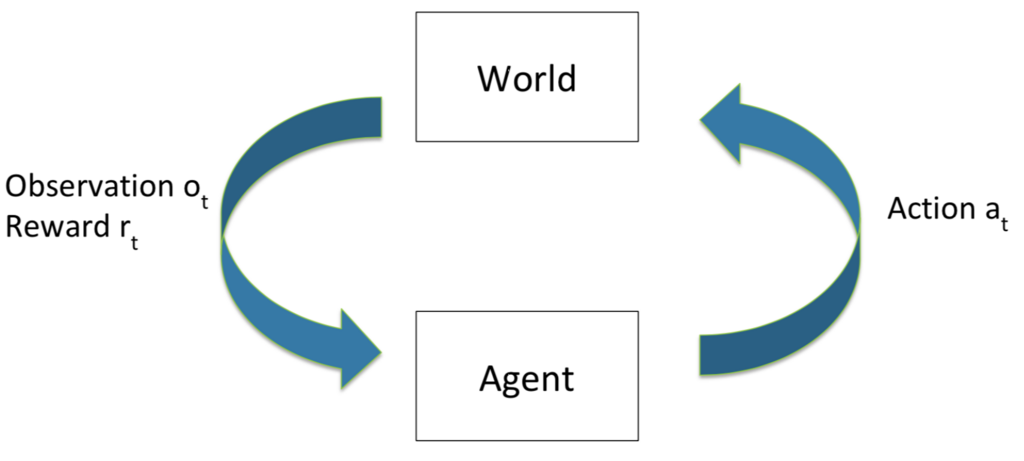
Finally, many agents aren't alone. They need social ability to interact with other agents and even humans. This isn't about being friendly; it's about communication and coordination. For instance, in a smart warehouse, multiple robotic agents might need to communicate to avoid collisions and decide which robot should retrieve which package. They follow a communication protocol, much like humans use language, to work together and achieve a common goal.
These four characteristics—autonomy, reactivity, proactivity, and social ability—are what elevate a piece of software from a simple tool into an active, intelligent agent.
What is the primary difference between an AI agent and a traditional software program?
A self-driving car immediately brakes when a pedestrian unexpectedly steps into the road. This action is a clear example of which agent characteristic?