The Wonderful World of Water
Molecular Structure
The Blueprint of a Water Molecule
At its core, water is a simple molecule. Its chemical formula, H₂O, is a recipe: take two hydrogen (H) atoms and one oxygen (O) atom, and put them together. This trio forms one of the most essential substances on Earth.
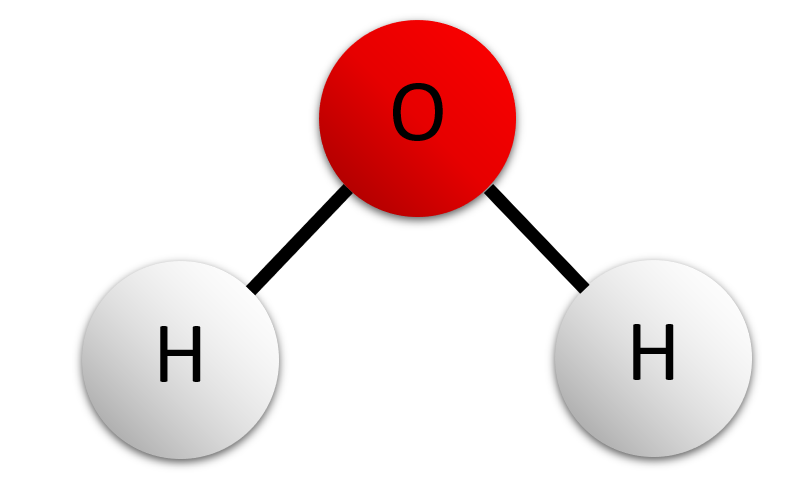
But how exactly do they stick together? It's not like they're just glued. The atoms are joined by powerful chemical connections called covalent bonds, which form the sturdy structure of every single water molecule.
Sharing is Caring
Atoms form covalent bonds by sharing electrons. Think of it like two people sharing a pair of gloves to keep their hands warm. Neither person owns the gloves completely, but by sharing, both benefit.
An oxygen atom has six electrons in its outer shell, but it wants a full set of eight to be stable. A hydrogen atom has one electron but wants two. By sharing, they all get what they need. The oxygen atom shares one of its electrons with each of the two hydrogen atoms. In return, each hydrogen atom shares its single electron with the oxygen atom.
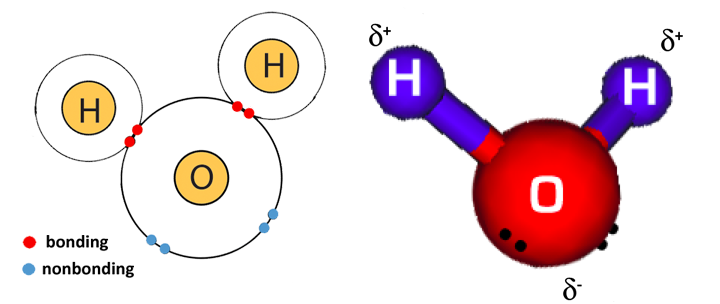
This sharing creates two strong covalent bonds that hold the molecule together. But the sharing isn't perfectly equal. Oxygen is a bit more 'electron-greedy' than hydrogen.
A Lopsided Molecule
In the tug-of-war for shared electrons, the bigger, more powerful oxygen atom pulls them a little closer. This is a property called electronegativity. Because the electrons spend more time buzzing around the oxygen atom, that end of the molecule gets a slight negative charge. The two hydrogen atoms, having their electrons pulled away slightly, are left with a slight positive charge.
This separation of charges makes water a polar molecule. It has a negative pole (oxygen) and a positive pole (the side with the two hydrogens).
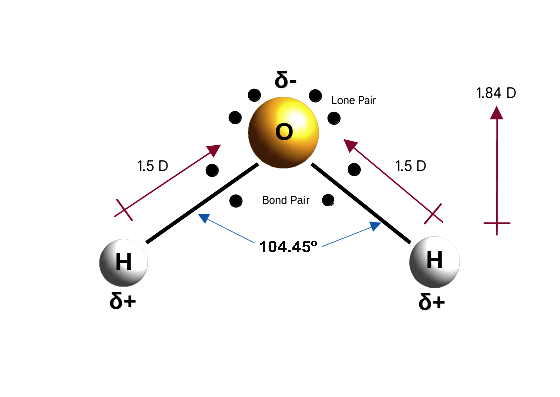
The molecule's shape is also a crucial part of its polarity. The two hydrogen atoms don't stick out from the oxygen in a straight line. Instead, they form a 'bent' or V-shape. The two pairs of unshared electrons on the oxygen atom push the hydrogen atoms downwards, creating a bond angle of about 104.5°.
Because of its bent shape and unequal electron sharing, a water molecule has a slightly positive side and a slightly negative side, acting like a tiny magnet.
This polarity is the secret behind many of water's amazing abilities. It's why water can dissolve so many different substances and why water molecules are so attracted to each other. We'll explore those properties later on, but it all starts with this simple, lopsided structure.
Ready to check your understanding?
What is the chemical formula for a single molecule of water?
The bond that joins the hydrogen and oxygen atoms within a water molecule is a(n) ________ bond.