The Winter Solstice Explained
Earth's Tilt and Seasons
The Tilt Is Everything
Why do we have seasons? The answer isn't about how close Earth is to the Sun. In fact, our planet is slightly closer to the Sun during the Northern Hemisphere's winter. The real reason is much more elegant: Earth is tilted.
Imagine a spinning top. It doesn't just spin perfectly upright; it usually has a bit of a lean. Earth is similar. It spins on an axis, an imaginary line running through the North and South Poles. But this axis isn't straight up and down compared to its path around the Sun. It's tilted by about 23.5 degrees.
The seasons are the result of Earth’s 23.5-degree axial tilt.
This tilt is constant. As Earth makes its year-long journey around the Sun, the North Pole always points toward the same spot in space, near the star Polaris. Because of this consistent lean, different parts of the planet receive more direct sunlight at different times of the year.
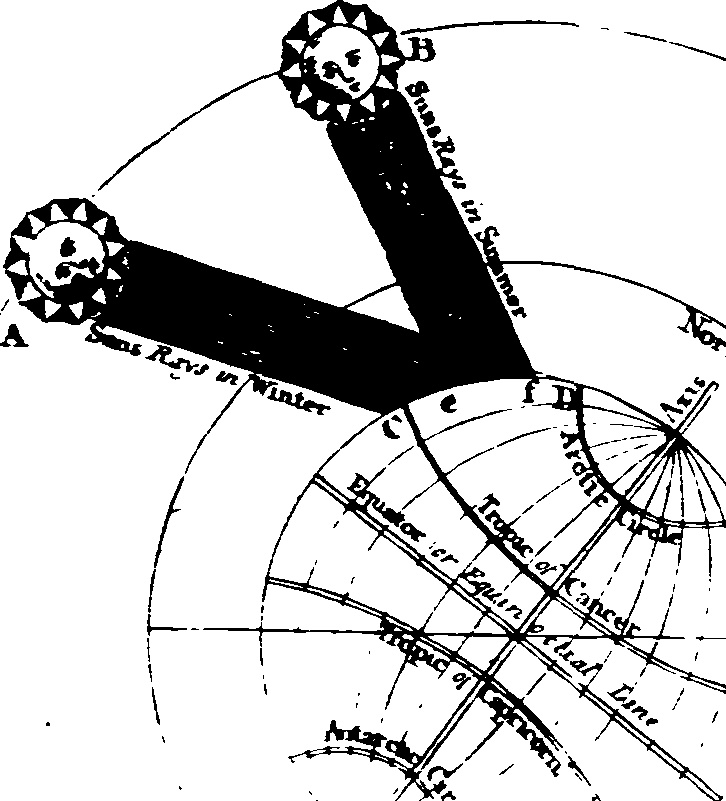
When a hemisphere is tilted toward the Sun, it receives more direct, concentrated solar energy. The Sun's rays hit the ground at a steep angle, warming it effectively. This period is what we call summer, marked by longer days and warmer temperatures.
Conversely, when that same hemisphere is tilted away from the Sun, the sunlight strikes the surface at a shallow angle. This spreads the same amount of energy over a much larger area, making it less intense. This brings on winter, with its shorter days and cooler weather.
Solstices and Equinoxes
Our planet's orbit has four key moments that mark the official start of the seasons. These are the solstices and equinoxes.
solstice
noun
The point in Earth's orbit when the Sun is at its greatest distance north or south of the celestial equator. It marks the longest and shortest days of the year.
There are two solstices each year. The summer solstice (around June 21st in the Northern Hemisphere) is when one of Earth's poles is at its maximum tilt toward the Sun. This is the longest day of the year. Six months later, the winter solstice (around December 21st) occurs when the pole is tilted farthest away from the Sun, giving us the shortest day of the year.
Because of the tilt, the hemispheres experience opposite seasons. When the Northern Hemisphere is tilted towards the Sun enjoying summer, the Southern Hemisphere is tilted away, deep in winter. Their solstices are reversed: June brings their winter solstice, while December marks their summer solstice.
equinox
noun
The point in Earth's orbit when the Sun crosses the celestial equator, and day and night are of approximately equal length.
Twice a year, the tilt is neither toward nor away from the Sun. On these days, the Sun shines directly on the equator, and the lengths of day and night are nearly equal everywhere on Earth. These are the equinoxes.
The vernal (spring) equinox happens around March 20th in the Northern Hemisphere, signaling the start of spring. The autumnal equinox occurs around September 22nd, kicking off autumn. In the Southern Hemisphere, these are flipped: March is for autumn, and September is for spring.
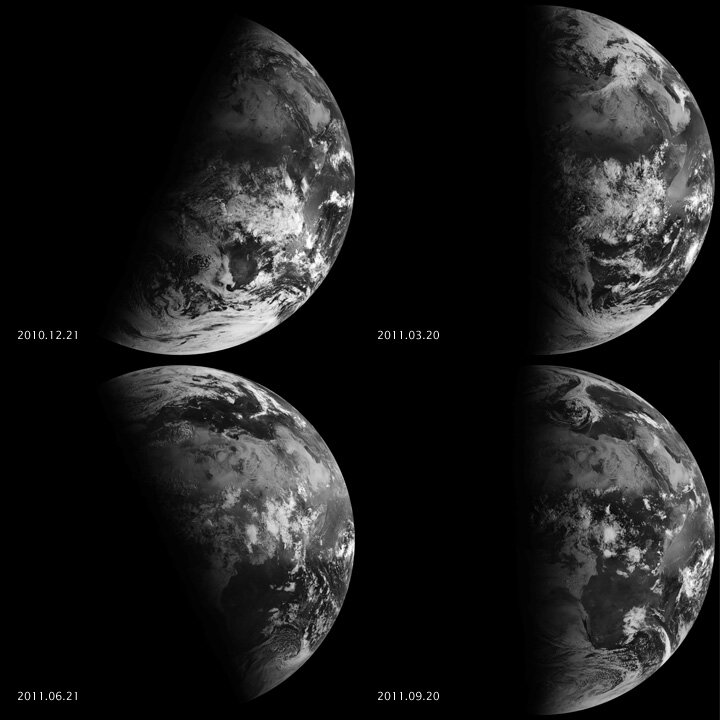
Let's check your understanding of these key astronomical events.
What is the primary reason Earth experiences distinct seasons?
When the Northern Hemisphere is tilted away from the Sun, the sunlight it receives is less intense. This leads to winter.
These four points—two solstices and two equinoxes—aren't just abstract ideas. They are the direct, predictable results of our planet's constant 23.5-degree tilt as it journeys through space.