The Whosampled Community Explained
Introduction to Music Sampling
What Is Sampling?
At its heart, sampling is a simple idea: taking a portion of one sound recording and reusing it as an element in a new song. This snippet, or "sample," can be anything. It could be a drum beat, a melody, a vocal line, or even a non-musical sound.
sampling
noun
The act of taking a portion, or sample, of one sound recording and reusing it as an instrument or a sound recording in a different song or piece.
Think of it like making a collage. A visual artist might clip images from magazines and photographs to create a new piece of art. A music producer does the same, but with sound. By combining these audio snapshots in new ways, they can create something entirely original.
In the context of musical synthesis, sampling is the process of recording a real instrument and then using that recording to make new music.
A Quick History
The roots of sampling go back further than you might think. In the 1940s, French composers of musique concrète experimented with tape loops, physically splicing and rearranging recordings of everyday sounds to create new compositions. This was sampling in its most manual form.
Technology soon caught up. The Mellotron, an early keyboard sampler from the 1960s, used strips of magnetic tape to play back pre-recorded sounds. It's famously heard on The Beatles' "Strawberry Fields Forever," creating the iconic flute intro.
The real game-changer was the arrival of digital technology. In the late 1970s and 1980s, machines like the Fairlight CMI and the E-mu SP-12 made it possible to record, edit, and play back sounds digitally. Suddenly, sampling was faster, more flexible, and more accessible. It was no longer just for experimental composers or the world's biggest rock bands.
Sampling's Sonic Footprint
No genre is more connected with sampling than hip-hop. In its early days, DJs would use two turntables to isolate and extend the drum breaks from funk and soul records, creating a continuous, danceable beat. This was the foundation of hip-hop music.
As samplers became more affordable, producers took this idea into the studio. They could now chop up drum breaks, loop horn stabs, and layer vocal snippets with unprecedented control. Sampling became the primary way hip-hop beats were made, building new sounds on the foundations of the old.
Sampling has been a transformative force in hip hop, enabling artists to pay homage to their musical roots while pushing the boundaries of creativity.
But hip-hop is far from the only genre to embrace sampling. Electronic music, from house and techno to drum and bass, relies heavily on sampled drum machines, vocal hooks, and atmospheric sounds. Pop artists use samples to add familiar textures to their tracks, while even some rock and indie bands have incorporated samples into their work.
Sampling became a powerful tool for musical conversation, allowing artists to reference, remix, and reinterpret the music that inspired them. A new song could contain echoes of dozens of others, creating a rich tapestry of sound.
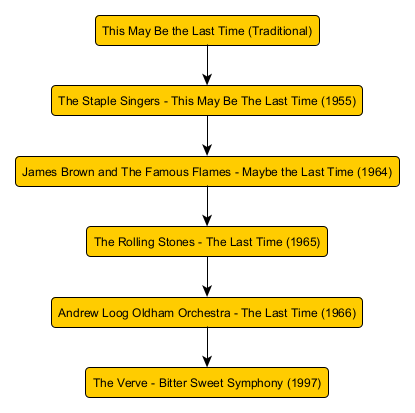
This new creative process fundamentally changed music production. Before sampling, creating music meant getting musicians in a room to play instruments. With samplers, a single producer could build an entire track from their record collection, a drum machine, and a synthesizer. It democratized music-making, allowing complex, layered arrangements to be built by one person in a bedroom studio.
Sampling turned the world's entire catalog of recorded sound into a potential instrument, opening up endless creative possibilities.
Ready to test your knowledge? Let's see what you've learned about the basics of music sampling.
What is the core concept of music sampling?
Which early experimental music style from the 1940s is considered a precursor to modern sampling due to its use of physically spliced tape loops?
Understanding sampling is the first step in appreciating the deep connections woven throughout modern music.