The War of 1812
Introduction to the War of 1812
A Second War for Independence
Less than 30 years after the American Revolution ended, the United States found itself at war with Great Britain once again. This conflict, the War of 1812, is sometimes called America's "second war for independence." It was a strange, sprawling war, fought on the high seas, across the Great Lakes, and in the forests of the American frontier. To understand why it happened, we need to look at the tense relationship between the young United States and the global superpower of Great Britain.
Sparks of Conflict
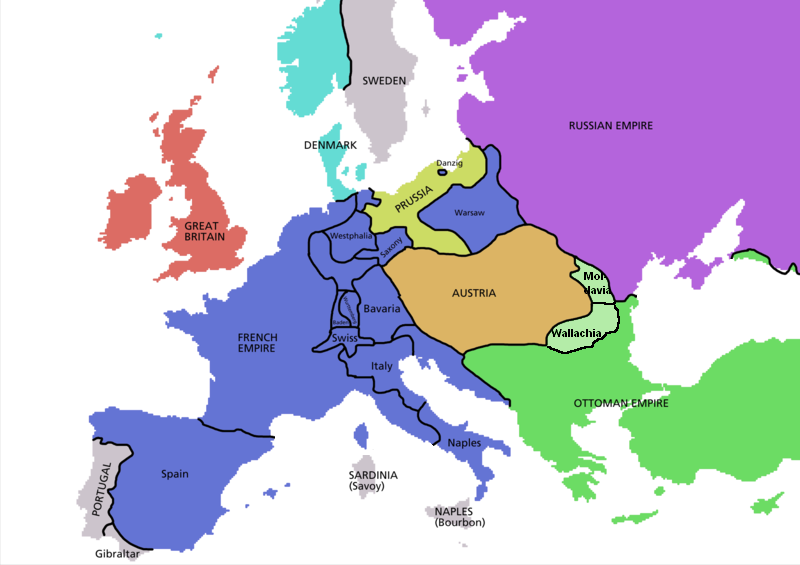
The main stage for the conflict was set thousands of miles away in Europe. Britain was locked in a massive war against Napoleon's France. This global struggle spilled over and created major problems for the United States, which was trying to remain neutral and trade with both sides.
Britain's Royal Navy was the most powerful in the world, but it was always short on sailors. To fill its ranks, it practiced "impressment" – forcibly taking sailors from other ships and pressing them into service. British warships regularly stopped American vessels, searched them, and seized sailors they claimed were British deserters. Thousands of American citizens were illegally forced into the British navy, an act that outraged the American public.
Imagine a foreign power boarding a U.S. ship today and kidnapping its crew. That's how inflammatory impressment was in the early 1800s.
On top of that, both Britain and France tried to block the United States from trading with their enemy. Britain's Orders in Council required neutral ships to stop at a British port and pay a tax before trading with France. This crippled American shipping and was seen as a direct attack on U.S. sovereignty and its right to free trade.
The final major cause of the war was unfolding on the American frontier. As American settlers pushed west into the Ohio Valley and the Great Lakes region, they clashed with Native American tribes. Many of these tribes received weapons and encouragement from British officials in Canada, who hoped to create a buffer state to block American expansion. A Shawnee leader named Tecumseh forged a confederacy of tribes to resist the American advance, and many Americans believed the British were behind this unified opposition.
In most American textbooks, British impressment of sailors, British restriction of American trade and British support of Native Americans on the frontier are usually cited as the main causes in the War of 1812.
The War Unfolds
In June 1812, President James Madison asked Congress to declare war. The vote was one of the closest war declarations in U.S. history, reflecting a deeply divided country. The war was championed by a group of young congressmen known as the "War Hawks," who saw it as an opportunity to defend American honor and perhaps even annex Canada.
The war was fought on three main fronts: the Atlantic Ocean, the Great Lakes and the U.S.-Canadian border, and the Southern United States. The early years of the war did not go well for the Americans. An invasion of Canada failed miserably. However, the U.S. Navy achieved some stunning victories in single-ship duels, most famously with the USS Constitution, nicknamed "Old Ironsides."
Key figures emerged on both sides. In the west, the American general William Henry Harrison defeated Tecumseh's confederacy at the Battle of the Thames in 1813, where Tecumseh himself was killed. This broke the power of the Native American alliance. In the south, Andrew Jackson became a national hero for his decisive victory over Creek warriors at the Battle of Horseshoe Bend and, most famously, against the British at the Battle of New Orleans in 1815. Unbeknownst to the fighters, the battle took place after a peace treaty had already been signed.
An End with No Clear Winner
By 1814, both sides were exhausted. Napoleon had been defeated in Europe, so Britain's need for impressment and trade restrictions vanished. The war had reached a stalemate. Diplomats met in Ghent, Belgium, and signed the Treaty of Ghent on Christmas Eve, 1814. The treaty essentially returned everything to the way it was before the war. No territory changed hands, and the treaty didn't even mention impressment or trade rights.
| Outcome | Description |
|---|---|
| Territorial Changes | None. Borders returned to their pre-war status (status quo ante bellum). |
| Impressment | Not addressed in the treaty, but the practice ended with the Napoleonic Wars. |
| Native American Resistance | The war broke the power of Tecumseh's confederacy in the Northwest. |
| Nationalism | A surge of patriotism and national unity swept through the United States. |
So who won? It's complicated. From a military standpoint, it was a draw. The Americans didn't achieve their stated war aims, and their invasion of Canada was a failure. The British successfully defended Canada but failed in their invasions of New York, Baltimore, and New Orleans. Canadians, for their part, developed a strong sense of identity from having repelled an American invasion.
For the United States, even though the war ended in a tie, it felt like a victory. The country had stood up to the mighty British Empire for a second time and survived. This sparked a new wave of patriotism and confidence that would shape the nation for decades to come.
Which of the following was a primary reason the United States declared war on Great Britain in 1812?
The Treaty of Ghent, which officially ended the War of 1812, resulted in significant territorial gains for the United States.