The VRIO Framework for Competitive Advantage
Introduction to Strategic Management
What is Strategic Management?
Strategic management is the ongoing process of planning, monitoring, analyzing, and assessing everything a company needs to do to meet its goals. Think of it as a business's long-term game plan. It’s not just about reacting to daily market changes, but about proactively steering the company toward a desired future.
This involves asking big questions: What business are we in? What do we do better than anyone else? Who are our customers? How can we create value for them?
The answers to these questions form a strategy, which acts as a roadmap for the entire organization. Every decision, from marketing campaigns to product development, should align with this overarching strategy.
Strategy is about making clear choices on how to compete. It’s the art of deliberately choosing to be different.
The Goal Is Competitive Advantage
Why do you choose one brand of coffee over another? Or one smartphone over its rival? It's because that brand has a competitive advantage. This is any unique feature or benefit that makes a company's product or service more desirable to customers than its competitors'.
Competitive Advantage
noun
A condition or circumstance that puts a company in a favorable or superior business position.
This advantage can come from many places: offering the lowest price, providing the highest quality, having the most innovative technology, or delivering outstanding customer service. The key is that the advantage must be something customers value. A company could have the world's best fax machine, but that's not a valuable advantage today.
A great strategy doesn't just create an advantage; it creates a sustainable one. The goal is to build a position that competitors find difficult to imitate, allowing the company to outperform rivals over the long run.
Looking Inward and Outward
So, how do leaders build a winning strategy? They start by doing their homework. Crafting a good strategy requires a deep understanding of two environments: the world outside the company and the world inside it.
When strategic management leaders and managers formulate strategy, they focus on an outside-in perspective.
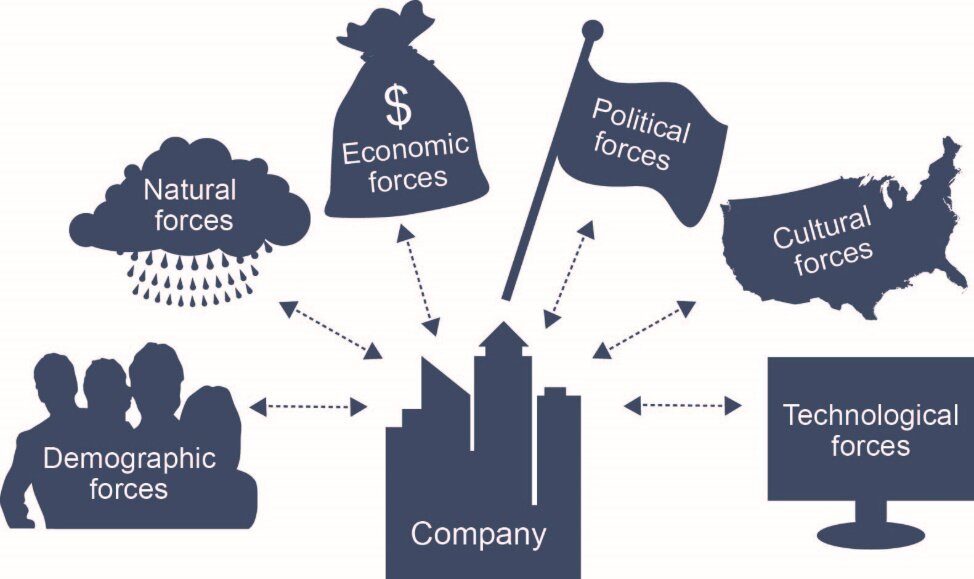
External analysis involves scanning the landscape outside the organization's walls. This means looking at the industry, the competitors, and the broader macro-environment. Questions in an external analysis include:
- Who are our main competitors, and what are they doing?
- How large is the market, and is it growing or shrinking?
- Are there new technologies or regulations that could impact our business?
- What are customers' needs and preferences, and are they changing?
This is like a ship's captain studying weather charts and sea maps. Ignoring these external forces is a recipe for disaster.
Internal analysis, on the other hand, is a candid look in the mirror. It's an assessment of the company's own strengths and weaknesses. This involves evaluating its resources, capabilities, and core competencies. Questions in an internal analysis include:
- What are we really good at? (e.g., product design, marketing, operational efficiency)
- What are we not so good at?
- Do we have a strong brand or valuable patents?
- Is our company culture an asset or a liability?
This process helps a company understand what unique assets it can leverage to compete. A strategy that doesn't align with a company's internal strengths is just wishful thinking.
Ultimately, a successful strategy is born where internal strengths meet external opportunities. It leverages what the company does best to meet a real need in the market. This foundational understanding of a firm's internal workings is a critical first step before applying more detailed frameworks to pinpoint what truly gives a company its edge.
What is the primary focus of strategic management?
A key quality of a strong competitive advantage is that it must be something customers value.