The Vivaha Suktam Vedic Wedding Hymn
Introduction to Vedic Literature
The Foundation of Dharma
At the heart of Hindu tradition lies a vast collection of sacred texts known as the Vedas. The word Veda itself means "knowledge" in Sanskrit, and these texts are considered divine revelations, or śruti ("what is heard"), rather than works of human authorship. They form the oldest layer of Sanskrit literature and are the foundational scriptures of Hinduism, guiding everything from complex rituals to daily life.
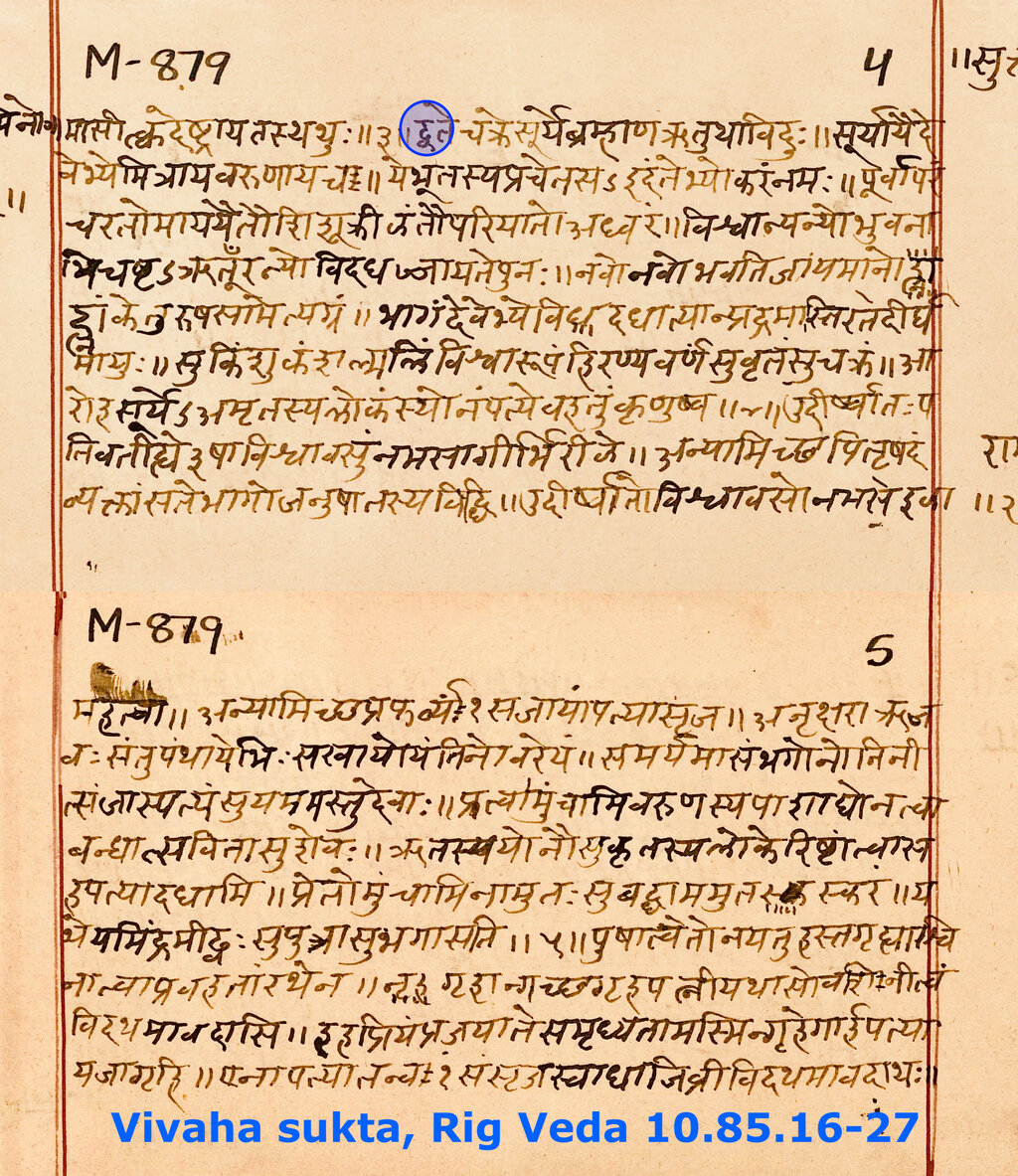
The Vedic literature is organized into four main collections, each with a unique purpose and style.
| Veda | Focus |
|---|---|
| Rigveda | The principal Veda, containing hymns of praise to various deities. |
| Yajurveda | A guidebook for priests with prose mantras for sacrifices and rituals. |
| Samaveda | Melodies and chants, mostly drawn from the Rigveda, set to music. |
| Atharvaveda | Spells, incantations, and hymns for healing and daily life. |
The Rigveda is the oldest and most important, a rich source of mythology and poetic hymns. The Yajurveda provides the practical instructions for conducting ceremonies. The Samaveda turns Rigvedic hymns into songs for liturgical purposes, and the Atharvaveda contains knowledge relevant to everyday concerns, from medicine to warding off evil.
Together, these four Vedas create a comprehensive framework for spiritual life, worship, and social conduct. They are not just ancient books but a living tradition, with their hymns and formulas forming the backbone of countless rituals performed to this day.
Life's Sacred Milestones
Within the Hindu tradition, an individual's life is seen as a spiritual journey marked by a series of rites of passage. These are called samskaras.
samskara
noun
A sacrament or rite of passage in a Hindu's life, marking a significant transition.
Samskaras are ceremonies that sanctify and prepare a person for different stages of their existence. They begin before birth and continue through to the final rites after death. The purpose of these rituals is to purify the individual and mark their entry into a new phase of life, whether it's receiving a name, beginning education, getting married, or preparing for renunciation.
Each samskara is a deeply significant event, involving specific rituals, prayers, and of course, the chanting of Vedic hymns. These hymns aren't just background noise; they are the core of the ceremony, invoking divine blessings and giving the ritual its spiritual power and meaning.
The hymns of the Vedas transform a simple action into a sacred rite, connecting the individual's life journey to the cosmic order.
Understanding this context is key. The Vedas provide the sacred words, and the samskaras provide the sacred moments. Together, they create a structured path for a person's life, grounding it in tradition and spiritual significance. This framework is the world from which specific hymns, such as those for marriage, draw their profound importance.