The Violin Explored
Violin Origins
Before the Violin
The violin didn't just appear out of nowhere. It evolved from a family of bowed string instruments that were popular across Europe for centuries. Think of them as the violin's older cousins. Two of the most important ancestors were the rebec and the lira da braccio.
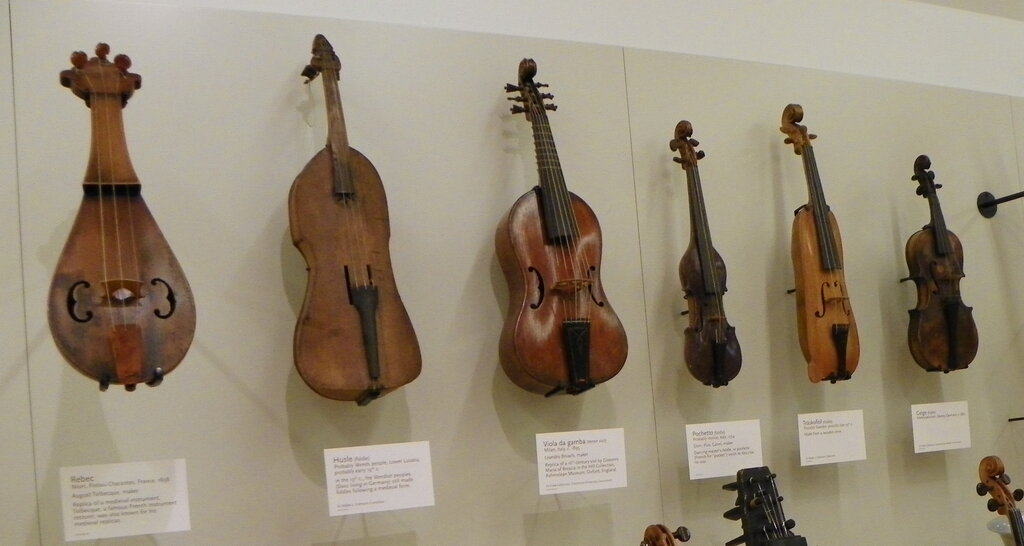
The rebec, which originated in the Arab world, was a small, pear-shaped instrument with three strings. It had a sharp, piercing tone and was often played by traveling musicians. The lira da braccio, on the other hand, was a more sophisticated instrument favored by courtly poets in Renaissance Italy. It had a shape closer to the modern violin, with distinct bouts (the C-shaped curves on the sides), and was held against the shoulder.
These early instruments combined key features: they were played with a bow, had a fingerboard to change pitch, and were small enough to be held. They set the stage for a new instrument that would blend their best qualities.
An Italian Innovation
The modern violin emerged in the early 16th century in Northern Italy. This region, particularly the cities of Cremona and Brescia, was a hub of craftsmanship and artistic innovation during the Renaissance. The cultural demand was shifting. Patrons and musicians wanted an instrument with a richer, more expressive range than the rebec, but more versatile than the lira da braccio.
Lyre for the arm
This is where the luthiers—the skilled makers of stringed instruments—came in. They began experimenting with new designs, combining the shoulder-held playing style of the lira da braccio with a new body shape and a four-string setup tuned in perfect fifths. The result was an instrument with unparalleled tonal brilliance and emotional depth. The violin was born.
The First Master
While several artisans contributed to the violin's early development, one name stands out: Andrea Amati. Working in Cremona in the mid-1500s, Amati is widely credited with creating the first instruments that we would recognize today as violins. He standardized the form, refined the arching of the top and back plates, and perfected the elegant scroll at the top of the neck.
Amati wasn't just a craftsman; he was an artist. His violins were sought after by royalty. One of his most famous commissions came from King Charles IX of France, who in 1564 ordered an entire ensemble of 38 stringed instruments for his court musicians. This royal endorsement cemented the violin's status as a premier instrument and helped spread its popularity across Europe.
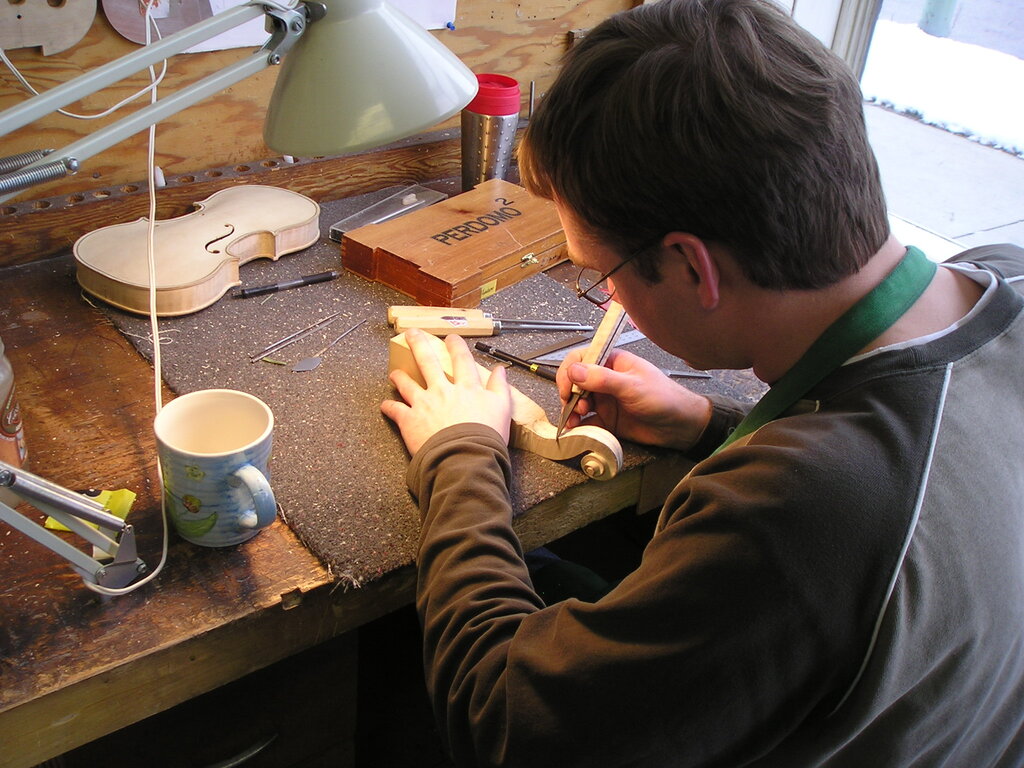
The workshop of Andrea Amati became a dynasty. His sons, and later his grandson Nicolò Amati, continued to build upon his work. Nicolò, in particular, is considered one of the greatest luthiers of all time. He not only crafted exquisite instruments but also trained the next generation of master violin makers, including Antonio Stradivari and Andrea Guarneri.
This direct line of teaching, from master to apprentice, ensured that the secrets of Cremonese violin making were preserved and refined, establishing a tradition that has never been surpassed.
Time to review what we've learned about the violin's early history.
Let's test your knowledge with a few questions.
Which two instruments are considered the primary ancestors of the modern violin?
In which region did the violin emerge during the early 16th century?
From its humble beginnings as a blend of older folk instruments to its perfection in the workshops of Cremona, the violin was born from a unique blend of culture, craftsmanship, and the timeless desire for beautiful sound.