The Vibe of Coding
Introduction to Vibe Coding
What is Vibe Coding?
Imagine describing a software application in plain English and having an assistant build it for you. That's the essence of vibe coding. Instead of writing code line by line, the developer communicates a high-level goal or a "vibe" to an AI, which then generates the necessary code.
Vibe coding is a new programming paradigm in which human engineers instruct large language model (LLM) agents to complete complex coding tasks with little supervision.
The term was popularized by AI researcher Andrej Karpathy in early 2025 to describe a shift in software development. The focus moves from the technical specifics of implementation to the creative and functional vision for the final product. The developer acts more like a director, guiding the AI through conversation and feedback until the desired outcome is achieved.
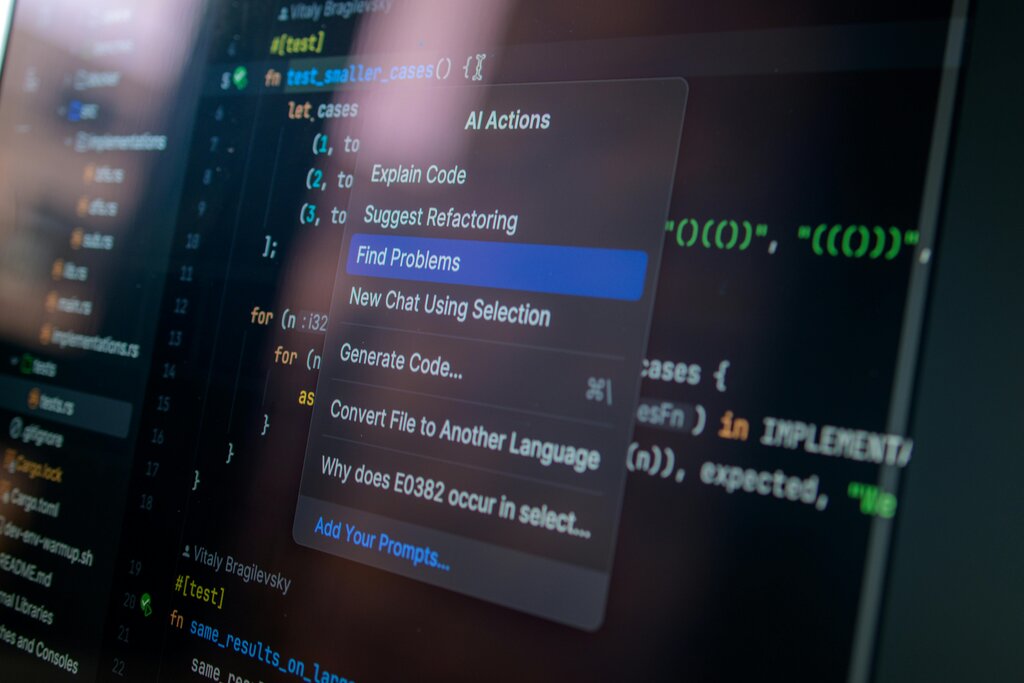
How It Works
Vibe coding isn't about pushing a button and getting a perfect app. It's an iterative, collaborative process between a human and a large language model (LLM). The workflow typically follows a loop.
Unlike traditional programming, the developer might not read a single line of the generated code. Instead, they evaluate it based on the output. Does the program run? Does it do what was asked? If not, the developer provides corrective feedback, such as "The button should be blue," or "It crashed when I uploaded a large file," and the AI tries again.
A New Kind of Workflow
Vibe coding fundamentally changes the role of the developer and the skills required to build software. It's a move away from memorizing syntax and toward articulating intent clearly. This table highlights some key differences between vibe coding and traditional coding.
| Feature | Traditional Coding | Vibe Coding |
|---|---|---|
| Developer's Role | Writer, architect, and debugger | Director, tester, and collaborator |
| Primary Skill | Logic and syntax proficiency | Communication and vision |
| Method | Writing explicit instructions | Describing desired outcomes |
| Focus | Code correctness and efficiency | Rapid iteration and functionality |
| Evaluation | Code reviews and unit tests | Observing program behavior |
The main advantage is speed and accessibility. Someone with a great idea but no formal training can potentially bring it to life. It allows for rapid prototyping, letting developers test ideas quickly without getting bogged down in implementation details.
Proponents argue vibe coding helps take the drudge work out of software development and lowers the barrier to entry for non-technical individuals.
However, this approach is not without risks. Since the developer may not understand the underlying code, it can be difficult to maintain, debug, or scale. The AI could introduce subtle bugs or security vulnerabilities that go unnoticed. Accountability is another major concern. When AI-generated code causes a problem, who is responsible—the developer who prompted it, or the creators of the AI?
A Tool, Not a Replacement
Vibe coding is a powerful new way to build software, but it's not an autopilot. The best results come from treating the AI as a very capable, very fast junior developer. It needs clear direction, careful supervision, and rigorous testing to ensure the final product is reliable, secure, and maintainable.
Vibe coding is not an autopilot for software development; it is a powerful new instrument, and its ultimate potential will only be realised in the hands of a skilled human operator who knows how to play it with intention, wisdom, and responsibility.
This new paradigm changes what it means to be a programmer. It elevates the importance of creative vision, clear communication, and critical thinking, blending human ingenuity with the raw power of artificial intelligence.