The Versatile Oboe
Oboe Origins
From Shawm to Oboe
The oboe’s story begins long before the instrument as we know it existed. Its roots are in a family of instruments that use a double reed to create sound. The most direct ancestor of the oboe is an instrument called the shawm, which was popular across Europe from the medieval period through the Renaissance.
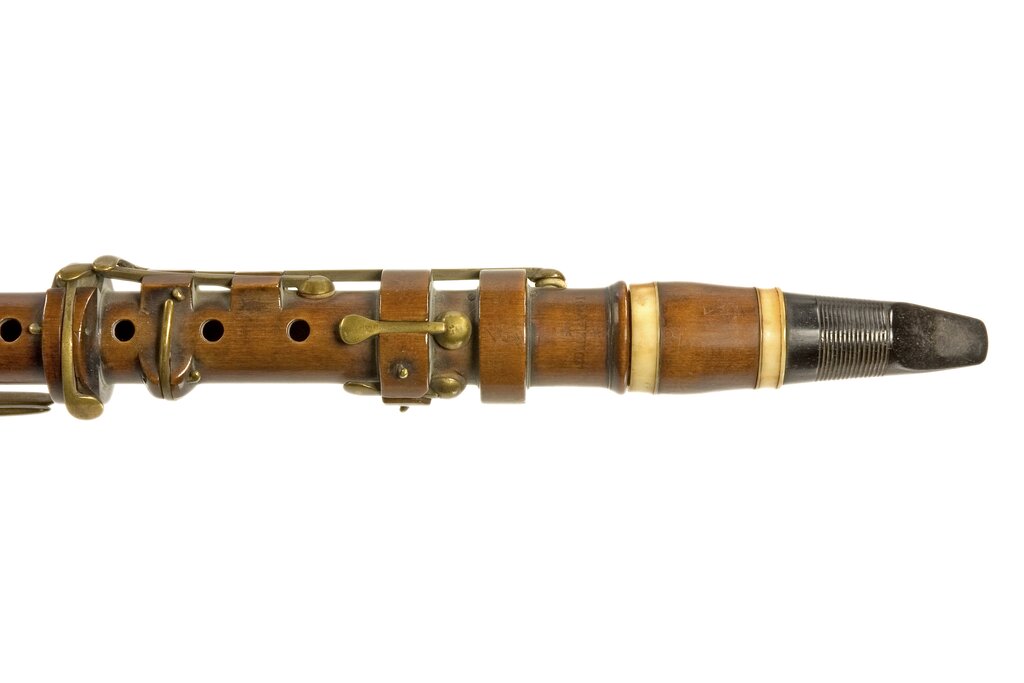
Shawms were known for their powerful, piercing sound. Built with a conical bore that flared out into a bell, they were perfect for outdoor events, military bands, and large ceremonies. Their volume could easily cut through the noise of a crowd. However, this loudness came at a cost. The shawm was difficult to play with any subtlety or dynamic control, making it less suitable for the more intimate, indoor music that was becoming popular.
shawm
noun
A medieval and Renaissance double-reed woodwind instrument, the predecessor of the oboe, characterized by its loud, piercing tone.
A Refined Sound for the Court
By the mid-17th century, musical tastes were changing, especially in the sophisticated French court of King Louis XIV. There was a demand for an instrument with the shawm's reedy character but a sweeter, more controlled voice that could blend with strings and other quieter instruments in an indoor setting.
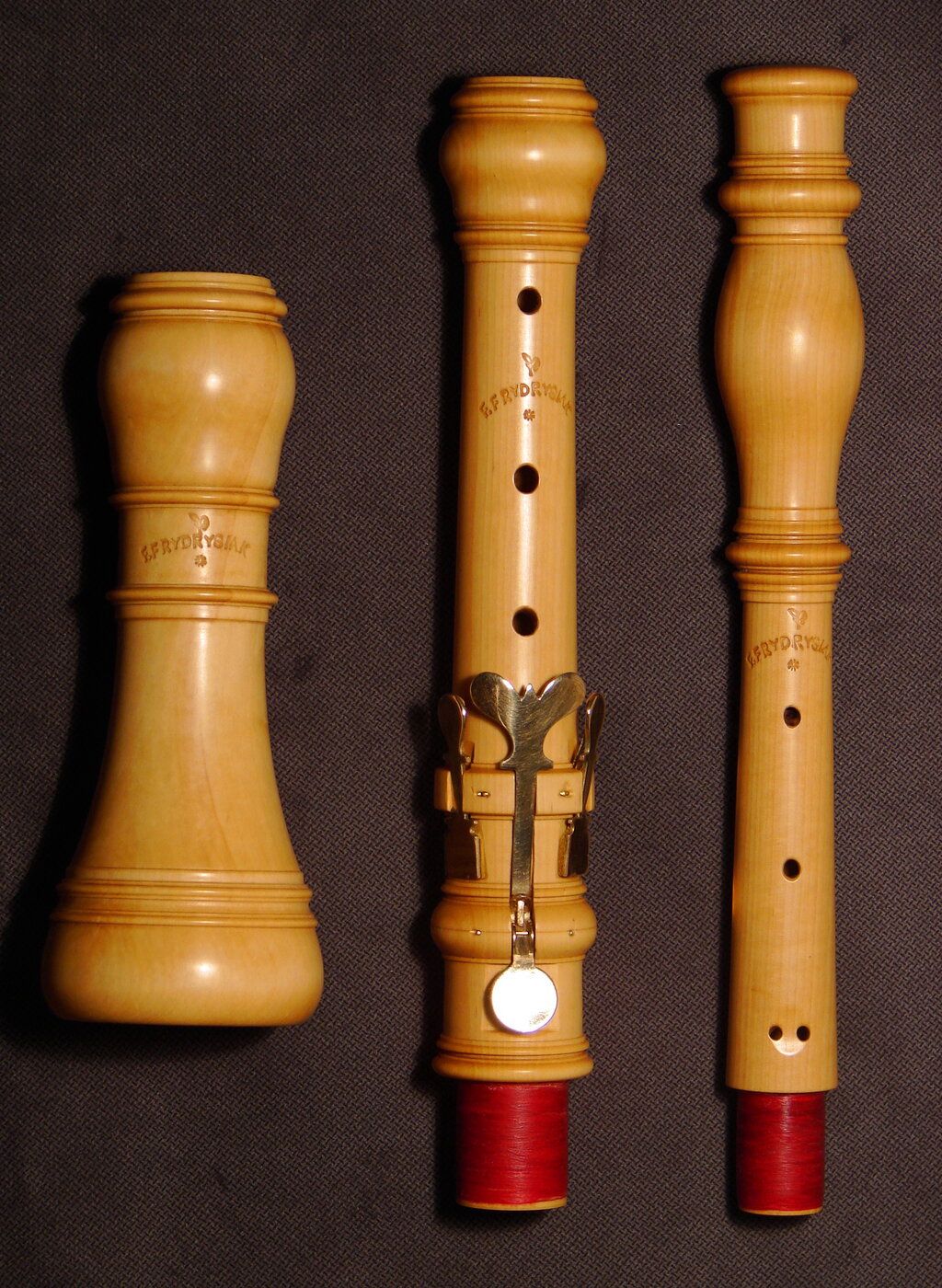
During the mid 17th century, the first baroque oboe (called hautbois, meaning "high-wood") was created in France, where it was used to entertain the French court.
Instrument makers, most notably the Hotteterre family, began modifying the shawm. They created a new instrument in three sections, narrowed its bore, and refined the reed. This new creation was called the hautbois.
high-wood
The name, which combines haut ("high" or "loud") and bois ("wood"), reflected its place as the highest-pitched double-reed instrument of the time. The hautbois, or Baroque oboe, had a much more delicate and expressive tone than the shawm, with greater dynamic range. This allowed it to take on a new, more prominent role in chamber music and the emerging orchestra.
Evolution to the Modern Oboe
The Baroque oboe was a huge success and quickly spread across Europe. But its evolution didn't stop there. Over the next two centuries, the instrument continued to change as musical demands grew more complex. Composers wrote increasingly difficult music, and players needed an instrument that was more agile and consistent in tuning.
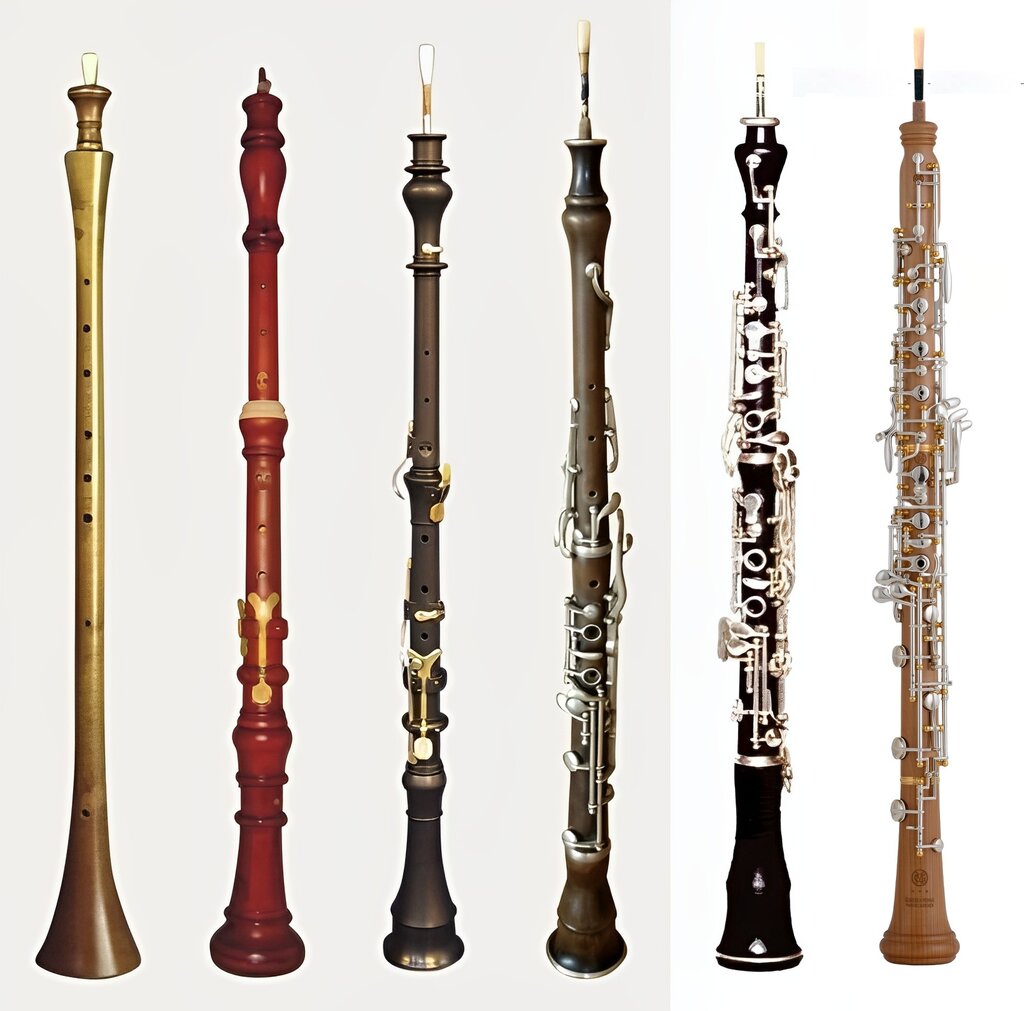
Instrument makers responded by adding more keys. The simple two- or three-key Baroque oboe gradually acquired a complex system of metal keys, rings, and levers. This new keywork made it easier to play in different keys, improved intonation, and allowed for faster, more intricate passages.
The bore was also further refined. By the 19th century, makers like the Triébert family in Paris and later Heckel in Germany had established the design for the modern oboe. This instrument, with its intricate key system and precisely engineered bore, is the one you see in orchestras today. While it looks very different from its ancestor the shawm, it still carries the legacy of that distinctive double-reed sound, refined over centuries for the concert hall.
Let's review the key terms from the oboe's history.
Now, check your understanding of the oboe's journey through time.
What was the direct ancestor of the oboe, known for its loud, piercing sound ideal for outdoor events?
What societal shift in the 17th-century French court drove the development of the oboe from the shawm?
From a loud outdoor instrument to a refined voice of the orchestra, the oboe's development shows how instruments adapt to new musical ideas and settings.