The Versatile Letter A
Introduction to Phonetics
The Science of Speech Sounds
Every time we speak, we send a complex stream of sounds into the air. But what are those sounds, really? And how do we make them? This is the focus of phonetics, the science of speech sounds.
phonetics
noun
The study and classification of speech sounds, focusing on their physical properties and how they are produced and perceived.
Phonetics isn't concerned with the meaning of words or the grammar of sentences. It zooms in on the physical act of creating sound. It has three main branches, but the one we'll focus on is articulatory phonetics, which looks at how we use our bodies—our lungs, throat, mouth, and nose—to produce the sounds of language.
Your Personal Sound Machine
Think of your body as a sophisticated instrument for making sounds. The process starts with air pushed up from your lungs. As it travels up your windpipe, it passes through the larynx, or voice box. Inside the larynx are your vocal cords, which are two small flaps of muscle.
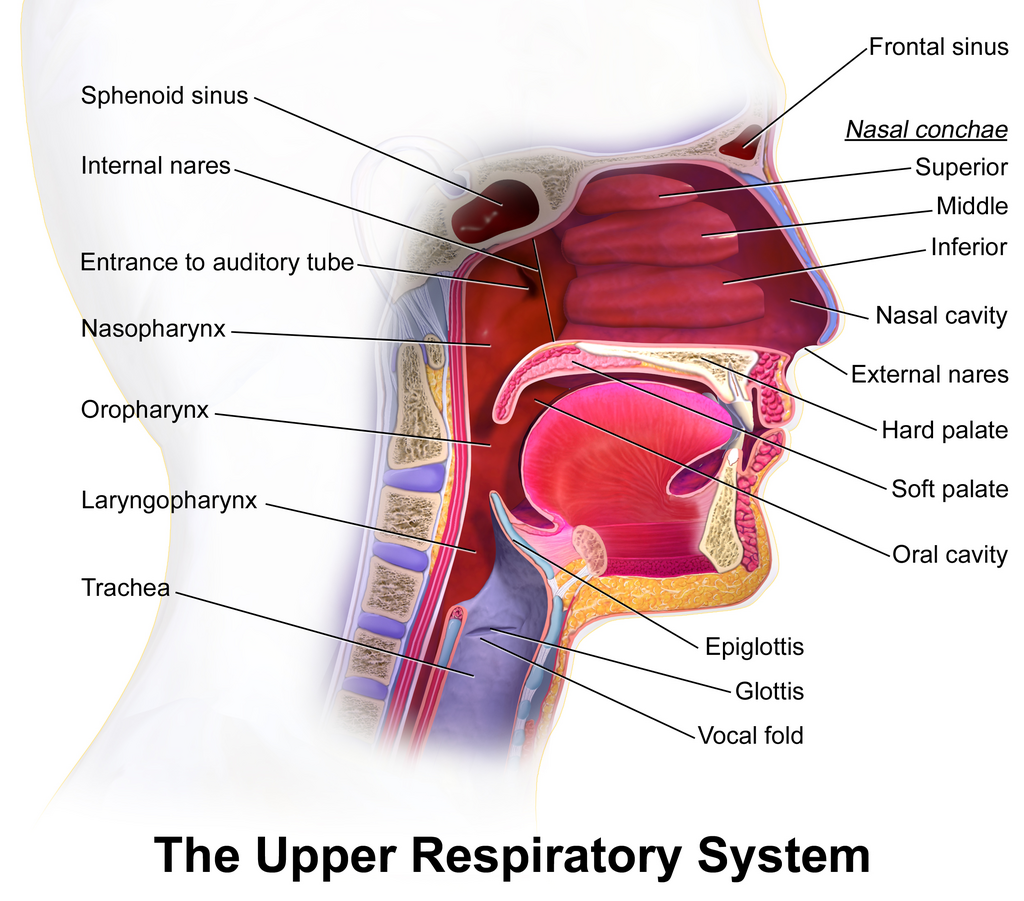
The vocal cords can do two main things. They can be held apart, letting air pass through freely. Or, they can be brought close together, causing them to vibrate as air pushes through. This vibration is called voicing. It's the difference between the /s/ sound in sip (voiceless) and the /z/ sound in zip (voiced). Try it yourself: place your fingers on your throat and make a long S-sound, then a long Z-sound. You should feel a buzzing vibration for the /z/ but not for the /s/.
After passing the vocal cords, the air enters the vocal tract, which includes your throat, mouth, and nasal cavity. Here, we shape the sound using our articulators: the tongue, lips, teeth, and palate (the roof of your mouth).
An Alphabet for All Sounds
One of the biggest challenges in studying sounds is that spelling is often misleading. The letters c-h sound different in church, choir, and chef. The letter a sounds different in cat, father, and late. How can we talk about sounds precisely if the alphabet is so inconsistent?
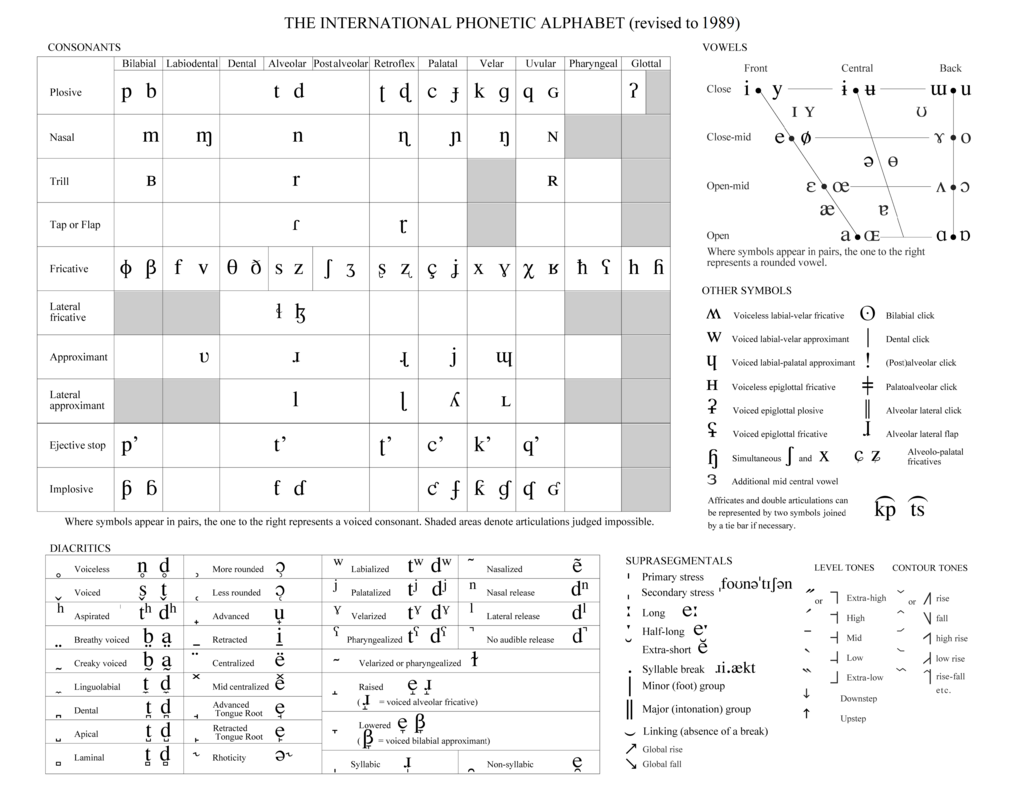
The solution is the International Phonetic Alphabet, or IPA. The IPA is a special set of symbols created by linguists to represent every sound found in human language. The guiding principle is simple: one symbol for one sound, and one sound for one symbol.
The IPA provides a universal, consistent way to write down the sounds of any language, from English to Swahili.
This allows us to transcribe speech unambiguously. For example, the English word phonetics would be written in IPA as /fəˈnɛtɪks/. Notice the first sound is represented by /f/, not 'ph'.
Vowels and Consonants
The IPA chart organizes sounds based on how they're made. The most basic division is between vowels and consonants.
Vowels are produced with an open vocal tract. Air flows from the lungs and out the mouth with very little obstruction. The specific sound of a vowel depends on the shape of the mouth, which is determined by how high or low the tongue is and whether it's toward the front or back of the mouth.
Consonants, on the other hand, are made by obstructing or constricting the airflow somewhere in the vocal tract. This obstruction can be complete, like with the sounds /p/ and /t/, or partial, like with /s/ and /f/. We classify consonants based on two key questions: where in the vocal tract the obstruction occurs (the place of articulation) and how the air is obstructed (the manner of articulation).
| Feature | Vowels | Consonants |
|---|---|---|
| Airflow | Unobstructed | Obstructed or constricted |
| Sound Source | Primarily vocal cord vibration | Vibration and/or air turbulence |
| Tongue Position | Determines vowel quality (high/low, front/back) | Forms a point of constriction |
| Example | The /i/ in meet | The /t/ in meet |
Understanding these core principles—how sounds are articulated, transcribed with the IPA, and classified into groups like vowels and consonants—is the first step to analyzing the sounds of any language.
What is the primary focus of articulatory phonetics?
The key difference between the sound /s/ in "sip" and the sound /z/ in "zip" is a concept known as...